
How confident are you that your organization could stay operational during a major disruption? Learn how to build real resilience that holds up when it matters most.

Emergency Management Oct 24, 2025
Complete Guide to Operational Resilience: Frameworks, Governance, and Best Practices
Business Continuity Plan Template
Create a customized, crisis-ready framework to keep your organization running through any disruption.

It’s not a stretch to assume that every aspect of your organization—from your people to your products and services—is vulnerable to disruption. Outages, third-party failures, cyber events, natural disasters, geopolitical uncertainty…it’s impossible to predict every scenario or contingency. So how do large, complex organizations stay ahead rather than stay in a permanent state of firefighting?
On a recent episode of The Employee Safety Podcast, Capital One’s Senior Director of Operational Risk Management, Teresa Reynolds, explained how her team approaches resilience very differently—not by trying to plug every possible hole. Instead, she focuses on identifying the essential services the company absolutely cannot fail to deliver and mapping every dependency required to keep those financial services running.
Rather than waiting for a crisis to expose a weakness, these organizations proactively identify single points of failure across people, processes, third parties, and even downstream cloud dependencies. They then weigh it against their risk appetite to determine which risks must be mitigated and which can be consciously accepted.
This philosophy is known as operational resilience: the ability to continue delivering on core commitments even amid disruption. And as Teresa emphasized, this isn’t about having a massive budget. It’s about clarity, prioritization, and pressure-testing the things that matter most before a crisis hits.
Business Continuity Plan Template
Create a customized, crisis-ready framework to keep your organization running through any disruption.
What Is Operational Resilience?
Operational resilience is the ability to withstand change and disruption and adapt to new scenarios. It applies to all parts of a business. When an organization has achieved operational resilience, its business functions will continue no matter what obstacles it must contend with, internal or external.
Operational resilience vs. business continuity vs. disaster recovery
While they’re often used interchangeably, operational resilience, business continuity, and disaster recovery play different—but complementary—roles in safeguarding an organization.
Business continuity management (BCM) centers on preparing for known and predictable disruptions. Through tools like business impact analysis and business continuity planning, organizations identify which processes are most critical, how long they can be offline, and what workarounds or manual procedures should be ready if those systems fail. BCM often results in formal plans, playbooks, and scenario-based procedures.
Disaster recovery sits underneath that—it focuses on restoring the systems, tools, and resources needed to resume normal operations after a disruption. This will also include IT recovery activities like recovery time objectives (RTOs), failover environments, backup validation, and restoration testing. It also may extend to physical facilities, critical equipment, and access to essential data or applications, depending on the nature of the disruption.
Operational resilience, however, is broader and more strategic. Instead of planning for one scenario at a time, it involves ensuring that, no matter what happens, the organization can adapt in real time and still deliver its essential services. It assumes the unexpected will occur and emphasizes capabilities like scenario testing, dependency mapping, lessons learned loops, and continuous stress testing, rather than relying only on static playbooks.
To illustrate the difference, think of it like a live stage production:
- Business continuity is an actor memorizing their script.
- Disaster recovery is when the stage crew rushes to physically repair or replace the broken prop, lighting, or equipment so the planned scene can continue without disrupting the show.
- Operational resilience is when the cast adapts in real time—improvising dialogue or movement—to keep the story moving seamlessly, even while the crew fixes the issue in the background.
All three are necessary. But operational resilience is the outcome, and BCM and disaster recovery are key inputs required to achieve it.
Inside the Operational Resilience Framework at Capital One
Operational resilience isn’t improvised—it requires a deliberate framework that gives structure to how an organization identifies its most critical services, uncovers risk blind spots, and pressure tests its readiness to withstand disruption.
This is exactly the approach Capital One takes.
Teresa Reynolds explained that Capital One treats operational resilience as a formal discipline with clear steps and governance—not a static plan or reactive function. Their framework is designed to ensure the company can continue delivering its essential services even when the disruption is unexpected or doesn’t match any one predefined scenario.
The framework follows a clear sequence of activities:
- Identify essential services: Determine which customer-facing commitments are absolutely critical to maintain.
- Map all dependencies: Include internal systems, downstream third parties, cloud partners, data, facilities, and key personnel to reveal single points of failure.
- Define impact tolerances: Clarify how long each essential service can be disrupted before causing unacceptable customer harm.
- Assess current resilience levels: Compare dependency strength against those tolerances to identify where actual risk is higher than acceptable risk.
- Build resilience strategies: Introduce risk response strategies like alternate suppliers, manual workarounds, backup environments, or tighter expectations for critical third parties.
- Test and pressure check: Conduct realistic exercises, scenarios, and simulations to validate real-world performance—not just documented capability.
- Capture lessons learned: Record findings from each exercise, including fatigue or over-reliance on individuals, and feed those insights back into the next resilience cycle.
Rather than asking “What could go wrong?” Capital One’s approach starts with “What must not fail?”—then reverse-engineers confidence from that point outward.
7-Step Operational Resilience Framework
While Capital One’s approach reflects the complexity of a large financial institution, the underlying principles apply to any organization seeking true resilience. Whether you operate in healthcare, technology, manufacturing, or education, the goal is to ensure the essential parts of your business can endure and recover quickly from disruption.
The following seven-step framework distills those best practices into a model any organization can adopt and adapt. It offers a repeatable way to identify what truly matters, strengthen weak points, and continually validate readiness—regardless of size, industry, or regulatory environment.
1. Define your essential services
Start by identifying the customer-facing services or internal functions that must not fail under any circumstance. Clarify the outcomes these services deliver, who owns them, and how their failure would affect your organization and stakeholders. For example, a retailer may identify payment processing as essential, while a university may prioritize its learning management system.
Download our Business Impact Analysis Template for guidance as you identify essential services, map dependencies, and set impact tolerances.
2. Map dependencies and interdependencies
Once essential services are clear, map every dependency required to deliver them—people, processes, technology, data, facilities, and third parties. Then look deeper to uncover interdependencies and downstream risks (for example, cloud hosting or identity management systems your vendors rely on). This holistic view exposes single points of failure that might otherwise go unnoticed.
3. Set impact tolerances and align with risk appetite
Determine how long each essential service can be unavailable before the impact becomes unacceptable to customers, regulators, or your bottom line. These are your impact tolerances. Align them with your organization’s risk appetite and establish recovery targets (RTOs and RPOs) that match those expectations across both internal and external dependencies.
4. Assess current resilience
Evaluate whether your existing capabilities meet those tolerances. Review technical controls, staffing levels, vendor SLAs, data redundancy, and process maturity. Use key risk and performance indicators (KRIs and KPIs) to quantify resilience gaps—for instance, measuring time to detect incidents, dependency health, or exercise success rates.
5. Plan and implement resilience strategies
Address the most critical gaps with targeted strategies. This could include contracting alternate suppliers, adding backup facilities, increasing automation or system redundancy, creating manual workarounds, or enhancing staff training. The objective is to ensure you can maintain essential services even when one or more components fail.
6. Exercise and validate
Test your assumptions regularly through scenario analysis, tabletop exercises, and technical stress testing. Include both business and IT stakeholders to validate communication, coordination, and recovery performance. Capture lessons learned from each test, assign owners for remediation, and track those actions to closure.
7. Learn, govern, and evidence
Feed insights from every exercise, incident, or near miss into your continuous improvement cycle. Report outcomes to senior leadership and the board, ensuring they have clear visibility into resilience performance, emerging risks, and resource needs. Maintain a centralized evidence repository documenting all activities—this is essential for demonstrating accountability to auditors, regulators, and stakeholders.
Roles at a glance:
- Senior management: Defines resilience objectives, approves tolerances, reviews progress, and ensures adequate resourcing.
- Business units / service owners: Own essential services, maintain dependency maps, and implement corrective actions.
- Risk and compliance teams: Monitor regulatory developments (PRA/FCA, DORA, FFIEC, etc.), interpret obligations, and evidence compliance.
- IT and third-party management: Validate recovery capabilities, ensure vendor SLAs align with impact tolerances, and maintain technical resilience.
- Internal audit / assurance: Independently test the realism of exercises and verify that issues are addressed promptly.
Key artifacts of a mature resilience program
By the time you’ve completed all seven steps, you should have more than just plans—you should have tangible proof of how resilience operates across your organization. These core artifacts serve as both a management toolkit and evidence trail for auditors, regulators, and senior leadership:
- Service catalog: A clear inventory of your essential business services and owners—the foundation for everything else.
- Dependency maps: Visual or tabular diagrams showing people, systems, data, and third-party links that support each essential service.
- Documented impact tolerances: The defined thresholds for how long critical services can be disrupted before causing unacceptable harm.
- Active KRIs and KPIs: Quantitative measures that track how resilient your services actually are—such as recovery time performance, vendor RTO alignment, or exercise success rates.
- Testing and exercise calendar: A living schedule that ensures continuous validation of your capabilities and communication readiness.
- After-action reviews and lessons learned: Detailed summaries from tests or real incidents that feed directly into improvement planning.
- Corrective-action register: A log of resilience gaps, owners, and due dates, showing how issues are tracked to closure.
- Evidence repository: A centralized space—ideally within your risk or continuity platform—where all documentation, metrics, and reports live for easy retrieval during internal or regulatory review.
Together, these artifacts demonstrate that operational resilience isn’t just a concept—it’s a measurable, well-governed system that evolves and improves with every cycle.
Your Business Continuity Plan Template Is Here.
How to Develop and Maintain Resilient Operations
If you’re going to improve your organization’s resilience management, you have to be ready to look both inward and outward for potential hazards and determine impact tolerances. Disruptions can come from outside your organization, of course, but ones that originate from inside your business can be just as devastating.
Begin with a risk assessment
Discover What Resilient Security Programs Do Differently
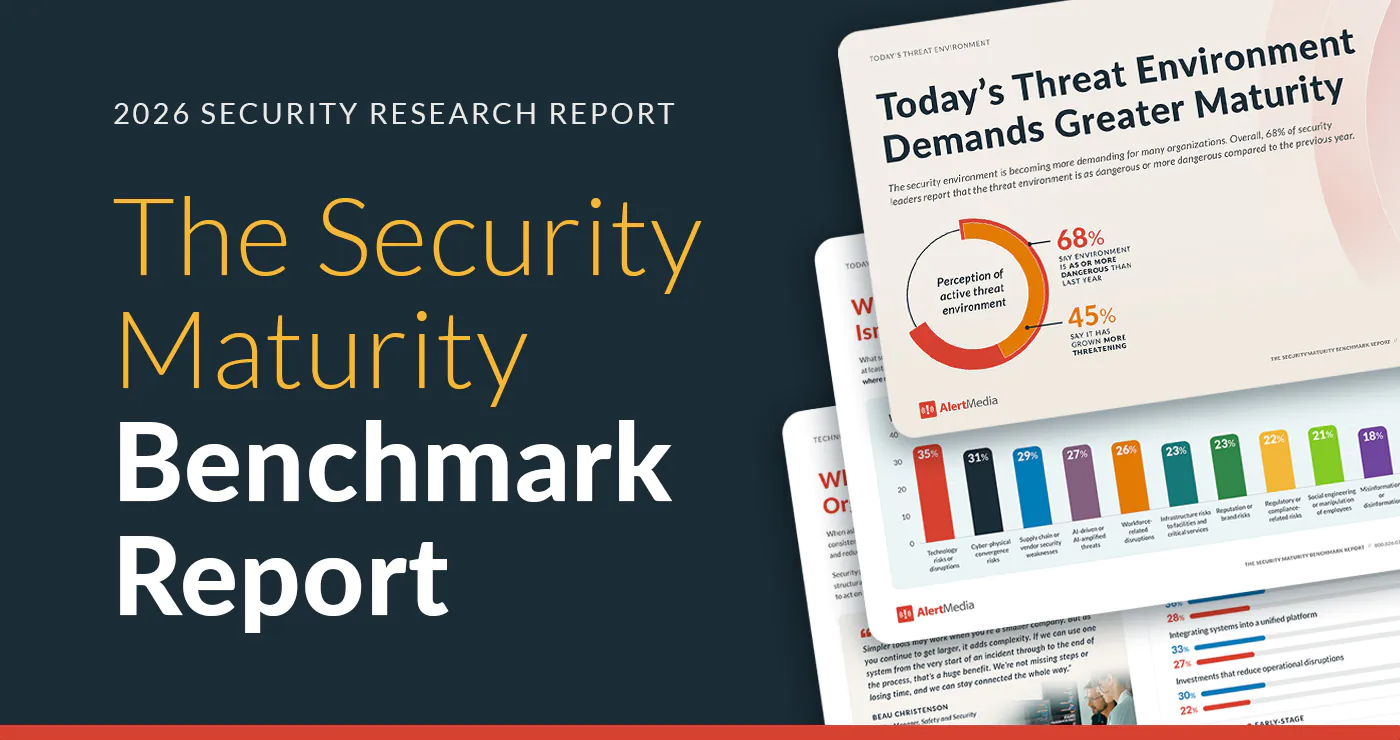
We surveyed 501 leaders to find what separates reactive from ready. Download The Security Maturity Benchmark Report to see where your program stands.
All the preparation in the world won’t make your business more resilient unless you target that prep toward your specific vulnerabilities. With a proper threat assessment, you will consult both internal and external stakeholders to identify likely and impactful threats that could hamper the business. From a global pandemic to cybersecurity breaches, stakeholders should consider how those events would alter business operations.
No matter what you need to prepare for, internal and external, this assessment is the critical first step of your operational risk management strategy.
Internal resilience strategies
When organizations come to us for help with emergency preparedness, they often have external emergencies in mind—the kind of emergencies that they don’t have any control over. Think of hurricanes, wildfires, terrorist attacks, and the myriad of other events you might have worried about in recent years. However, these organizations quickly find that preparation for internal threats is equally important—maybe even more important depending on the priorities a risk assessment unearths.
IT security
Almost all business services depend on digital processes. Most financial transactions are digital, as are most internal and external business communications. Unless you take action to prevent it, your organization is leaving the cyber doors wide open for malicious actors who are looking to exploit weak passwords and bad cybersecurity practices.
Even when cyberattacks originate externally, they almost always exploit human error—such as reused passwords or unattended unlocked devices. That’s why it’s critical to train employees to recognize phishing attempts, follow strong password hygiene, and lock their computers when not in use to prevent unauthorized access and avoid potential cyber breaches.
Facility security
Similar to cybersecurity, physical security is often overlooked until an incident occurs—yet it is a critical pillar of operational resilience. If your facilities are not properly governed, your organization becomes far more vulnerable to disruptive events stemming from preventable physical weaknesses.
This is why physical protection must be treated as part of a broader governance framework. Senior management is responsible for setting expectations and enforcing standards, not just reacting after an incident.
On one hand, the physical workplace should be structurally prepared for rare but high-impact external threats such as wildfires or severe weather. Reinforced building materials, hazard-resistant design, and proactive facility maintenance directly increase resilience under stress.
On the other hand, employee-only areas must be target-hardened against intrusion. Without strong access controls, a violent actor could gain entry with minimal resistance. Active shooters are statistically uncommon, but proven deterrents such as keycard-based access, monitored video surveillance, and reinforced entry points can prevent or delay harm from multiple threat types, including arson or stalking.
A formal physical security assessment helps you identify facility-level risks, prioritize weaknesses, and close high-impact gaps before a real disruption occurs.
Communication
No matter what kind of unexpected event your organization encounters, communication is one of the fastest ways to prevent cascading harm and maintain control. With tools such as emergency mass notification, you can instantly alert at-risk personnel and take critical actions such as:
- Warn employees of emerging threats
- Confirm individual safety
- Activate response teams
- Send evacuation instructions
Clear internal communication is equally important during normal operations. Most business operations rely on coordination across multiple teams, and delays in information flow can quickly create misalignment, stalled decisions, or accidental disruption. If departments operate in silos, a minor issue may escalate into a situation requiring full-scale business continuity management or even activation of disaster recovery plans.
In every scenario—crisis or routine—the ability to communicate rapidly and consistently is one of the most effective ways to mitigate risk and protect continuity of service.
Governance and accountability
Operational resilience depends not only on strong plans and technology but also on a clear governance structure that defines who is accountable for resilience across the organization.
A mature governance model begins with clear role delineation and regulatory awareness.
- Senior management is responsible for setting resilience objectives, defining risk appetite, and overseeing performance. They review testing results, approve corrective actions, and ensure resilience remains aligned with strategy and compliance obligations.
- Compliance and risk teams continuously monitor regulatory developments—including updates from the FCA, PRA, or DORA—and interpret new requirements into internal policies and controls. They advise business units, maintain evidence of compliance, and liaise with regulators when needed.
- Business units and operational leaders implement resilience requirements within their functions, ensuring that dependencies, controls, and recovery plans stay current.
- Internal audit or independent assurance functions validate that governance activities are effective and that findings or recommendations from prior reviews have been closed.
Coordination between these groups is essential.
- Senior management and compliance teams should meet regularly to review new regulations, evaluate their impact, and document how the organization maintains compliance.
- Cross-functional governance forums—often including business continuity, IT, risk, and communications leads—should oversee how regulatory changes are embedded into resilience frameworks, testing programs, and reporting.
- Documentation of resilience activities, such as exercise results, stakeholder communications, and corrective actions, should be maintained in a centralized repository to demonstrate readiness and due diligence during audits or regulatory reviews.
Effective governance also requires a structured approach to stakeholder mapping and communication.
- Identify and map key internal and external stakeholders, including employees, leadership, regulators, critical vendors, and customers.
- For each group, establish communication protocols that specify who communicates, how often, and through what channels—both in steady state and during disruptions.
- During crises, ensure timely, transparent updates are shared through the appropriate escalation paths to leadership, regulators, and affected stakeholders.
Finally, proactive engagement with regulators and stakeholders should be treated as an ongoing responsibility, not just a reactive step during emergencies. Maintaining open dialogue with oversight bodies and partners builds trust, clarifies expectations, and reinforces accountability for continuous improvement.
By embedding these practices, governance becomes more than an oversight function—it serves as the operating backbone of operational resilience, ensuring that accountability, communication, and compliance are integral to every stage of planning, testing, and response.
Global and EMEA Perspectives
In the U.K. and E.U., operational resilience is formally regulated—not optional. Under the Prudential Regulation Authority and Financial Conduct Authority operational resilience policies and the E.U.’s Digital Operational Resilience Act (DORA) regulation, firms are required to:
- Identify important business services that would cause intolerable harm if disrupted
- Set documented impact tolerances for maximum acceptable disruption
- Map all dependencies end-to-end, including third-party and cloud providers
- Test regularly through realistic and severe disruption scenarios
These global risk management regulations make resilience a proactive, continuously tested obligation, rather than a static compliance exercise.
External resilience strategies
Of course, only some of the bumps in the road are preventable. Even with prevention, recovery, and crisis management plans in place, rarely does everything go according to plan. Here’s what you can do to make your business more resistant to stumbling blocks.
Threat intelligence
If you are to protect your people and business from external dangers, you must continuously monitor all information channels and filter them to determine what truly matters. This ongoing analysis produces threat intelligence.
Threat intelligence empowers organizations to identify and assess risks before they escalate into cyber incidents, data breaches, or operational harm. You can use this insight to mitigate risk, support incident response decisions, and prevent disruptions across essential business processes. It is often the first step in disaster recovery plans, making it a critical pillar in efforts to build operational resilience.
Speed is everything. The earlier a threat is detected, the faster—and safer—you can act. That’s why deploying an advanced threat intelligence system is vital. According to Forrester, organizations using such systems can respond to emerging threats 30 minutes faster on average than those operating without real-time intelligence.
Third-party and cyber dependencies
External resilience is no longer just about natural hazards—it must account for third-party risk management and the growing exposure created by cyber risk. A single point of failure at a critical service provider, such as a cloud platform, authentication layer, or SaaS dependency, can trigger operational disruptions even when your internal systems remain fully functional.
Many organizations now set the same resilience requirements for third-party risk management as they do for internal teams. If your internal systems recover in 15 minutes but your vendor’s recovery time objective (RTO) is four hours, the business remains down—and the customer experience still breaks.
That misalignment (or relying on a single vendor or individual as the only failover path) is one of the biggest hidden interdependencies undermining external operational resilience. Below are common external risk drivers and how they translate into business impact.
| External Risk Driver | How It Undermines Resilience |
| Misaligned vendor RTO | Your internal recovery is faster than your vendor’s—so their delay becomes your outage. |
| Single cloud provider or identity platform | If a platform like AWS, Azure, or Okta goes down, everything that depends on it experiences an operational disruption. |
| Reliance on one specialist or internal SME | Critical knowledge lives with one person; if they’re unavailable, recovery stalls. |
| Tier-2/hidden interdependencies | A vendor’s vendor fails, and the impact hits you even though you never engaged them directly. |
External communications
When an emergency occurs, you may need to communicate with external entities, including first responders, service providers, media representatives, and members of the public. The ability to respond quickly and confidently is fundamental to effective operational resilience, as it helps maintain control of the situation and supports the best possible safety outcomes.
During her podcast interview, Capital One’s Teresa Reynolds emphasized that resilience also means maintaining stakeholder trust in real time. Waiting until every answer is confirmed is too late. Teams are expected to acknowledge the issue immediately, confirm ownership, and establish a clear communication rhythm, even as investigation and recovery are still in progress. A simple holding statement is more effective than silence—it signals control.
Failure to communicate with employee family members, financial institutions, regulators, third-party service partners, and other critical stakeholders introduces potential risks of misinformation and reputational damage. False narratives typically emerge only when clarity is absent—proactive communication reduces uncertainty, reinforces preparedness, and supports resilient operations as events unfold.
Travel safety
Traveling workers are likely to face more danger and unpredictable threats than their coworkers who remain in their familiar offices. They face new, possibly unknown places while disconnected from direct support from teams like HR and IT, as well as family and friends.
That’s why travelers rely on safety leaders when abroad—so it’s critical that you plan business travel carefully, end-to-end, for each trip and keep track of where everyone is supposed to be at any given time. By keeping in touch with employees on the road and even monitoring their location data via mobile apps, you set yourself up to be resilient and respond to any travel emergency.
Monitoring, Testing, and Continuous Improvement
Even the strongest resilience framework must be validated under real-world conditions before an actual disruption event occurs. High-maturity organizations continuously test, monitor, and refine their plans to ensure they hold up—not just in documentation but also in execution.
There are multiple ways to do this. The most effective teams rely on a mix of methodologies to strengthen decision-making and response agility.
| Methodologies | What it is | Best for |
| Scenario analysis/simulations | Reviewing detailed “what if” disruption models to evaluate how well current plans hold up against realistic stress conditions | Strategic leaders assessing overall impact tolerances and risk exposure |
| Tabletop exercises | Low-risk, discussion-based walk-throughs of an incident, testing decision-making, and communication without touching live systems | Cross-functional teams validating roles, communication, and escalation paths |
| Live-systems or technical stress testing | Controlled testing against real infrastructure or third-party integrations to observe actual recovery performance and system behavior under strain | Information technology (IT), cyber resilience, infrastructure, and vendor management teams validating RTO alignment and dependencies |
| Post-incident metrics and lessons learned | Capturing what worked, what didn’t, and how long recovery truly took to update and strengthen future plans | Any organization committed to measurable, ongoing resilience maturity |
Governance and accountability in testing
Resilience testing isn’t only about confirming that plans work—it’s about proving that governance, ownership, and oversight are embedded in the process.
A mature program clearly defines:
- Who owns testing: Operational resilience or continuity managers plan and coordinate exercises across departments.
- Who oversees testing: Senior management and risk committees receive test schedules, summary reports, and emerging risk themes at least annually to confirm alignment with business objectives and risk appetite.
- Independent validation: Audit, compliance, or another independent assurance function reviews testing evidence to verify that exercises are realistic, findings are addressed, and improvement actions are effective.
- Formal escalation channels: Significant issues uncovered during exercises—such as control failures or dependency gaps—should follow a documented escalation path to senior management or the board, ensuring timely visibility and resourcing.
- Corrective action tracking: Every finding must be assigned an owner, a target completion date, and closure verification to prevent unresolved vulnerabilities from resurfacing.
Maintaining a central record
To effectively maintain resilience records, document each exercise or disruptive event in a centralized system—ideally integrated with your risk or continuity management platform rather than stored in isolated spreadsheets or emails. Each record should follow a consistent template, capturing the date, scenario type, participants, duration, and verified outcomes.
Metrics and lessons learned should be logged rather than overwritten, maintaining version control that demonstrates continuous improvement over time. This transparent audit trail ensures that resilience isn’t just periodically reviewed—it’s actively governed, tested, and strengthened across the organization.
Small Team Playbook
Even without large budgets or dedicated resilience teams, small organizations can make meaningful progress by starting with a narrowed, high-leverage approach:
- Identify your top one to three critical operations—focus only on what would cause the greatest financial loss or customer harm if disrupted
- Map the first layer of cyber threats and service providers—not every system, just the most immediate external factors that could interrupt that service
- Set a realistic impact tolerance—define how long that business operation can be down before permanent damage occurs (e.g., 24 hours, 4 hours, 1 hour)
- Run one tabletop exercise per year—even a 60-minute discussion-style scenario is enough to expose blind spots and refine next steps
Teresa Reynolds made it clear on The Employee Safety Podcast: operational resilience is not about how many resources you have—it’s about how clearly you understand what must not fail.
360° Business Resilience
Operational resilience is proven by how reliably an organization can perform under real pressure. As Capital One’s Teresa Reynolds reinforced, preparedness is only the starting point. Resilience is validated through continuous testing, measurement, and refinement over time.
The all-hazards approach is a commitment to broadening your perspective as a safety leader in such a way that every possible hazard can be accounted for. Every exercise, disruption, or close call should inform the next improvement—not be treated as a box checked and forgotten. The strongest organizations maintain clarity on what must not fail, understand what those services depend on, and repeatedly test their ability to recover within acceptable tolerances.
Resilience is a living capability—strengthened over time—and the organizations that treat it that way are the ones able to protect operations, retain trust, and respond with confidence when it matters most.
Business Continuity Plan Template
Create a customized, crisis-ready framework to keep your organization running through any disruption.

AlertMedia, Risk Intelligence and Response