
Position your company to survive and thrive, no matter what comes your way, with the five-step risk management lifecycle.

Emergency Management Mar 19, 2026
Risk Management Lifecycle: 5 Steps to a Safer, More Resilient Organization
Risk Mitigation Plan Template
Use this template to build a comprehensive plan that helps reduce the negative effects of threats and disasters on your business.
From extreme weather to political unrest to near-constant cyberattacks, your company may face a diverse range of threats on a given day. On top of that, the threat landscape is constantly shifting.
For example, you might think the rise of remote work has reduced companies’ risks. But as Ontic CEO Lukas Quanstrom notes, that’s not the case. “We get that a lot, that it must be a lot safer because no one’s really going into work anymore,” Quanstrom commented. “But really what’s happened is the threats have been pushed away from the office, which is typically a more secure location, and dispersed geographically. So security teams are stretched to monitor hundreds of staff, maybe thousands, now spread across a wide patch of less-secure turf.”
So, how can you hope to tackle multiple threats, many of which are unseen and far-flung across various locations? Ad-hoc solutions might work in the short term. But to be effective and manage risks at scale, you need a structured, repeatable approach. That’s where the risk management lifecycle comes in.
Understanding the risk management lifecycle and framework helps organizations identify vulnerabilities, score risk levels, and build resilient workflows. Read on to learn more about the five-step risk management lifecycle and how it can help you mitigate risks in your organization.
Download Our Risk Mitigation Plan Template
Use this template to build a comprehensive risk mitigation plan.
Risk Management Fundamentals
Before diving into the risk management lifecycle, let’s get a few basics out of the way.
What is risk management?
Risk management is a process for identifying, understanding, and responding to hazards that could harm your company. The process encompasses risks of all sizes, both internal and external. From international war down to a simple tripping hazard, you can apply risk management principles to manage and minimize the impact on your people, assets, and operations. Risk management helps your organization regularly evaluate its risk levels and perform risk scoring to efficiently prioritize threats.
Some of the most common types of risk include:
- Financial risks, such as bad investments or unpaid invoices
- Operational risks like equipment failures or theft
- Strategic risks, including market shifts or declining customer demand
- Compliance risks, such as OSHA violations or discrimination lawsuits
- Reputational risks that harm people’s opinion of your company
- Global risk due to political unrest, cultural differences, or natural disasters
Getting a handle on everything can seem daunting. But ignoring it can have painful—and expensive—consequences in a crisis. For example, research from IBM found that companies with regularly tested incident response plans spent an average of $2.66 million less on data breaches.
Reputational risk in particular can compound quickly once it becomes public — our guide to reputational risk management breaks down how to detect and respond to it early.
The Five-Step Risk Management Lifecycle
How can you prevent a natural disaster or perfectly forecast customer demand for your products? You can’t. But the goal isn’t total risk prevention—it’s risk management. To succeed at risk management, you need to understand the full process and learn how to apply it to any scenario.
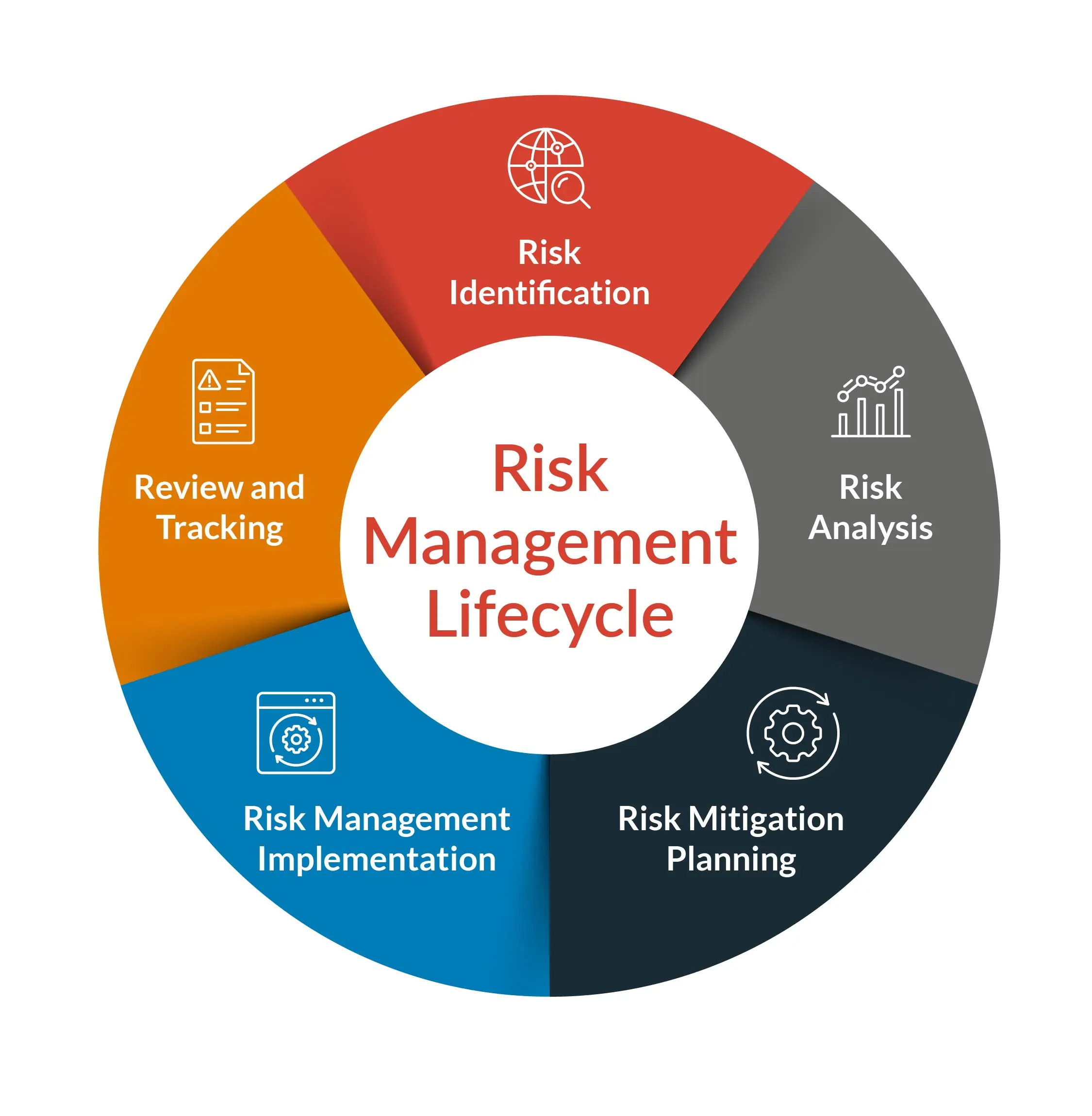
There are five phases in the risk management lifecycle.
1. Risk identification
First, you need to assess the threats your company faces. The specific risks will depend on your company and business processes, but there are several common classifications:
- Operational risks specific to your industry, like the presence of heavy machinery or toxic chemicals
- Weather-related risks like hurricanes, winter storms, or flooding
- Legal or compliance risks (if you’re in a highly regulated industry)
- Financial risks, such as poor cash flow management
To get the most comprehensive picture of your risk landscape, you’ll want to gather unique perspectives from across the organization. For example, say your company does long-haul trucking. Your drivers will have an acute sense of what can go wrong on the road, but little visibility into office-side problems. Likewise, your logistics team will understand centralized risks but will only have a vague sense of what drivers face. Also, be sure to include third-party data when identifying risks to capture vendor and supply chain exposures.
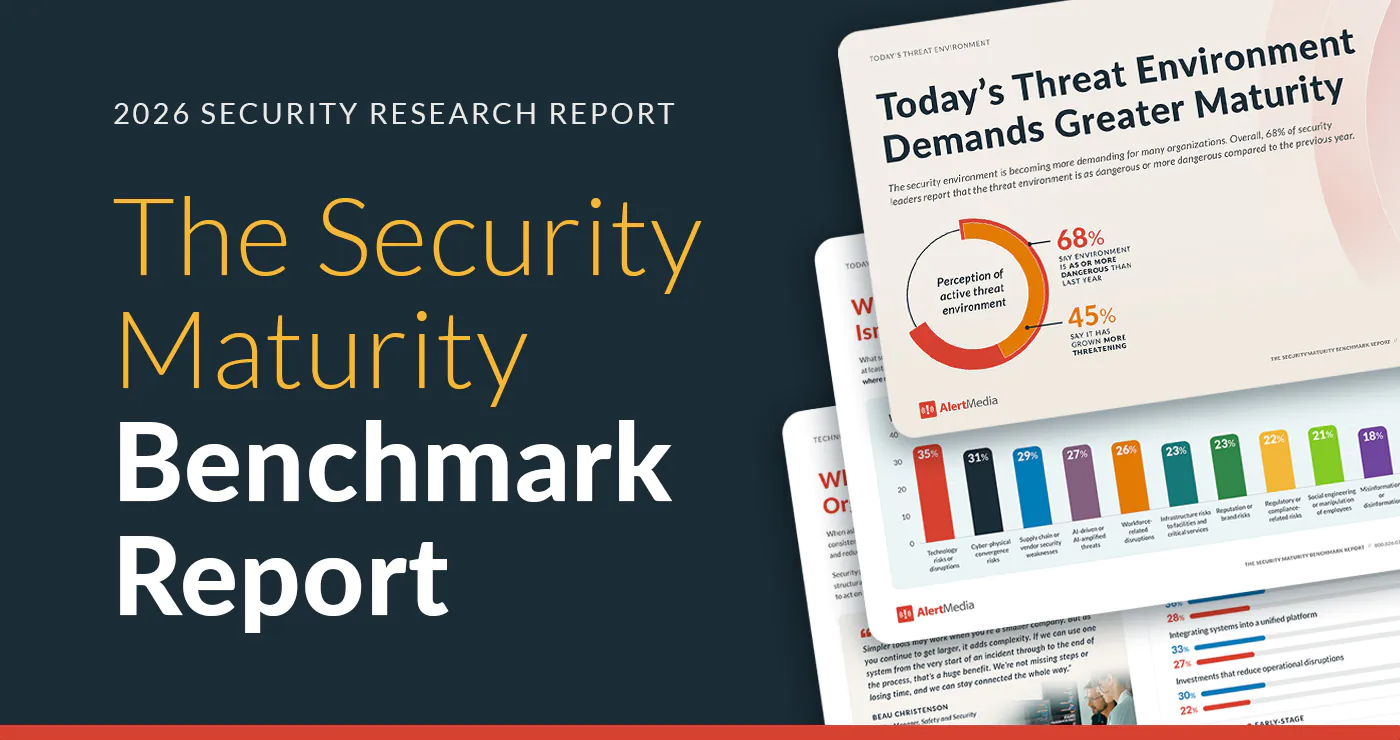
Discover What Resilient Security Programs Do Differently
We surveyed 501 leaders to find what separates reactive from ready. Download The Security Maturity Benchmark Report to see where your program stands.
2. Risk analysis
Next, you’ll analyze the risks you identified. There are two key factors to consider for each threat:
- How likely is the threat to happen?
- What’s the negative impact if the threat occurs?
Risks scoring highly in both categories should be addressed first, followed by less likely and/or lower-impact risks. You can use risk scoring and performance metrics to assess which threats pose the highest risk levels.
A good example of risk assessment is extreme weather. Most companies deal with it, be it hurricanes, tornadoes, or winter storms. And as Jonathan Erdman, Senior Digital Meteorologist at the Weather Channel, points out, risk analysis is critical to proper preparation.
“Know the types of weather hazards that can affect your area and have a system in place to communicate and alert your employees about these hazards,” Erdman commented. “Ask yourself, how susceptible is your area to flash flooding? How susceptible is it to the occasional light snow? Austin [Texas] is a perfect example of this—you may get one snowfall every couple of years, but when it does happen, it’s big. So you also have to think about infrequent events that can have big impacts and plan accordingly.”
3. Risk mitigation planning
Once you understand the risks you face, you need to decide how to deal with them. Along with likelihood and impact, you need to understand your risk tolerance. If facing a hazard carries a significant reward, you’re more likely to tolerate the risk. But if there’s no reward, there’s no value in taking on the risk.
Based on impact, likelihood, and tolerance, you have four primary risk responses to choose from:

- Avoidance: In some cases, it makes sense to bypass a risk altogether by avoiding the situation
- Transference: You can transfer or share certain risks, usually by getting insurance against a risk coming to fruition
- Mitigation: The most common risk response is mitigation, in which you take measures to reduce the likelihood or potential impact
- Acceptance: For highly unlikely risks with minimal impact, you can just accept the risk and deal with the consequences
Select responses that align with your organization’s risk management framework and compliance requirements (e.g., GDPR).
4. Risk management implementation
After developing risk management plans, it’s time to implement them. Depending on the threat, there are a variety of risk mitigation strategies to consider:
- Exercise risks by practicing for them in scenarios like fire drills
- Challenge risks by allowing them to progress until the danger becomes unmanageable
- Isolate risks by minimizing potential impact, as is common with firewalls and network architecture in the cybersecurity world
- Buffer a risk by using more resources to prevent it, for example, by adding slack time to a schedule or having extra personnel on hand
- Make a contingency plan for when your initial risk mitigation strategy falls short of its goal
- Document workflows to streamline mitigation execution across teams.
5. Risk management review and tracking
Once your process is in motion, you need to monitor the risk to see how the situation unfolds and respond accordingly. Sometimes, this can be quick—an oncoming winter storm will be over in a matter of days. Other times, it can be an ongoing process, like monitoring the risk of theft in a retail environment. A few best practices for monitoring risks:
- Document every aspect of the situation for review later
- Develop metrics and key performance indicators to objectively measure how your mitigation strategies worked
- Communicate with stakeholders throughout the process
- If a situation goes worse than expected, alter plans as necessary—safety is always top priority
- Use a risk register tool for recording and tracking identified risks
- Monitor trends via dashboards and track key performance metrics tied to your risk lifecycle.
A risk management plan isn’t a one-time project. It’s a living document, which you’ll adjust to reflect changes in your company and the threats you face. To keep your risk management plans current, you should:
- Conduct risk assessments periodically to identify new risks or changed threats
- Analyze changes in the risk profiles and risk appetite based on lessons learned
- Use after-action reviews to review how effective your response plans were
- Refine your risk management plans and the metrics you use in your decision-making process
- Schedule exercises to test your plans as appropriate
Use this template to build a comprehensive risk mitigation plan.
Benefits of an Effective Risk Management Process
Risk management is a win in and of itself. You get a better handle on the risks you face and—hopefully—develop plans to avoid them. Also, risk management can have a positive ripple effect throughout your organization. A mature risk management lifecycle and framework improve visibility into your organization’s risks, support decision-making, and more.
Improved business resilience
With thorough risk management plans, you can minimize disruptions to your business. And when things do go awry, you’ll be better positioned to get back up to speed quickly.
Safer work environment
Understanding your workplace risks helps you prepare your team members to better handle them. Through communication and training, you can prevent threats from materializing and keep your employees safe.
Competitive advantage
Effective risk management gives your company a leg up against competitors. Vendors and clients are more likely to do business with resilient operations, and employees want to work at a company that puts safety first.
Challenges in Managing Risk
Here are three common challenges to watch for in your risk management process.
Static plans for dynamic risks
Your business moves quickly. You’re moving assets around, swapping equipment, starting new projects, and constantly evolving. During fast-paced operations, it can be easy to let risk management plans slip out of date.
There are a few ways you can avoid this:
- Make risk management part of your project management methodology
- Perform periodic infrastructure risk assessments to ensure they’re up to date
- Schedule comprehensive risk management plan reviews to keep details from slipping through the cracks
Organizational gaps and siloed risk
Poor communication between departments is never good. But when it comes to risk management, it can lead to two critical problems:
- Organizational gaps, where multiple parties think someone else is addressing an issue, but no one actually is
- Siloed risks that only a select few people are aware of, leading to incomplete risk management strategies
Prevent gaps and silos by taking a top-down approach and engaging stakeholders throughout your organization. By involving everyone in the risk management process, you’ll keep your team members in sync and protect your company.
Regulatory compliance
For some businesses, risk management planning isn’t just nice to have—it’s a requirement. Many industries must follow strict OSHA risk management guidelines, seek ISO certification, or work with other regulatory agencies. And sometimes, each set of requirements can be slightly different.
Be sure to review relevant regulations thoroughly before you start the risk management process. Making a mistake can lead to fines or costly remediation efforts.
Third-Party Tools to Aid in Risk Management
In an increasingly digital world, you have a wide array of third-party risk management solutions at your disposal. These tools and technologies can help you speed up analysis, mitigation, and monitoring—and improve your overall risk management process.
The following three options can apply to most types of organizations:
Mass notification system
A mass notification system keeps you connected to your team by sharing real-time updates and monitoring feedback to help you avoid threats. And when risks do materialize, you can coordinate your response quickly and efficiently.
Artificial intelligence (AI) and machine learning (ML)
When your company faces multiple threats, it would be difficult to assess all potential risks without automation. Using AI- and ML-driven predictive modeling, you can explore a wide range of risks quickly and hone in on what’s important to your company.
Threat intelligence
Most organizations don’t have the resources to keep up with every detail of the risks they face. Using a threat intelligence provider offloads the analysis work, yielding actionable intelligence for your organization.
The Journey Toward a Safer, More Resilient Organization
As a safety leader, you know you’ll never be able to address every risk or threat your company faces. But you also understand the importance of preparing as thoroughly as possible.
Using the five-step risk management lifecycle, you can position your company to survive and thrive through whatever life throws your way. Your teams will be safer, your operations more resilient, and you’ll be ready to deal with even the most unlikely risks.
FAQ
- What is the risk management lifecycle? The risk management lifecycle is a structured five-step process organizations use to identify, analyze, mitigate, implement, and monitor risks. It helps businesses proactively manage threats, minimize disruptions, and improve operational resilience.
- What are the five steps in the risk management lifecycle? The five steps in the risk management lifecycle are: risk identification, risk analysis, risk mitigation planning, risk management implementation, and risk management review and tracking
- Why is risk management important for organizations? Risk management helps organizations identify vulnerabilities, prioritize threats, reduce financial and operational losses, protect employees, maintain compliance, and strengthen overall business resilience.
- What are the four primary risk response strategies? The four primary risk response strategies are avoidance, transference, mitigation, and acceptance. Avoidance involves eliminating the risk entirely by steering clear of the activity or exposure. Transference shifts the risk to another party, often through insurance or contractual agreements. Mitigation focuses on reducing either the likelihood of the risk occurring or the impact if it does occur. Acceptance means acknowledging the risk and preparing to address the consequences if it materializes, typically when the risk is low in likelihood or impact.
- How often should a risk management plan be reviewed? A risk management plan should be reviewed regularly and updated whenever business operations, infrastructure, regulations, or external threats change. Periodic risk assessments, after-action reviews, and scheduled exercises help ensure plans remain effective and current.
- What are common challenges in managing risk? Common challenges include maintaining up-to-date plans in fast-moving environments, preventing organizational silos that hide risks, ensuring regulatory compliance, and addressing evolving threats such as cyberattacks, extreme weather, and geopolitical instability.
- What tools can help improve the risk management process? Organizations can improve their risk management process with tools such as mass notification systems, AI and machine learning for predictive modeling, threat intelligence platforms, dashboards for monitoring trends, and risk registers to track identified risks.
Download Our Risk Mitigation Plan Template
Use this template to build a comprehensive risk mitigation plan.

AlertMedia, Risk Intelligence and Response