
You can’t mitigate a risk you don’t know about. Here are eight ways to identify your organization’s potential risks and better prepare to manage them.

Emergency Management Mar 19, 2026
8 Risk Identification Strategies to Protect Your Business From Harm
Operational Risk Assessment Template
Use this step-by-step template to identify and address potential threats before they snowball into major disruptions.
If you don’t know what could go wrong, you cannot prevent a potential emergency. In today’s complex threat landscape, organizations across every industry face a wide range of potential threats, from severe weather to cyberattacks to active shooter events. These risks can cause harm, including disrupting operations, damaging reputations, and impacting financial stability.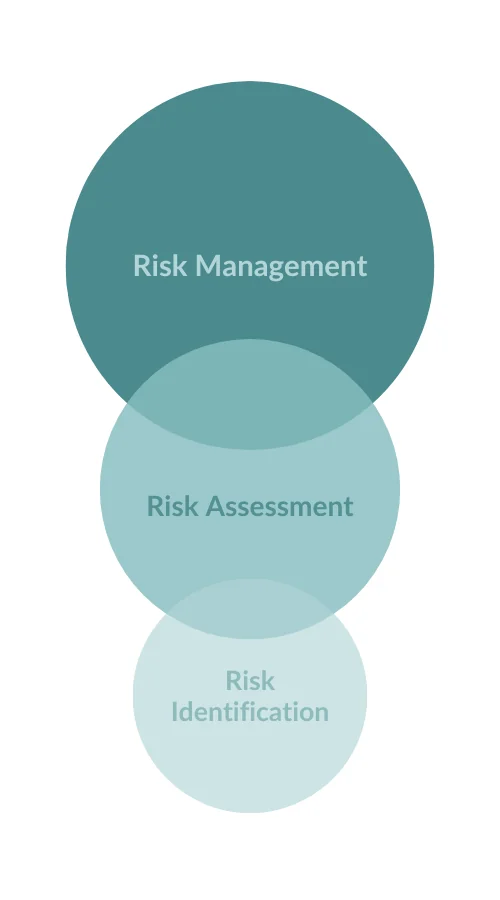
Identifying these risks early and accurately is critical to implementing risk management strategies to protect your business. But compiling a list of potential risks to your organization can be intimidating, especially when the stakes are high.
This post explores eight risk identification strategies that can help you stay ahead of potential threats. It also offers guidance on how to proceed, so you can ensure your business is aware and well-prepared for whatever comes your way.
What Is Risk Identification?
Risk identification is the process of detecting, assessing, and documenting potential threats that could harm your people or facilities or disrupt your business operations. It is part of the larger risk assessment process under the umbrella of risk management. The primary goal of risk identification is to anticipate issues before they occur, enabling your team to establish risk mitigation strategies to limit and prevent negative impacts.
Operational Risk Assessment Template
Identify and address potential threats before they snowball into major disruptions.
The Risk Identification Process (A Systematic Approach)
Risk identification works best when it follows a systematic approach rather than a one-time discussion. As part of broader risk management activities, risk identification helps organizations uncover specific risks, document them clearly, and support informed decision-making.
While every organization’s methodology may vary, most follow these core steps:
1. Define objectives and context
Align risk identification with business goals and strategic planning to focus on the most relevant project risks and operational threats.
2. Gather inputs
Involve stakeholders and the project team to capture different perspectives. Review incident reports, security assessments, and other relevant project documents to avoid blind spots.
3. Write clear risk statements
Document each risk using a simple cause–event–impact structure:
Because of [cause], [event] may occur, resulting in [impact].
Strong risk statements make managing risks more effective and actionable.
4. Prioritize and document
Use likelihood and impact to guide prioritization. Record risks in a register and integrate them into operational workflows.
5. Monitor for emerging risks
Regular reviews help identify emerging risks, including evolving cybersecurity threats, supply chain disruptions, and regulatory changes.
Following these steps like a flowchart can help ensure you are covered for all kinds of risks.
Context → Inputs → Risk Statement → Prioritization → Documentation → Ongoing Monitoring
What Makes Risk Identification So Important?
Risk identification is the foundation of effective risk management. After all, in order to prevent, prepare for, and respond to a risk, you need to know exactly what it is and how it might impact your business. This is why Scott Davidson, CEO and Founder of Code 4—an operations management and emergency services provider based in Austin, Texas—prioritizes risk identification in his mitigation efforts. Risk awareness is a key part of how he ensures safety and security during mass events.
“Even the most thoughtfully planned, well-funded, and longstanding events have a scarcity of resources. We’re limited in bandwidth, time, and, more than ever, the personnel available to mitigate these risks. It means that our job is to really triage and to be futurists, tasked with predicting the future based on our expertise, our experience, and the patterns and trends that we’re observing,” Scott explains on The Employee Safety Podcast. “We have to identify what risks are worthy and meaningful to mitigate against and knowingly leave some unmitigated. And that’s, as you can imagine, quite a challenge.”
The core benefit of comprehensive risk identification is that it sets the stage for all subsequent risk management work, ensuring that you are aware of potential threats before they can cause significant harm. With an accurate list of risks, you’ll be able to make better decisions, optimize your resource allocation, and overall create a more resilient organization.
8 Strategies for More Comprehensive Risk Identification
Identifying all potential risks can be a challenge for any business. No matter how large or small your organization is, you will need to account for a wide variety of internal factors and monitor ongoing events worldwide to address external threats. General brainstorming and the use of risk analysis frameworks, such as a SWOT analysis or a root cause analysis, can be incredibly helpful.
But identifying all risk factors can be hard on your own. Here are eight risk identification methods to make sure you have all your bases covered and can identify the most likely and important risks to your organization:
1. Review past risk incidents
Examining past risk events can provide valuable insights into potential future risks. By analyzing previous risk identification examples, both within your company and across the industry, you can assess patterns and trends that may indicate vulnerabilities or new risks. Documenting these incidents and their impacts can help identify similar threats in the future and develop preventive measures.
2. Interview industry experts
Engaging with industry experts can provide an external perspective on potential risks. These experts bring a wealth of knowledge and experience, offering insights that may not be apparent within your organization. Regular consultations with consultants, analysts, and other professionals can keep your risk management strategy up to date with the latest industry developments.
3. Meet with company stakeholders
Stakeholders, including senior management, board members, and key department heads, have a deep understanding of the company’s operations and strategic goals. Their input is crucial in identifying risks that could impact the organization’s mission and objectives. Regular meetings with stakeholders ensure that risk identification and analysis are aligned with the company’s priorities and business environment.
4. Consult with diverse department heads
Different departments within your organization face unique challenges and risks. Brainstorming with department heads across functions such as finance, IT, operations, and marketing can uncover risks specific to their areas. This cross-functional collaboration ensures a more comprehensive understanding of the risks across the entire organization.
Get Your Free Operational Risk Assessment Template Here
5. Ask the broader employee base
Employees at all levels of the organization can provide valuable insights into potential risks. Frontline employees, in particular, are often the first to notice emerging issues. Encouraging open communication and feedback from the wider employee base can uncover risks that might otherwise go unnoticed. Surveys, suggestion boxes, and regular meetings with team members can facilitate this process.

The Future of Threat Intelligence
Discover a blueprint for sourcing actionable threat intelligence you can trust.
6. Use generative AI tools
You can enhance the risk identification process by using generative AI tools to analyze vast amounts of data to detect patterns and anomalies that may indicate potential risks. These tools can provide predictive insights and help you stay ahead of emerging threats. You can also use AI to help create risk identification templates or checklists to improve process automation.
7. Run exercises or drills
Regular tabletop exercises or drills can help identify gaps in your risk management plan. These simulations test the organization’s response to various scenarios, revealing weaknesses and areas for improvement. By running these exercises, you can refine your risk identification processes and ensure your team is prepared for real-world events.
8. Invest in threat monitoring
Investing in risk intelligence tools and services can provide real-time insights into potential risks. These tools continuously scan for indicators of threats, such as cyberattacks, market volatility, or geopolitical events. Real-time threat monitoring ensures you can identify and respond to risks as they emerge, minimizing their impact on your organization.
Identifying risks, large and small
These risk identification strategies are fantastic tools for creating lists of potential risks at both the extensive enterprise risk management and the minor project management scales. While the types of risks may differ between operational and project planning, the process can benefit both. To manage risk at any level, you need to assess internal and external threats, involve stakeholders in key decision-making, and create contingency plans for possible risks.
How to Conduct a Risk Assessment
This video will help you facilitate an effective risk assessment at your organization.

Take Your Risk Identification to the Next Level
While risk identification is the foundation of actionable risk management, it’s just the start. Once you’ve sourced your business risks from the strategies above, here are two ways to better understand those risks so you can more effectively manage them.
Understanding risk impact and likelihood
To act on a potential risk, you need a deeper understanding of its potential impact on your organization and its likelihood of occurring. A risk’s impact could range from minor operational disruptions to significant financial losses or reputational damage, and its likelihood might range from a guaranteed, frequent occurrence to a very unlikely possibility.
You can identify these factors in tandem with risk identification and use many of the same strategies, such as interviewing managers or reviewing historical data. Understanding these two dimensions lets you prioritize your risks effectively, focusing resources on the highest-impact and/or highest-likelihood threats first.
Fitting risks into a greater context
Risks do not exist in isolation. They interact with each other, your organization, and the broader business environment. Understanding these interconnections can help you anticipate how one risk might trigger or exacerbate others, leading to a cascade of issues. This dynamic risk perspective enables the development of more comprehensive risk mitigation strategies that address multiple threats simultaneously.
Additionally, aligning risk identification with your organization’s strategic objectives ensures that risk management efforts support your broader business goals and business resiliency.
What to Do Once You Identify Your Risks
Now that you have your list of risks and have analyzed how they impact your organization, their likelihood, and their broader context, it’s time to get to work managing them. Here are a few resources for tackling risk management:
| Learn About Risk Mitigation Strategies
While you can’t eliminate all risks, you can take steps to minimize risk and get as close as possible to complete protection with common risk mitigation strategies. | Create a Risk Management Plan
Your business shouldn’t falter when faced with a problem. With a risk management plan, you can learn to adapt and react quickly and confidently to any disruption. | Document and Monitor Risks With a Risk Register Risks can materialize unexpectedly, from regional conflicts disrupting supply chains to natural disasters compromising infrastructure. The risk register is crucial in identifying and preparing for these unforeseen events. |
| Improve Risk Awareness in the Workplace
Training your employees in risk awareness will improve your overall emergency preparedness and risk management. | Implement Physical Security Controls You can mitigate intrusion, theft, and physical threats to your people and work locations with the right physical security controls. It all comes down to aligning controls to manage your risks. | Plan Around the Risk Management Lifecycle
Position your company to survive and thrive, no matter what comes your way, with the five-step risk management lifecycle. |
Continuous Assessment and Identification
Effective risk identification is an ongoing process that requires continuous improvement. As the risks you face grow in complexity and scale, you must build a comprehensive risk management framework that identifies risks and equips your organization to mitigate and manage them effectively. These proactive steps will improve your overall risk management process and protect your business from harm, ensuring long-term success.
Contact our team to learn about operational risk management solutions.
FAQ
- What is risk identification? Risk identification is the structured process of detecting, projecting, and documenting potential threats that could cause harm to an organization’s people, facilities, operations, or reputation. As a foundational component of risk management, it enables businesses to anticipate issues before they occur and establish proactive mitigation strategies to reduce negative impacts.
- Why is risk identification important for businesses? Risk identification is essential because organizations cannot mitigate threats they do not recognize. By identifying risks early, businesses can allocate resources more effectively, minimize operational disruptions, protect their financial stability and reputation, and strengthen overall resilience in an increasingly complex threat landscape.
- What are the key steps in the risk identification process? The risk identification process typically begins with defining objectives and aligning efforts with business goals. Organizations then gather input from stakeholders and review historical data to avoid blind spots. Clear cause–event–impact risk statements are documented, risks are prioritized based on likelihood and impact, and findings are recorded in a risk register. Ongoing monitoring ensures emerging threats are continuously evaluated.
- How can reviewing past incidents help identify risks? Reviewing past incidents helps organizations uncover patterns, recurring vulnerabilities, and emerging trends that may signal future threats. By analyzing previous disruptions and their impacts—whether internal or industry-wide—businesses can better anticipate similar risks and implement preventative measures before issues escalate.
- Why should organizations involve stakeholders and department leaders in risk identification? Involving stakeholders and department leaders ensures a comprehensive understanding of risks across the organization. Senior executives, department heads, and frontline employees each provide unique perspectives on operational, financial, technological, and strategic threats, helping create a more complete and accurate risk profile.
- How can generative AI improve risk identification? Generative AI tools enhance risk identification by analyzing large volumes of data to detect patterns, anomalies, and potential emerging threats. These tools can also assist in automating checklists, generating risk statements, and providing predictive insights, enabling organizations to strengthen and streamline their overall risk management processes.
- What role do exercises and drills play in identifying risks? Exercises and drills, such as tabletop simulations, help organizations test their response plans under realistic conditions. These activities often reveal gaps, weaknesses, or overlooked risks within existing processes, allowing teams to refine their risk identification and mitigation strategies before a real-world disruption occurs.
- What should organizations do after identifying their risks? After identifying risks, organizations should evaluate each threat’s potential impact and likelihood, prioritize them accordingly, and develop appropriate mitigation strategies. This includes documenting risks in a risk register, implementing security and operational controls, training employees, creating a formal risk management plan, and continuously monitoring the environment to address new and evolving threats.
Operational Risk Assessment Template
Identify and address potential threats before they snowball into major disruptions.

AlertMedia, Risk Intelligence and Response