
You may never eliminate operational risk, but you can reduce how often it turns into disruption. Learn how operational risk management works through real examples and practical guidance you can apply across day-to-day operations.

Emergency Management Feb 04, 2026
Operational Risk Management: Definitions, Examples, and Practical Guidance
Operational Risk Assessment Template
Use this step-by-step template to identify and address potential threats before they snowball into major disruptions.
Operational risk often goes unnoticed until an organization is already under pressure. When disruptions stack up, weaknesses in everyday business processes, internal controls, and risk management practices can quickly surface.
“We used to be very transactional, focused on checking boxes,” said Teresa Reynolds, Senior Director of Operational Risk Management at Capital One, speaking on a recent episode of The Employee Safety Podcast. “Now we’re much more risk-focused — looking for where the organization may be exposed, where trends or performance could lead to resilience risk, and where we need to ask harder questions.”
Like many large organizations — particularly financial institutions — Capital One depends on people, processes, and technology working together consistently. When internal controls fail to keep pace with operations, or when vulnerabilities and potential threats aren’t assessed through a structured operational risk management process, small gaps can cascade into financial losses and sustained disruption.
In this article, we’ll explain what operational risk is, how the ORM process works in practice, and why senior management plays a critical role in aligning operational risk management initiatives with the organization’s level of risk and long-term goals.
Operational Risk Assessment Template
Identify and address potential threats before they snowball into major disruptions.
What Is Operational Risk?
Operational risk is the threat of operational loss or organizational breakdown due to failed internal processes, human error, bad policies, system failures, or external events. Operational risk focuses on how you manage risk within the organization, even if the actual threat is external.
For example, natural disasters are outside any company’s control. But how you maintain and recover operations is your responsibility. Say your company stores essential documents for clients in a region prone to summer wildfires. Losing those documents in a fire would be an operational risk. Mitigation strategies for that risk profile would include off-site digital backups and fireproof safes.
How does operational risk differ from other types of risk?
In many cases, businesses will willingly take on a certain amount of market risk, credit risk, or strategic risk in exchange for potential reward. Enterprise risk management (ERM) focuses on these types of business risks, using a strategic framework to balance them against potential gains.
On the other hand, most companies avoid operational risk at all costs. There’s no benefit to accepting it. And unlike other risks, you can’t eliminate threats to your operations. As long as you employ imperfect people and imperfect processes, risk will exist. The best you can do is minimize disruption, which is the goal of operational risk management.
How to Conduct a Risk Assessment
This video will help you facilitate an effective risk assessment at your organization.

What Is Operational Risk Management (ORM)?
Operational risk management (ORM) is a systematic approach to controlling the chaos that operational risk creates. While every organization faces a different risk profile, many of the ways risk is identified and addressed can be standardized. Through a continuous cycle of identifying, assessing, measuring, mitigating, and monitoring risk, organizations can stay ahead of operational threats — even as those threats change.
That need for continuity is something Teresa Reynolds highlights in her discussion of how her team’s role has shifted over time. Speaking about her work at Capital One, Reynolds explains that her team moved away from a transactional, check-the-box model toward a more risk-focused approach. Rather than treating resilience as a one-time exercise, they began regularly reassessing where the organization might be exposed, tracking trends that could signal emerging weaknesses, and adjusting strategies as conditions changed.
That kind of ongoing reassessment is central to effective ORM. Without it, organizations risk building controls that look sufficient on paper but fail under real-world pressure.
How operational risk management supports better risk decisions
Operational risk management exists to support decisions before disruption forces them. At its best, ORM gives leaders a shared way to evaluate tradeoffs, focus resources, and act quickly when conditions change — instead of discovering weaknesses mid-crisis.
That organizing structure matters most when priorities compete. By anchoring risk discussions to what truly matters and mapping the dependencies behind critical operations, organizations gain the clarity needed to align business continuity and contingency planning.
The table below outlines key ORM objectives and the practical benefits they enable.
| ORM objective | How an ORM framework delivers value |
| Improve decision-making | Establishes a common framework leaders can use to prioritize investments, evaluate tradeoffs, and make faster decisions under pressure |
| Increase risk awareness | Exposes hidden dependencies across people, processes, technology, and third parties, directly informing more effective risk mitigation plans |
| Support regulatory compliance | Provides consistent policies, controls, and oversight that support ongoing compliance risk assessment |
| Reduce organizational stress | Limits reactive crisis response by clarifying ownership, expectations, and recovery priorities in advance |
| Strengthen resilience | Ensures recovery capabilities across the value chain are aligned, reducing exposure to single points of failure |
ORM Frameworks to Build On
Proven frameworks give you a shared way to think about risk. They help you spot issues early, decide what controls are needed, and put clear oversight in place. As your operations grow more complex, these structures make it easier to scale your risk practices.
That said, frameworks aren’t a substitute for judgment or experience. They work best as a foundation with a common risk language and clear ownership. Many frameworks rely on practical tools, such as risk assessments, control self-assessments, and formal control reviews.
When you add internal audit oversight and basic risk analytics, those tools become even more useful. They help you test assumptions, strengthen data quality, and uncover gaps that informal or ad-hoc processes often miss.
Most organizations don’t follow a single standard word-for-word. Instead, they adapt one or more risk frameworks to fit how they operate, often combining them into a broader approach. Below are some of the most commonly referenced frameworks and guidelines used for operational risk management.
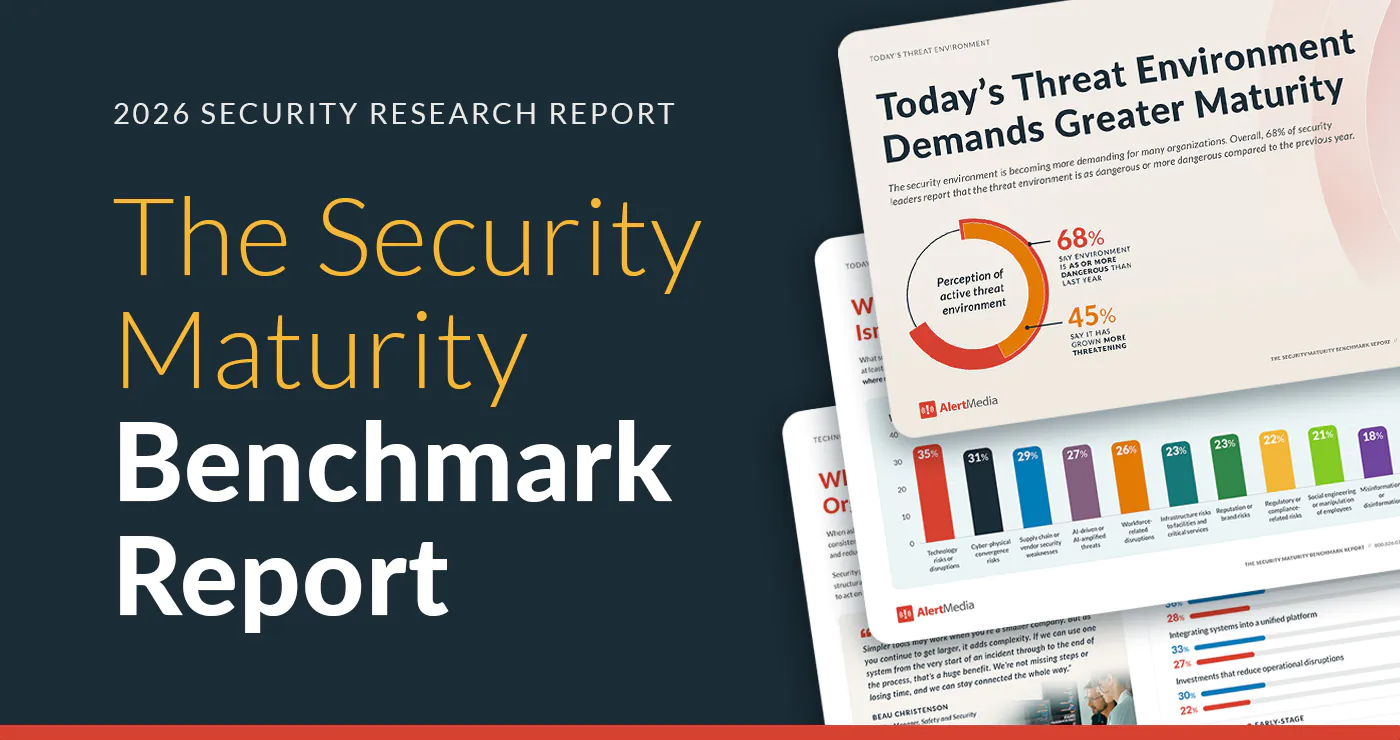
Discover What Resilient Security Programs Do Differently
We surveyed 501 leaders to find what separates reactive from ready. Download The Security Maturity Benchmark Report to see where your program stands.
ISO 31000 (Risk management guidelines)
ISO 31000 is published by the International Organization for Standardization. It sets out clear principles for managing risk. It also provides a high-level framework organizations can use across the enterprise. That framework helps teams identify, assess, treat, and review risk in a consistent way.
COSO Enterprise Risk Management (ERM) Framework
Developed by the Committee of Sponsoring Organizations of the Treadway Commission, COSO ERM focuses on embedding risk management into governance, strategy, and performance, making it especially useful for leadership alignment and oversight.
Basel Committee on Banking Supervision – operational risk principles
These principles, issued by the Basel Committee on Banking Supervision, are widely used in financial services and emphasize strong control frameworks, risk data governance, and consistent measurement and reporting of operational risk.
NIST Risk Management Framework (RMF)
Maintained by the National Institute of Standards and Technology, the NIST RMF is commonly applied in technology-heavy environments, particularly where operational risk intersects with system reliability, data integrity, and regulatory requirements.
IEEE standards and guidance
The Institute of Electrical and Electronics Engineers publishes standards that support operational reliability, system resilience, and process consistency, particularly in environments dependent on complex technical and engineering systems.
Industry-specific regulatory guidance
Many regulators publish operational risk expectations for specific industries. These expectations shape how organizations document policies and procedures. They also influence how teams run audits, perform reviews, and demonstrate effective governance and oversight.
Taken together, these risk management frameworks and standards provide organizations with a tested foundation for managing operational risk — one that supports consistency, accountability, and adaptability as risks change.
7 Examples of Operational Risk
Operational risk may look different depending on your industry. Here are seven common threats to your company’s operational resilience and potential impacts and business disruptions.
1. Internal fraud
According to the Association of Certified Fraud Examiners’ Occupational Fraud 2024: A Report to the Nations, organizations lose about 5% of their annual revenue to occupational fraud. Many cases went undetected for nearly a year before being discovered.
Internal fraud can take many forms, including:
- Misappropriating employer assets or funds
- Financial statement fraud
- Engaging in corrupt activities such as bribes or kickbacks
It might not be worth chasing small amounts of cash missing from a register. But more complex schemes, like falsifying invoices or writing off receivables, can put a big dent in a company’s books. Developing proper controls around company finances and assets is critical to fraud prevention.
Internal fraud risk is often amplified when too much operational responsibility is concentrated in a small number of individuals.
As Teresa Reynolds noted in her discussion on operational resilience, organizations often rely on a small number of people to handle critical activities. At first, this can seem efficient. Over time, it weakens oversight. It also reduces segregation of duties and creates single points of failure. In these conditions, fraud can go undetected for long periods because there are fewer independent checks in place.
2. External fraud
Fraud isn’t just an internal problem. Bad actors outside your company can also inflict severe damage. The umbrella of external fraud covers:
- Cyberattacks that steal data or damage information systems
- Financial schemes like check kiting or document forgery
- Theft of physical assets like inventory or equipment
Cybercrime is one of the most urgent forms of external fraud facing organizations today. As hacking and data breaches become more frequent, prevention matters more than ever, especially given the high cost of remediation.
Regulations like the Digital Operational Resilience Act (DORA) are designed to address this risk by requiring financial services firms to withstand, respond to, and recover from ICT-related disruptions and threats. The financial impact is significant. IBM estimates the average cost of a data breach at $4.4 million. That reality makes continued investment in network security and employee training a practical necessity that goes beyond compliance.
3. Process management failures
A single business day depends on countless interconnected processes. When those processes are poorly designed, inconsistently followed, or no longer aligned with how work actually gets done, operational risk quickly follows.
- Flawed process: The process itself can’t reliably support its intended purpose. For example, a data entry workflow that lacks validation or review steps increases the likelihood of errors propagating downstream.
- Misapplied process: A process exists, but it isn’t consistently followed in practice. If a restaurant policy requires discarding food after a set time but staff routinely bypass it, the risk of foodborne illness increases.
Process management failures often occur when processes are treated as static, even as operating conditions change. At Capital One, Teresa Reynolds has described how controls and procedures that once seemed sufficient were later found to be misaligned with how work was actually being performed under sustained pressure. When processes aren’t revisited and tested as conditions evolve, gaps between documented procedures and real execution can widen.
In these situations, the risk isn’t theoretical. A process may appear sound on paper, but if it hasn’t been reassessed in an internal audit against current operating realities, operational risk can materialize before corrective action is taken.
4. Employment and safety practices
Companies of every size and shape have to follow basic laws. While some industries have specific or stringent workplace safety regulations, most companies must adhere, at a minimum, to:
- Basic safety laws, such as OSHA regulations
- Fair hiring and anti-discrimination policies
- Compensation rules such as minimum wage, on-time payroll, and taxes
Running afoul of those regulations poses both operational and financial risks. Say, for example, your construction company operates in Arizona. You’re trying to finish a massive project in August and decide to skirt OSHA’s heat regulations. At best, you’re risking penalties or fines from OSHA. At worst, you’re putting your employees in potentially fatal danger.
Get Your Free Operational Risk Assessment Template Here
5. Technological failure
Dealing with technological failures is likely already part of your business continuity plan. But it’s also a critical operational risk in an increasingly digital world. Consider the technology your company needs to run, such as:
- Internet access and internal network
- Electricity
- Phone system
- Server infrastructure
- Software licenses
- Artificial intelligence error
Outages can range from annoying to devastating. And the effort you put into mitigating the risk should correspond. For example, if a regional bakery’s website goes down for a few hours, it won’t have a huge impact. They might lose a potential customer, but investing in redundant web hosting would be overkill.
But for a hospital, losing electricity is a life-or-death situation. Most hospitals avoid that risk by having a robust generator system to sustain them through a power outage.
This challenge has surfaced in real-world resilience work. In discussing operational risk management at Capital One, Teresa Reynolds described how teams often underestimate technology risk because they focus on the systems they operate directly, not the dependencies those systems rely on.
When organizations map aggregate operations end to end, they frequently discover secondary and tertiary technology dependencies — such as cloud platforms or shared infrastructure — that were never considered part of the risk profile. When those hidden dependencies fail, disruption can cascade quickly, even if internal systems appear to be functioning as designed.
6. Damage to physical assets
Whether you’re a brick-and-mortar chain or an e-commerce brand, you have critical physical assets. From servers, inventory, and real estate to heavy machinery or the business site itself, there are a variety of threats that could damage your assets:
- Natural disasters like hurricanes or earthquakes
- Vandalism and petty crime
- Terrorism or significant civil unrest
- Employee negligence or misuse
Risk mitigation plans should focus on the likely causes of damage. For example, an energy company operating in developing countries may need to harden property against unstable civil or political environments. On the other hand, a factory in rural Oklahoma should consider tornadoes and winter storms as operational risks.
7. Business practices
Some operational risks grow out of everyday business decisions. They are not caused by system failures, but by how work is structured. These risks can create exposure even when everything appears to be running smoothly. The danger increases when routine risk-taking is not revisited as conditions change.
In detailing her experience, Teresa Reynolds has described how sustained pressure can make shortcuts feel normal. Teams may rely on informal approvals, shorten review cycles, or delay oversight to keep work moving. These practices can seem reasonable in the moment. However, they often bypass scenario analysis that would test how decisions hold up under stress. Over time, this can leave senior leaders unaware of how much residual risk has quietly built up.
This type of risk does not come from a broken process. It comes from how governance adapts, or fails to adapt, under ongoing pressure. Without clear visibility through an established operational risk management program, organizations may misjudge their true risk posture. When this gap persists, operational risk can increase gradually until an incident finally reveals its full impact.
Steps to Building an Operational Risk Management Program
Operational risk is a subset of your company’s overall threat landscape. But that doesn’t mean it’s a narrow scope. Operational risk touches everything from cybersecurity to human resources to physical security. So, getting organization-wide buy-in is critical if you want an effective operational risk management (ORM) program.
Like most business threat assessments, developing an operational risk management program is a multi-step process involving all stakeholders:
Risk identification
The first step towards risk control is to detect, describe, and catalog everything that could go wrong during normal operations. Review all systems, assets, business decisions, and internal processes for potential risk exposure.
It’s essential to involve all stakeholders in this risk identification process—and the steps to follow. Things rarely go precisely according to plan, and team members need to be connected, or they risk siloed decision-making.
Threat Assessment Template
Identify the threats that will have the biggest impact on your organization with this fill-in-the-blank template.
Risk assessment
Next in the ORM framework is to perform an operational risk assessment on the threats you’ve identified. If your organization doesn’t already have a formal process, key risk indicators are a good starting point. They quantify risk events, how likely they are to occur, and the impact if the threat becomes a reality.
With limited resources to mitigate risks, you must prioritize the most likely and most impactful ones. For essential business operations, a business impact analysis can help you fully understand the consequences of a given threat.
Risk mitigation
Once you’ve determined your risk appetite and which risks to address, develop internal checks to control them. Solutions can range from process automation or added oversight to enhancing training programs.
For example, say you’ve identified financial statement fraud as a critical operational risk. You’d need to consider some of the following to mitigate the risk:
- Oversight: You already have an accountant preparing the statements and the CFO reviewing them; would another executive review step help prevent risk?
- Automation: Can your accounting software perform automated checks to ensure the outputs on financial statements match the inputs coming into the system?
- Third-party support: Would periodic external audits be worth the cost when compared against the potential risk?
Risk monitoring
The management of operational risk is an iterative process. You’ll want to monitor your operational risk management strategies using key metrics to ensure they’re effective. And it’s essential to look for new risks that develop as your company’s operations evolve. Using the five-step risk management lifecycle, you can position your company to survive and thrive through whatever life throws your way. Make risk management a step in your organizational documentation procedures to keep your risk in check.
Levels and Principles of Risk Management
Risk management principles do not operate in isolation. They play out over time. How they are applied depends on how much warning an organization has, how complex the situation is, and how quickly decisions must be made. Risk acceptance, risk avoidance, and advance planning sit on the same continuum. They are applied differently as conditions change.
| Acceptance | Avoidance | Planning |
| A hospital opens a care hub in a flood-prone area because the need for services outweighs the risk. | When choosing a site, the hospital avoids the highest-risk areas and places the hub on elevated ground with lower flood exposure. | Leadership plans evacuation routes and backup care locations in case flooding forces the hub to close. |
Planning for risk happens when time and information are available. Organizations identify credible threats and evaluate potential impacts through activities like a business impact analysis. They also conduct an operational risk assessment to understand where disruption would cause the most harm. These insights shape early decisions around resilience investments, controls, and recovery priorities, before pressure sets in.
As conditions shift and risk becomes more immediate, decision-making becomes more deliberate. Teams rely on established procedures, predefined limits, and approved risk mitigation strategies to manage exposure. At this stage, risk avoidance becomes more selective. Some actions are ruled out to prevent escalation, while others move forward within known tolerances.
Once disruption is underway and time is limited, decisions become time-critical. Formal analysis gives way to execution. Teams may temporarily accept risk to restore essential operations, protect customers, or limit wider impact. These choices are not improvised. They are constrained by the planning, assessments, and mitigation strategies established earlier.
Effective operational risk management recognizes this progression. It does not treat risk decisions as static. Instead, it prepares teams to apply the same principles—planning, avoidance, and acceptance—at the right moment and at the right level. That is what allows organizations to respond under pressure without losing discipline.
Overcoming ORM Framework Challenges
The risk management lifecycle describes how an organization manages risk over time. It starts with identifying risk. It then moves to assessing impact and likelihood, deciding how to respond, monitoring how that risk changes, and adjusting controls as conditions evolve. The point is not that risk work happens once, but that it follows a repeatable cycle as operations and threats change.
Standardizing operational risk management helps you apply this lifecycle consistently in day-to-day work. Without standardization, teams often engage at different points in the lifecycle. Some identify risks but never assess them. Others respond to issues without clear monitoring in place. In some cases, risks are reassessed too late, after conditions have already changed.
Because operational risk spans departments, systems, and third-party relationships, these breakdowns are usually structural. They reflect how work is divided and decisions are made. When the lifecycle is applied inconsistently, gaps form between identification, assessment, response, and ongoing monitoring.
| Operational problem | Root cause | How standardization helps resolve it |
| Inconsistent identification of operational risks across teams | Disjointed systems and siloed risk assessments prevent teams from sharing risk information | Standardized risk taxonomies and centralized reporting ensure risks are identified and categorized consistently |
| Limited visibility into operational risk exposure | Data inconsistency and fragmented data sources obscure the full risk picture | Centralized risk data improves transparency and enables enterprise-level visibility |
| Delayed or missed response to emerging risks | Failure to detect new risks due to periodic, static assessments | Continuous monitoring and standardized escalation processes improve early risk detection |
| Unreliable operational risk reporting | Data integrity and accuracy issues caused by manual inputs and human error | Standardized data controls and automated validation improve reporting reliability |
| Breakdowns in operational controls during execution | Control failures stemming from inconsistent control design and ownership | Standardized control frameworks clarify responsibilities and improve execution consistency |
| Overdependence on manual processes | Human error introduced by repetitive, manual operational tasks | Standardized workflows and automation reduce variability and execution risk |
Treating ORM as a business advantage
Operational risk management supports competitive advantage when it becomes part of how you run the business. It shapes culture, supports compliance, and helps minimize reputational damage. When risk practices are applied consistently, teams are better prepared to handle disruption. They can maintain continuity and reinforce operational resilience through everyday decisions.
An approach built on integrated risk management connects operational risk to the bigger picture. It helps you see how risk, compliance, and operations intersect across teams. That visibility makes tradeoffs clearer. It also reduces friction between departments and gives leadership a more realistic view of operational limits earlier in the planning process.
Over time, organizations that embed this level of integration into their operating model execute strategy more reliably. They take on risk deliberately. They manage exposure in a controlled, consistent way. And they avoid surprises that derail execution after decisions are already in motion.
Choosing Tools That Support Operational Risk Mitigation
Operational risk mitigation depends on tools that do more than record problems after they occur. The most useful tools help you spot issues as operations change. They pull in data from multiple sources. They also support better risk decisions while work is actually happening.
In practice, this means bringing together monitoring, analytics, and control checks, working together to surface risk early.
- Risk assessment tools and risk control self-assessments: These tools provide structured ways for teams to identify operational risks within their own processes and evaluate whether existing controls are adequate. When used consistently, they surface gaps between how controls are designed and how they are actually applied in day-to-day operations.
- Key risk indicators supported by scorecards: Key risk indicators turn day-to-day operational activity into measurable signals. When paired with scorecards, they help you track changes over time, compare performance across teams, and spot early warning signs. That visibility makes it easier to trigger review or escalation before issues turn into losses.
- Automated monitoring systems for risk detection: Automated monitoring systems reduce reliance on manual checks by continuously scanning operational data for anomalies and anticipating potential threats or reputational risks. This supports real-time continuous monitoring and reporting without overwhelming teams with false positives.
- Risk analytics and analysis tools: Risk analytics tools pull together risk events, loss data, and control testing results so you can see the bigger picture. Instead of reviewing incidents one by one, teams can spot trends, recurring problem areas, and dependencies that shape overall operational risk exposure.
- Loss event management and loss data repositories: Loss event management tools capture what went wrong, why it happened, and what the impact was. Over time, this data becomes a critical input for trend analysis methodology and helps organizations refine mitigation strategies based on actual operational failures and experience.
- Predictive modeling to anticipate emerging risks: Predictive modeling uses past loss data and operational trends to flag where new risks are likely to appear. The models are not perfect. Even so, they help risk teams focus attention and resources before problems turn into actual losses.
- Role-based dashboards for decision support: Different stakeholders need different views of risk. Role-based dashboards tailor risk information to how people actually make decisions, with operations teams tracking control performance and leadership reviewing aggregated indicators tied to strategic objectives.
- Internal audit and control testing tools: Independent oversight plays a critical role in operational risk management. Internal audit tools and control testing results show whether controls work in practice and help surface gaps in execution.
- Cybersecurity and data protection capabilities: Technology dependencies drive many operational risks. Cybersecurity and data protection tools minimize the risk of loss from system failures, data loss, and disruptions that can ripple across operations.
- Software composition analysis for technology-driven operations: Hidden risk often sits inside third-party provider components. Software composition analysis tools help teams identify vulnerabilities and dependencies within complex software supply chains that directly affect operational continuity.
Taken together, these tools enable operational risk management to move beyond periodic assessments and static controls. By combining monitoring, analytics, and validation across everyday operations, organizations gain earlier visibility into risk exposure and stronger evidence that mitigation efforts are working.
When operational risk management is supported by the right mix of tools and applied consistently, it becomes a practical discipline that improves decision-making, reduces avoidable losses, and strengthens the organization’s ability to operate reliably under changing conditions.
Download our operational risk assessment template to apply these practices consistently and support a more structured approach to operational risk management.
Operational Risk Assessment Template
Identify and address potential threats before they snowball into major disruptions.

AlertMedia, Risk Intelligence and Response