By AlertMedia, Risk Intelligence and Response
Emergency Management Jun 24, 2026
Threat Intelligence for Operational Resilience Programs
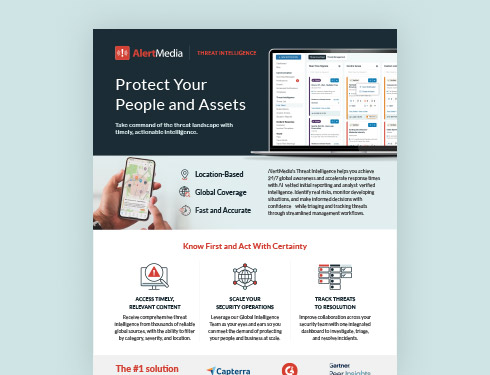
Threat Intelligence Key Feature Guide
Gain instant clarity into emerging threats with analyst-verified intelligence and AI-driven early signals.
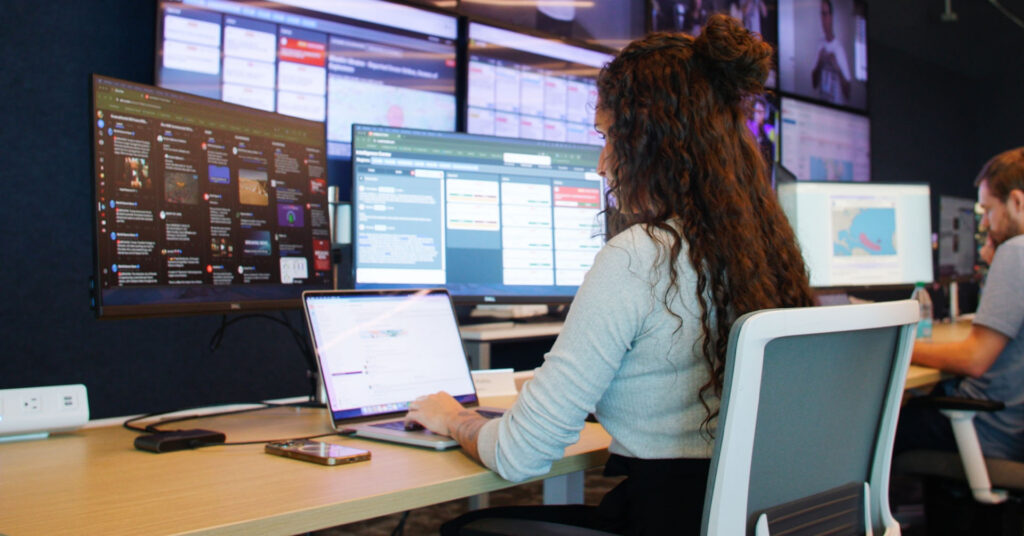
Operational resilience isn’t theoretical—it’s a regulatory and business requirement. Threat intelligence for operational resilience programs is the capability that converts a resilience framework from a document into a live operational system. Without a structured intelligence layer, BC and operational resilience teams make decisions based on news feeds, reactive reports, and informal information sharing. With analyst-verified threat intelligence integrated into the resilience program, those same teams get early warning on disruptions before they escalate, structured briefings for stakeholder reporting, and the intelligence continuity needed to activate and sustain response at scale.
Why Threat Intelligence Belongs In Your Resilience Program
From framework to live system
Business continuity and operational resilience programs define what to do when disruptions occur. But program activation depends on knowing that a disruption is coming—or has already started. Threat intelligence is the monitoring layer that keeps the resilience framework current and actionable, providing the situational awareness that drives timely activation.
Structured intelligence for governance and reporting
OpRes programs carry reporting obligations—to executive leadership, to boards, to regulators in some industries. Strategic Situation Reports (SitReps) authored by AlertMedia’s Global Intelligence Team give resilience leaders expert-level briefings on major global incidents: what is happening, what it means for operations, and what to monitor. SitReps translate raw threat data into structured intelligence appropriate for governance documentation and stakeholder communication.
Reducing mean time to activate
The gap between a disruption emerging and a resilience team activating a response is often filled with uncertainty: Is this serious? Does it affect us? What do we do first? Analyst-verified intelligence closes that gap. When the team gets a verified, contextualized signal—not raw noise—activation decisions are faster and more confident.
Protecting supply chain and operations continuity
Operational resilience extends beyond direct workforce risk to include supply chain nodes, third-party dependencies, and critical infrastructure. Threat intelligence mapped to locations, supplier sites, and operational assets gives the resilience team visibility across the full footprint of what they’re protecting.
How Threat Intelligence Supports the Operational Resilience Lifecycle
Pre-incident: continuous monitoring and early warning
AlertMedia’s Threat Intelligence monitors tens of thousands of public sources continuously—news, government advisories, weather data, and more—surfacing signals relevant to your locations, people, and assets. Real-Time Signals, the AI-vetted add-on, provides early-warning detection ahead of the full analyst-verification cycle for time-sensitive situations.
Emerging incident: analyst verification and context
When a signal becomes a developing situation, AlertMedia’s Global Intelligence Team—staffed 24/7—verifies the intelligence, assesses its organizational relevance, and provides the context the OpRes team needs to evaluate activation thresholds. This is the analyst access layer: not a chatbot, not a ticketing queue—a direct connection to human analysts trained for exactly this moment.
Active disruption: impact assessment and response integration
Real-Time Impact Assessment visualizes the threat-to-asset and threat-to-people relationship instantly on a map view—showing which facilities, supply chain nodes, or workforce populations are within a disruption’s affected area. That visualization drives faster impact scoping and more accurate resource deployment.
Response and communication: one platform, no switching
Verified threats flow directly from Threat Intelligence into AlertMedia’s Emergency Communication and Incident Response products. Resilience teams activate notifications, launch response workflows, and coordinate across functions without leaving the platform. No exports, no parallel systems, no friction in the handoff from intelligence to action.
Post-incident: documentation and program improvement
Historical threat data and incident documentation support after-action review and program improvement. Resilience programs that document how they identified, assessed, and responded to threats build stronger governance records—and stronger institutional memory for future activations.
The AlertMedia Approach to Operational Resilience Intelligence
AlertMedia is the unified risk intelligence and response platform—purpose-built to give BC and OpRes teams the intelligence layer their resilience programs have been missing. Threat Intelligence is not a standalone monitoring feed: it’s the intelligence backbone of an integrated platform that connects monitoring to assessment to response to communication in a single workflow.
Resilience program need | How AlertMedia helps |
| Continuous threat monitoring across all locations | Analyst-verified intelligence from AlertMedia’s Global Intelligence Team covers tens of thousands of sources, filtered to what’s relevant to your footprint |
| Executive and board-level intelligence briefings | Strategic Situation Reports (SitReps) authored by AlertMedia analysts—structured for governance and stakeholder communication |
| Early warning ahead of full analyst verification | Real-Time Signals premium add-on surfaces AI-vetted hyperlocal signals before the complete verification cycle—speed and rigor together |
| Impact assessment across facilities and supply chain | Real-Time Impact Assessment maps threat proximity to your locations, assets, and workforce populations on a single visual |
| Integrated activation—from intelligence to response | Verified threats flow directly into Emergency Communication and Incident Response; no platform switching at the moment of activation |
| 24/7 analyst consultation | On-Demand Analyst Access add-on connects resilience teams to AlertMedia’s Global Intelligence Team during active situations—not just business hours |
AI Across the Platform
AI is built into AlertMedia’s threat monitoring layer to help resilience teams operate at scale. Real-Time Signals uses an analyst-trained AI feed to surface hyperlocal early-warning signals. Dynamic Weather Forecasting applies AI-assisted meteorological modeling to provide localized severe weather risk—one of the most common triggers for operational continuity activation. AI scales the coverage; analyst verification is what makes each signal trustworthy enough to drive a program activation decision.
AlertMedia’s platform serves 3,500+ organizations across 150+ countries, including organizations with complex multi-site operational footprints and formal resilience programs. The platform holds SOC2 Type II, ISO 27001, GDPR, and CCPA certifications. AlertMedia earned the Gartner Peer Insights™ Customers’ Choice distinction.
Frequently Asked Questions
- What is threat intelligence for operational resilience programs? Threat intelligence for operational resilience programs is the capability that gives BC and operational resilience teams early warning on disruptions, structured intelligence for activation decisions, and the situational awareness needed to sustain response. It connects a resilience framework—which defines what to do—to a live intelligence layer that tells the team when to do it and what is actually happening. Without this connection, resilience programs operate reactively rather than proactively.
- How does threat intelligence support business continuity planning? Threat intelligence supports BC planning at two levels. Pre-incident, it provides continuous monitoring that identifies threats before they trigger activation thresholds—giving BC teams time to pre-position resources and prepare communications. During an incident, analyst-verified intelligence and real-time impact assessment give the BC team the situational picture they need to activate plans accurately and adjust them as the situation develops.
- How does AlertMedia's Threat Intelligence integrate with existing resilience frameworks? AlertMedia's platform connects to the response layer—Emergency Communication and Incident Response—in a single workflow, so the intelligence-to-activation handoff is seamless. For frameworks aligned to DRII, BCI, or ISO 22301, the threat monitoring and situational reporting capabilities map to the threat and risk assessment, business impact analysis, and response strategy components of those standards.
- Can threat intelligence help with regulatory compliance for operational resilience? Yes, in two ways. First, analyst-authored Strategic Situation Reports provide structured intelligence documentation that supports governance records and board-level reporting. Second, the integrated response and communication workflow creates an audit-ready record of how the organization identified, assessed, and responded to a disruption—the documentation regulators and internal audit functions typically require.
- How do Situation Reports support OpRes program reporting and governance? Strategic Situation Reports (SitReps) are expert-authored briefings from AlertMedia's Global Intelligence Team on major global incidents—geopolitical disruptions, natural disasters, civil unrest. They give resilience leaders a structured, contextualized view of what is happening, what it means for operations, and what to monitor. SitReps are designed for decision-making and stakeholder communication, not just awareness. They're available on-demand during major events and as scheduled briefings for program review.
- What role does AI play in threat intelligence for resilience programs? AI powers the early-warning layer of AlertMedia's Threat Intelligence through Real-Time Signals—an AI-vetted feed that surfaces hyperlocal signals before the full analyst-verification cycle completes. AI also drives Dynamic Weather Forecasting for localized severe weather risk. The defining choice in how AlertMedia uses AI: AI scales coverage and speed; AI paired with analyst verification is what makes the intelligence trustworthy enough to activate a resilience program against.
Download Our Threat Intelligence Key Feature Guide
Gain instant clarity into emerging threats with analyst-verified intelligence and AI-driven early signals.

AlertMedia, Risk Intelligence and Response