
Geopolitical tensions are rising. Is your organization prepared to respond? Read this comprehensive guide to geopolitical risk and learn how to prepare for fast-moving global disruptions.
Emergency Management Jun 05, 2026
What Is Geopolitical Risk? A Corporate Security Leader’s Guide
2026 Threat Outlook Report
Explore the top threats that impacted organizations in 2025 and how these events will shape the workplace in 2026.

For years, most organizations treated geopolitics as a finance problem. It lived in market forecasts, insurance discussions, and investor briefings. Today, it directly affects your operations, your employees, and your ability to respond during fast-moving incidents.
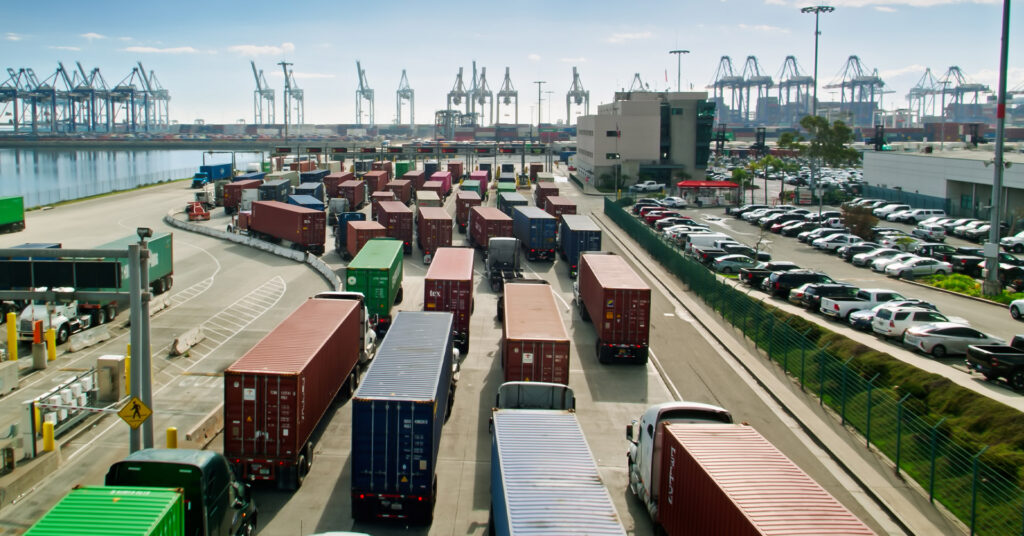
A regional conflict can delay shipments across global trade routes. New tariffs or protectionist policies can disrupt suppliers with little warning. Civil unrest can shut down transportation hubs, strand traveling employees, or create security concerns near your facilities. Even organizations far from a conflict zone can feel the operational effects within hours.
That pressure has become more visible as coordinated demonstrations and political movements spread rapidly across multiple regions at once. During a recent episode of The Employee Safety Podcast, Sara Pratley, Senior Vice President of Global Intelligence at AlertMedia, discussed the concerning trend:
“We’ve seen the number of demonstrations and protests rise significantly in recent years—really in every corner of the globe. We’ve also seen trends like these mega demonstration campaigns, where a few groups are calling for events across a multitude of cities, sometimes hundreds.”
That level of coordination creates real operational pressure for your organization. A protest can disrupt employee travel. A regional conflict can affect your suppliers or offices. A disinformation campaign can spread across social media before your team has time to verify the facts.
You no longer need offices or personnel inside a conflict zone to feel the impact of geopolitical events. The downstream effects now move faster and reach farther than many organizations expect.
In this guide, you’ll learn what geopolitical risk means for corporate security teams and how this risk management methodology differs from traditional political risk planning. You’ll also learn how to monitor threats, protect your people, and respond to rapidly changing geopolitical conditions.
2026 Threat Outlook Report
Explore the top threats that impacted organizations in 2025 and how these events will shape the workplace in 2026.
What Is Geopolitical Risk?
Geopolitics examines how geography, natural resources, and physical environments shape global power dynamics and relationships between nations. Geopolitical risk refers to the threats organizations and governments face when political events or international tensions disrupt economic activity, weaken security, interrupt supply chains, or affect business operations.
For example, rising tensions between China and Taiwan could trigger new export controls or shipping restrictions tied to national security decisions. A U.S. manufacturer that relies on Taiwan-based semiconductor suppliers may never experience the conflict directly, yet still face production delays, inventory shortages, and rising operational costs. Those disruptions can then spread through logistics networks and third-party vendors before affecting business operations across multiple countries.
Many organizations also struggle to distinguish geopolitical risk from related concepts such as political risk and country-specific risk. While the terms overlap, they focus on different types of exposure and require different response strategies. Understanding those distinctions is an important part of security convergence and enterprise risk planning.
| Geopolitical risk | Political risk | Country risk |
| Large-scale international relations or events that create cross-border operational, security, or global economic threats. | Risks tied to government actions, foreign policy decisions, or political instability within a specific jurisdiction. | The overall risk associated with operating in a specific country, including political, economic, trade flows, security, and regulatory conditions. |
| Example: Brexit-related trade disruptions are delaying shipments and affecting critical infrastructure suppliers operating between the United Kingdom and New York. | Example: Political unrest in Venezuela is causing fuel shortages and transportation disruptions, which are affecting regional business operations. | Example: A company delays expansion into Russian markets due to sanctions, corruption concerns, and the growing economic instability tied to the war in Ukraine. |
Why Geopolitical Risk Is a Corporate Security Problem
Many organizations still treat geopolitical risk as something distant. A conflict happens overseas. A protest shuts down part of a city. A trade dispute affects another industry. At first glance, none of it seems connected to your operations.
That assumption creates blind spots for corporate security teams.
Modern geopolitical risk rarely stays contained to one location or one organization. Instead, it creates dynamic risk that spreads through supply chains, transportation systems, social media platforms, and public infrastructure. You may never operate inside the original disruption zone and still experience the operational fallout days later.
For example, sanctions tied to the Russia-Ukraine war forced many European manufacturers to reevaluate suppliers, logistics routes, and energy dependencies. Tensions in the Middle East continue to affect shipping operations, employee travel, and business continuity planning across Gulf-region operations. In each case, organizations far removed from the original geopolitical event still faced operational disruption and increased pressure on security teams.
The same pattern applies at a local level. A protest near a warehouse can delay deliveries across an entire region. A transportation shutdown can strand traveling employees. False information spreading online can trigger confusion before your team has time to validate the facts.
As Sara Pratley explained during her discussion on cascading operational disruption: “A small event or something that would generally have a small impact if nothing was going on can have a very devastating impact when we’ve got high density, high emotion in all of these atmospheres.”
That’s what makes geopolitical risk a corporate security problem instead of just a political or economic concern. Your team must identify downstream impacts early, monitor how situations evolve, and prepare for disruptions that spread quickly across connected operations.
How Geopolitical Risk Is Measured
Measuring geopolitical risk is a critical step in helping your organization anticipate disruptions. Fortunately, you can draw from a wide range of established indices when building your geopolitical risk management program.
The Caldara-Iacoviello GPR Index
One of the most widely used tools for measuring geopolitical risk is the Caldara-Iacoviello Geopolitical Risk (GPR) Index, developed by economists Dario Caldara and Matteo Iacoviello. The geopolitical risk index measures geopolitical instability by tracking newspaper coverage tied to adverse geopolitical events and rising international tensions.
Rather than measuring financial losses or market volatility directly, the index tracks how often major geopolitical events appear across international media sources. Caldara and Iacoviello then use that reporting volume to identify changes in geopolitical activity over time and measure how geopolitical tensions fluctuate across different regions and periods.
The GPR Index measures activity across eight categories:
| War Threats | Rising tensions or threats of armed conflict between states or groups. |
| Peace Threats | Threats to diplomatic stability, peace agreements, or ceasefire conditions. |
| Military Buildups | Increased troop movements, military positioning, or force mobilization. |
| Nuclear Threats | Nuclear rhetoric, weapons testing, or proliferation concerns. |
| Terror Threats | Threats tied to terrorism or extremist activity. |
| Beginning of War | The formal outbreak or initiation of armed conflict. |
| Escalation of War | Intensifying military operations or expanding hostilities. |
| Terror Acts | Completed terrorist attacks or violent extremist incidents. |
The model also includes two subindexes:
- Geopolitical Threats (GPRT): Categories 1–5
- Geopolitical Acts (GPRA): Categories 6–8
Together, these measurements help analysts identify whether geopolitical tensions are building or whether active conflict and violence are already occurring.
Other indices and indicators
The GPR Index is only one part of the broader global risk management ecosystem. Different reporting models focus on different types of geopolitical exposure.
The Marsh Political Risk Report is particularly useful for organizations operating in manufacturing, logistics, energy, and supply chain-heavy industries because it focuses heavily on trade disruption, investment exposure, and regional instability.
The World Economic Forum Global Risks Report 2026 provides a broader enterprise-level view of the global risk landscape. The report examines interconnected threats such as armed conflict, misinformation, cyberattacks, climate pressures, and economic instability.
Many multinational organizations also rely on Eurasia Group analysis for region-specific geopolitical forecasting. Their reporting is commonly used by organizations with operations in Europe, the Middle East, Asia-Pacific regions, and emerging markets where political shifts can quickly affect business continuity and workforce safety.
Why corporate security teams need security-specific indicators
Traditional geopolitical indices help identify broad patterns, but they often move more slowly than modern operational threats. Corporate security teams need indicators that reflect real-world operational exposure in real time. That includes:
- Protests near facilities
- Transportation disruptions
- Executive travel threats
- Cyber campaigns
- Disinformation targeting employees or brands
- Infrastructure strain
- Localized violence near vendors or third-party partners
The challenge becomes even more difficult when false information spreads during periods of heightened geopolitical tension. Sara Pratley described a rapidly spreading false report claiming an Iranian soccer player had joined the Iranian army. Although the player’s agent quickly denied the claim, the story spread rapidly across social media amid heightened tensions in Iran and increased global attention on the World Cup.
The incident highlights a growing challenge for security teams: AI-driven misinformation and fast-moving geopolitical narratives often spread faster than traditional geopolitical indices and disinformation security efforts can track. That’s why organizations increasingly combine long-term geopolitical analysis with real-time monitoring, threat intelligence, and operational reporting.
Get Expert Advice on the Threats to Expect in 2026
A Four-Pillar Framework for Managing Geopolitical Risk
You need to assess geopolitical risk from multiple angles. A strong program combines proactive intelligence, cyber-physical integration, supply chain awareness, and workforce protection, enabling your organization to respond to fast-changing threats without losing operational visibility.
| Proactive intelligence and monitoring | Supply chain awareness | Cyber-physical integration | Workforce and executive protection |
|
|
|
|
1. Identifying geopolitical threats before they escalate
Proactive intelligence gives your organization time to respond before geopolitical threats create operational disruption. Your team needs to identify credible threats quickly, validate information accurately, and escalate meaningful risks before they affect employees, facilities, or business operations.
Throughout her discussion of geopolitical instability, Pratley repeatedly returned to a principle familiar to many security professionals: “trust, but verify.” Security teams now process an overwhelming amount of information every day, and only a small portion of it represents a legitimate threat to your organization.
As Pratley explained:
“It’s trust, and it’s also validation. If our teams are seeing information, really looking at the credibility, really looking towards verification so that we understand the truth, that can help to drive our decision-making with our employees.”
That risk intelligence process has become more difficult as AI accelerates the speed and quality of cyber threats and disinformation campaigns. Threat actors can now generate highly convincing phishing emails, cloned branding, fake alerts, and fabricated reports within minutes. False information also spreads rapidly across social media platforms during periods of political tension or active conflict.
Your monitoring capabilities need to keep pace with those threats.
Strong programs combine experienced analysts with intelligent monitoring tools that surface emerging geopolitical events, identify operational exposure, and track rapidly spreading narratives in real time. They also establish trusted communication channels early so employees know where to find verified information during fast-moving situations.
2. Understanding downstream operational exposure
Geopolitical events can disrupt your operations long before they directly affect your facilities or employees. Delayed shipments, border slowdowns, regional instability, and transportation bottlenecks often create the first signs of operational strain.
That’s why supply chain awareness is important for geopolitical risk management.
Security teams need visibility into how geopolitical events could affect vendors, logistics routes, regional partners, and critical operational dependencies. A disruption involving a single supplier or transportation hub can quickly ripple downstream across multiple business units and locations.
Timing also matters.
During her discussion on the tensions surrounding the 2026 World Cup, Pratley pointed to upcoming U.S.-Mexico-Canada trade agreement discussions as a potential flashpoint occurring at the same time as one of the world’s largest international events. Increased travel, heightened political attention, and regional demonstrations all create additional operational pressure during already sensitive negotiations.
For corporate security teams, situations like these reinforce the importance of monitoring geopolitical developments alongside operational dependencies. A transportation disruption, labor protest, or regional security incident may require adjustments to your broader incident management plan long before it escalates into a full operational crisis.
Strong programs continuously assess where geopolitical instability could create bottlenecks or concentrated exposure across the organization. That awareness gives security leaders more time to coordinate response efforts, communicate with stakeholders, and reduce operational disruption before problems spread across the business.
3. Cyber-physical integration in volatile regions
Geopolitical instability rarely stays confined to a single type of threat. Physical disruptions and digital activity now feed into each other constantly. A protest can spread through encrypted messaging platforms before it reaches the streets. False information online can increase tensions around facilities, transportation hubs, or public gathering spaces within hours.
That overlap creates a major challenge for security teams operating across volatile regions.
When discussing large-scale global events, Sara Pratley explained that organizations often focus most of their security resources on primary facilities and highly visible locations. The greater exposure risk, however, often arises in the surrounding operational environment—places with large crowds, weaker security controls, and limited visibility into monitoring.
As Pratley noted, “It’s really the locations beyond the main sites that I think could have the biggest exposure… we’re going to see in some cases less security and potential gaps there.”
For many organizations, those secondary locations include hotels, transit corridors, vendor facilities, temporary worksites, distribution centers, and employee gathering areas. Threat actors increasingly use digital platforms to coordinate activity within those spaces, making it important for security teams to monitor cyber and physical threats together rather than treating them as separate operational issues.
Strong cyber-physical integration improves situational awareness across your entire operational footprint. It also helps your team identify escalation patterns earlier so you can respond faster when geopolitical tensions begin affecting employees, facilities, travel routes, or third-party operations.
4. Strengthening workforce protection during global instability
During her discussion on geopolitical instability surrounding the 2026 World Cup, Sara Pratley pointed to the violence that erupted in parts of Mexico following the killing of a major cartel leader. Although conditions stabilized relatively quickly, the incident still prompted renewed discussions among FIFA officials and Mexican authorities on security planning and regional preparedness.
The situation highlights how quickly localized geopolitical events can affect workforce safety and executive movement far beyond the original incident area. A sudden outbreak of violence may force organizations to reevaluate travel plans, adjust staffing decisions, reroute transportation, or increase security coverage for employees operating in the area.
Strong workforce protection programs account for those rapidly changing conditions before employees arrive on site. That includes:
- Monitoring regional instability before travel begins
- Tracking disruptions affecting hotels, transportation, and public infrastructure
- Adjusting travel guidance as conditions change
- Establishing emergency communication procedures for traveling personnel
- Coordinating evacuation or shelter-in-place planning when needed
The same principles apply to corporate executive protection programs. Executives often face increased exposure during periods of geopolitical instability, driven by heightened public visibility, predictable travel patterns, and participation in high-profile meetings or events.
Security teams should continuously reassess executive travel routes and accommodations, as well as transportation providers and public-facing activities, as geopolitical conditions change. A location considered low risk one week may require a very different security posture days later, after protests, political unrest, or localized violence emerge.
Organizations that treat workforce protection as an ongoing intelligence function instead of a reactive process place themselves in a much stronger position to respond when geopolitical conditions shift unexpectedly.
Operationalizing the Framework
Pratley summarized the right approach to building a geopolitical risk management program succinctly:
“Look closely at the timing and locations involved. Map your assets and operational exposure, develop region-specific contingency plans, establish a trusted source of information, and prepare communication templates before an incident occurs.”
Each part of that framework helps security teams translate geopolitical intelligence into practical operational planning.
Conduct a geopolitical vulnerability audit
Start by identifying where geopolitical instability could affect your organization most directly. Map your offices and facilities along with key vendors, executives, travelers, and operational dependencies against regions with elevated geopolitical exposure.
This audit should look beyond countries where your organization has a formal presence. A team may not have an office in Latin America, for example, yet still rely on suppliers, shipping routes, outsourced services, or executive travel connected to the region. Disruptions to global trade, sudden tariff increases, shifts in monetary policy, and volatility in financial markets can still affect operations and decision-making.
You should also evaluate nearby transportation hubs and hotels, as well as public gathering areas or third-party operations that could create indirect disruption risks during periods of instability. This process helps your team identify concentrated exposure before a crisis begins. It also provides security leaders with a stronger foundation for preparedness initiatives, such as traveler briefings, vendor contingency planning, executive protection planning, and business continuity updates.
Define risk appetites and tripwires
Your organization should establish clear geopolitical tripwires that define when changing conditions require operational changes or leadership escalation. A tripwire is a predefined threshold tied to a specific event, intelligence indicator, or operational disruption that automatically triggers a response from your organization. Without defined tripwires, teams often waste valuable time debating whether a situation is serious enough to act on.
Examples of geopolitical tripwires may include:
- Demonstrations within a certain distance of a facility triggering enhanced monitoring or additional security staffing
- Escalating regional violence pausing executive travel or requiring security escorts for essential personnel
- Transportation disruptions activate remote work contingencies before employees become stranded
- Cyber campaigns targeting employees or executives trigger immediate internal communications and increased monitoring from IT and security teams
- Internet or cellular disruptions affecting traveler accountability procedures in high-risk regions
- Government sanctions or export controls forcing supply chain reviews and vendor reassessments
Strong tripwire frameworks should also define who makes decisions, how escalation occurs, and what operational actions follow once thresholds are met. That structure helps your organization respond consistently during periods of uncertainty, rather than relying on improvised decision-making under pressure.
Establish a source of truth
Employees need to know exactly where verified information will come from during a geopolitical incident. Without a clearly defined source of truth, teams may rely on conflicting reports from social media or breaking news while conditions continue changing in real time.
Your organization should establish a centralized authority responsible for validating information and distributing updates during high-pressure situations. That responsibility may sit with your security operations center, your crisis management team, or your corporate communications function. What matters most is consistency. Employees should immediately recognize which updates are verified, who is responsible for sharing them, and where to look as conditions change.
Clear communication structures help reduce confusion, strengthen employee trust, and limit misinformation during rapidly developing geopolitical events.
Pre-build communication templates
Fast-moving geopolitical incidents leave little time to draft communications from scratch. Security and communications teams often need to issue updates while conditions are still developing and facts remain incomplete.
Pre-built communication templates help your organization respond faster during geopolitical incidents. Templates should match the communication channels employees already use. They should also provide separate guidance for different groups within your organization. Travelers may need accountability instructions, while executives may require security guidance, and regional leaders may need operational updates.
Preparation also improves message consistency across business units and geographic regions. That becomes especially important during multinational incidents when employees may receive conflicting information from local media or government agencies before your organization has time to issue formal guidance.
Run tabletop exercises for high-probability scenarios
A strong geopolitical tabletop exercise brings together stakeholders from security, HR, communications, legal, IT, travel management, and executive leadership to walk through how the organization would respond as conditions escalate. Facilitators should introduce new developments throughout the exercise, forcing teams to make decisions with incomplete information.
The goal is not to “win” the exercise. It is to identify operational gaps, clarify responsibilities, and improve coordination under pressure.
Example geopolitical tabletop exercise scenarios
The examples below can be adapted to create your own tabletop exercise focused on threats stemming from geopolitics.
| Regional conflict and employee evacuation | |
| Rising tensions between Iran and neighboring countries escalate into military strikes near a major commercial corridor used by your organization’s regional partners. Within hours, airlines suspend flights, governments issue travel advisories, and employees in nearby offices begin requesting evacuation support. | During the exercise, teams must determine:
|
| Facilitators can escalate the scenario by introducing cyberattacks against transportation infrastructure or localized protests outside company facilities. | |
| Tariffs and supply chain disruption | |
| The United States announces new tariffs tied to rising protectionism and shifting trade policies affecting imported technology components from multiple international markets, including Brazil and parts of Southeast Asia. Within days, private-sector suppliers begin warning of shipment delays, rising costs, and inventory shortages. | Exercise participants must evaluate:
|
| To escalate the scenario, facilitators can introduce rapid rate changes or judicial decisions that stall implementation for certain goods and services. | |
| Climate change, civil unrest, and infrastructure failure | |
| Severe flooding linked to climate change affects multiple regions simultaneously, including parts of Brazil and the eastern Mediterranean near Syria. Ports critical to global trade experience shutdowns, public demonstrations intensify over government response efforts and sustainability initiatives, and rolling power outages begin affecting transportation and communications infrastructure. The disruptions also create growing ESG concerns tied to supply chain resilience, operational continuity, and regional humanitarian impacts. | During the exercise, participants must evaluate:
|
| Scenario escalations here could involve key communications hubs shutting down or losing communication with key personnel in affected regions. | |
Building Leadership Buy-In for Geopolitical Risk Programs
Even the strongest geopolitical risk management program will struggle without leadership support. Security teams need executive stakeholders to understand how geopolitical instability could affect operations, employees, travel, facilities, and business continuity before a major disruption occurs.
That starts with communication.
“Sharing and creating awareness early is important: Here’s what we have. Here are the questions we’re asking. And this is why I’m bringing this to you. Because if this evolves, here are the impacts that we foresee.”
That approach helps leadership teams understand both the current situation and the potential operational consequences without overstating the threat.
Strong security programs typically follow three communication principles during geopolitical events:
- Communicate early so leadership teams have time to prepare for possible operational impacts
- Be transparent about uncertainty, verification status, and information gaps as situations evolve
- Update stakeholders continuously as new intelligence, operational risks, or regional disruptions emerge
This type of communication builds trust between security teams and executive leadership while improving organizational readiness during fast-moving geopolitical events.
KPIs for Geopolitical Resilience
Tracking the right metrics helps your organization measure how effectively it identifies geopolitical threats and responds when conditions change. Strong geopolitical resilience KPIs should focus on operational readiness and workforce safety while also measuring response coordination and decision-making speed. These metrics provide a clearer picture of real-world preparedness than purely technical security measurements alone.
| KPI | What It Measures | Formula |
| Threat Escalation Time | How quickly security teams escalate credible geopolitical threats to leadership or response teams | Total time from threat identification to escalation ÷ total number of escalated incidents |
| Employee Acknowledgment Rate | How effectively employees receive and confirm emergency communications during geopolitical events | Total employee acknowledgments ÷ total notifications sent × 100 |
| Travel Disruption Response Time | How quickly the organization adjusts travel guidance or protective measures after a geopolitical disruption | Total response time for travel-related incidents ÷ total number of travel incidents |
| Geopolitical Exercise Completion Rate | How consistently teams complete geopolitical tabletop exercises and preparedness activities | Completed exercises ÷ planned exercises × 100 |
| Facility Impact Rate | How often geopolitical events disrupt facility operations, access, or staffing | Total impacted facilities ÷ total monitored facilities × 100 |
| Regional Risk Assessment Coverage | How much of the organization’s operational footprint receives active geopolitical risk assessment | Assessed locations ÷ total operational locations × 100 |
| Executive Travel Risk Review Rate | How consistently executive travel receives security review before departure | Reviewed executive trips ÷ total executive trips × 100 |
| Incident Communication Speed | How quickly employees receive official communications after a confirmed geopolitical event | Total communication delivery time ÷ total geopolitical incidents |
Preparing for the Next Era of Geopolitical Risk
Geopolitical instability will continue creating operational pressure for organizations across every industry. Conflicts, demonstrations, cyber campaigns, disinformation, and regional instability now spread faster and affect more organizations than ever before.
That reality makes proactive geopolitical risk management an important part of every modern crisis management plan.
Corporate security teams can no longer rely on reactive decision-making or broad headline monitoring during fast-moving events. They need vetted, attributable, and contextualized intelligence that helps leadership teams understand how geopolitical developments could affect employees, facilities, travel operations, supply chains, and business continuity.
Organizations that build those capabilities early place themselves in a much stronger position to identify threats sooner, communicate more effectively, and respond with greater confidence as geopolitical conditions change rapidly.
2026 Threat Outlook Report
Explore the top threats that impacted organizations in 2025 and how these events will shape the workplace in 2026.

AlertMedia, Risk Intelligence and Response