
The devastating earthquake in Ishikawa Prefecture, Japan, serves as a stark reminder of how important an earthquake response plan and emergency plan can be. By understanding how companies weathered this disaster, the examples can inform your own earthquake response planning.

Emergency Management Apr 29, 2026
How to Create an Earthquake Emergency Plan and Response Plan
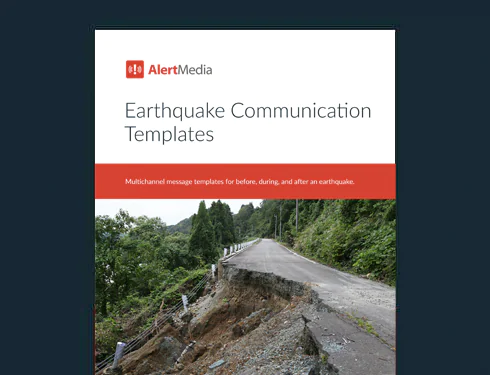
Earthquake Communication Templates
Use these multichannel templates to communicate with employees before, during, and after an earthquake.
On the first day of 2024, a major earthquake, measuring 7.5 on the Richter scale, struck Ishikawa Prefecture in Japan, leaving in its wake more than 1,200 aftershocks. The Noto earthquake resulted in tragic loss of life, with hundreds of casualties and extensive damage, and caused profound disruption to infrastructure and daily life. However, many of the factories and vital businesses in the region were able to resume operations quickly, sometimes within a week of the quake, even as many crucial suppliers and routes were disrupted. These companies leveraged emergency plans for earthquakes to prepare for the disaster before it hit.
Whether earthquakes are a common threat or a rare risk for your business, having an earthquake emergency plan and response plan can make a meaningful difference in preventing injuries, confusion, and prolonged outages. We can review what the companies in Japan did to understand how earthquake preparedness mitigates the damage these disasters can cause.
Download Our Earthquake Communication Templates
Use these multichannel templates to communicate with employees before, during, and after an earthquake.
What Is an Earthquake Response Plan?
An earthquake response plan is a documented set of procedures that helps an organization protect people, communicate clearly, evaluate hazards, and restore operations after an earthquake. It should work alongside a broader earthquake emergency plan that includes prevention, preparedness, response, evacuation, shelter-in-place, and recovery steps.
Start Your Earthquake Response Plan With a Risk Assessment
In the wake of the Noto earthquake, Medaka Kotsu, a transportation company providing charter and school buses, recognized the urgency to resume transportation promptly. Bus services are a critical part of a city’s infrastructure, making it essential to restore operations swiftly after a disaster. The company conducted a risk assessment as part of its business continuity planning, including communication plans, employee safety checks, and overall business management. This assessment enabled Medaka Kotsu to identify potential issues, ensuring not only the resumption of bus services but also securing the required cash flow for ongoing operations if needed.
An earthquake risk assessment involves stakeholders collaborating to identify vulnerabilities, assess potential impacts, and formulate effective strategies for mitigating earthquake risks. A strong risk assessment should also account for location-specific threats, including whether facilities are in earthquake country, near fault lines, close to overpasses, or dependent on vulnerable water lines, roads, utilities, or suppliers. With the risks laid out, the enterprise can then categorize its response to each one.
EliminateThe best way to prevent a threat is to eliminate it. In earthquake preparedness, this may include removing unstable bookshelves, breakable items, or other heavy objects that could fall and cause harm. | MitigateIn mitigation, the threat can’t be avoided, so you’ll have to reduce the risk itself. An example for an earthquake might include someone putting a brace on bookcases to keep them stable, rather than removing them entirely. | AssignSome threats can be mitigated, but still pose a serious risk, like a gas leak following the earthquake. In this case, you’d assign a responsible party to handle the emergency evacuation plan and report injured people, hazardous materials, or other impacts. |
Past events can also be a good indicator of how to respond to future ones. Of the 13 factories that operated within the Hokuriku region during the Noto earthquake, 10 had returned to operations within a month. This rapid turnaround is likely due to the region being an earthquake-prone one. The businesses that operate there know the importance of having an emergency plan for earthquakes and have clean-up measures well-rehearsed.
Get Ready-to-Use Earthquake Communication Templates
How Can You Establish a Strong Earthquake Communication Plan?
Effective communication is crucial for guiding employees through sudden and destructive events like earthquakes. Follow these five steps to create streamlined information sharing.
- Tailor communication for your audience: Customize messages for different stakeholders, addressing the specific needs of security teams, remote employees or those with disabilities, executives, and the entire workforce. Post-earthquake, provide targeted emergency information to relevant groups, such as the cybersecurity team.
- Establish an emergency communication team: Assign individuals or a dedicated team to manage your communication strategy, information dissemination, and after-action reporting. Designate roles such as group admins, emergency responders, information officers, and spokespersons for a coordinated response.
- Integrate communication with crisis planning: Include communication plans in broader emergency response plans. Collaborate with stakeholders, reviewing and updating plans through emergency drills. Ensure everyone understands their roles and responsibilities.
- Prepare message scripts: Develop clear and concise messaging templates for various phases of the event. Consider communication mediums like text, email, and voice. Tailor notification templates for specific audiences, keeping them short and easy to understand. Earthquake communication templates should cover the main shock, aftershocks, evacuation instructions, shelter-in-place updates, injured people, facility closures, and all-clear messages.
- Invest in emergency communication technology: Incorporate emergency mass notification software for efficient information distribution. Ensure two-way communication to account for individuals during and after emergencies and confirm who is safe, who needs assistance, and whether employees are affected by damaged roads, streetlights, utilities, or water lines. Finally, implement a threat monitoring system using real-time data to proactively warn employees about potential threats.
Store Emergency Supply Kits
Emergency supplies become critical if workers must either shelter in place or evacuate. Having the right resources on hand ensures their safety and well-being during unforeseen circumstances. Here’s a list of essential items to help workers navigate and cope with challenges arising from unexpected events.
Set Earthquake Evacuation and Shelter-in-Place Protocols
One big mistake a lot of businesses make when setting up an emergency plan for earthquakes is to take an evacuation-first approach. In some cases, evacuations are not the best option as they could put otherwise safe individuals in the path of hazards.
After the immediate danger, there may be falling heavy objects, downed power lines, debris in evacuation routes, and other dangers. Meanwhile, the environmental health inside the building may be capable of keeping workers safe for hours or days as they await emergency services. Enterprises need procedures in place for when to evacuate, versus when to shelter in place, so workers can shift their response as needed.
Your earthquake response plan should also clarify when employees should avoid or use elevators, move away from overpasses or exterior walls, and wait for confirmation that evacuation routes are safe.
Evacuate
| Shelter in place
|
Conduct Earthquake Safety Training
Of the 13 factories operating within the Hokuriku region during the Noto earthquake, 10 had resumed operations within a month. One was in operation within a week. Takayama Reed Co., a major producer of reeds crucial to the textile industry, was able to get operations up and running thanks to strong disaster planning. Immediately after the natural disaster, company President Toru Takayama swiftly confirmed the safety of their 85 employees and implemented a recovery task force, closely following the company’s earthquake plan. Ensuring that each individual within that task force knew what to do and how to execute their duties was critical for Takayama Reed Co.’s rapid recovery.
The same level of emergency preparedness was evident at Medaka Kotsu, which resumed operations just two days after the major earthquake. President Ryuichi Hoshiba credited the simulations they went through while developing their business continuity plan. He highlighted these simulations as a key component in helping them address gaps, not just in training but also in the plan itself. Executing realistic earthquake drills or tabletop exercises is critical to helping the team test their response and iterate. It also plays a vital role in instilling proper drop, cover, and hold-on procedures in employees.
In earthquake safety protocols, “drop, cover, and hold on” is a widely recommended set of actions to protect oneself during an earthquake. Employees are trained to drop to the ground, take cover under a sturdy table, piece of furniture, or against an interior wall, and hold on until the shaking stops. This practice helps reduce the risk of injury from falling objects and potential hazards during seismic events. Implementing and practicing such procedures is essential for the overall safety and preparedness of employees in the face of earthquakes.
In short, earthquake tabletop exercises help you test your plan for gaps, while earthquake drill procedures test your workforce’s individual response. Conducting both types of training helps to embed strong responses in times of crisis.
Document, Test, and Improve Your Earthquake Response Plan
The final stage of creating a plan for an earthquake emergency is to document and improve. In the example from the transportation company, Medaka Kotsu, they discovered a serious financial risk that could have hindered their recovery, but for their BCP.
Leadership realized that the company might need outside funding to continue supporting operations in the months following recovery when revenue was down. Reviewing this made them aware that it was likely they could run out of funding. The company worked out methods for obtaining loans, allowing it to support long-term recovery without disrupting its immediate response.
It was the documentation process itself that helped them discover the gap and improve the plan. Companies can formalize this documentation process with an after-action report (AAR). In the event of an earthquake, the plan is executed. The company then engages in an AAR, a structured process of reviewing what happened during and after the event. This includes assessing the effectiveness of the implemented plan, identifying any gaps or areas for improvement, and documenting lessons learned.
Learn a step-by-step framework for developing an after action report to ensure your organization is prepared for any emergency scenario.

Earthquake Response Plan Checklist
Use this earthquake response plan checklist to confirm your organization has covered the essentials:
- Complete an earthquake risk assessment
- Secure bookcases, equipment, cabinets, and hazardous materials
- Create emergency communication templates for employees, leaders, and responders
- Define evacuation and shelter-in-place triggers
- Identify safe places inside each facility
- Stock emergency supplies such as water, sturdy shoes, first aid kits, extra batteries, and a battery-powered radio
- Include procedures for employees and visitors with disabilities
- Train employees on “drop, cover, and hold on”
- Run earthquake drills, tabletop exercises, or ShakeOut-style exercises
- Review lessons learned and update the plan after each exercise or event
Build a Strong Foundation
A strong earthquake emergency plan and response plan is built on a proven foundation: risk assessment, clear communication, employee training, documented procedures, and regular improvement. The companies that were able to recover from the Noto earthquake and its aftershocks were the ones that followed proven BCP strategies and had measures in place to ensure employee safety. Templates can be great tools for making sure all the gaps are filled. Download our emergency response plan template to create strategies that adapt to any emergency.
Download Our Earthquake Communication Templates
Use these multichannel templates to communicate with employees before, during, and after an earthquake.

AlertMedia, Risk Intelligence and Response



![11 Steps to Creating an Effective Emergency Response Plan [+ Template]](https://www.alertmedia.com/wp-content/uploads/2023/10/Blog-Emergency-Response-Plan.webp)