Walmart’s Approach to Strengthening Community Resilience
When disaster strikes, Walmart is there. With 90% of the U.S. population living within 10 miles of a Walmart, every disaster is local. That philosophy is just one reason why communities rely on Walmart before, during, and after emergencies.
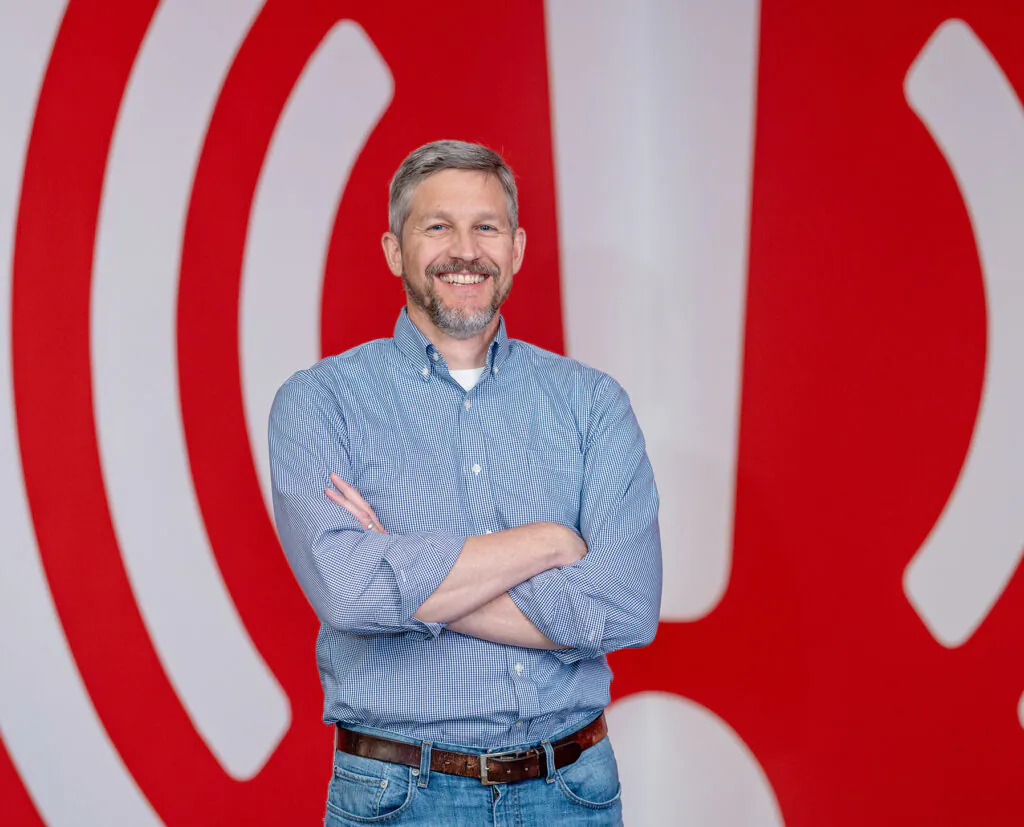
Brooks Nelson, Director of Strategic Initiatives at Walmart, shares how the company mobilizes its people, resources, and partnerships to support communities when they need it most. Drawing on more than 15 years of experience, Brooks offers practical lessons businesses of all sizes and industries can apply to help strengthen community resilience.
Walmart’s strategies include:
- Preparing associates and stores for severe weather and other emergencies
- Building relationships with local emergency managers before disasters strike
- Transforming store parking lots into emergency resource centers
- Applying lessons from past disasters to improve future recovery efforts
Transcript
(Automatically transcribed)Peter Steinfeld: Walmart has more than 10,000 locations worldwide and is a household name.
But what many people don’t realize is how the company supports communities before, during, and after disasters.
Brooks Nelson is Walmart’s Director of Strategic Initiatives, with more than 15 years of experience in community resilience.
Today he shares how Walmart puts its people, resources, and partnerships to work when communities need them most.
Brooks, thanks for being here.
Brooks Nelson: Thank you for having me, Peter.
It’s an honor to be here.
Peter Steinfeld: You know, I’ve always found it really interesting how a business can become such an important part of a community’s response to disaster, sometimes in ways that people just wouldn’t expect.
And Walmart really has an interesting perspective because of just how many communities that you’re part of.
So when a disaster threatens a community, how does Walmart approach supporting its associates, its customers, and the broader community in general?
Brooks Nelson: Yeah, I mean, I think you tee up that question.
Great, because that’s exactly how we think about it.
We think about taking care of our people first.
What do they need?
How do they need to be supported?
We think about our businesses and how we get our stores back up and running for our customers because we know that they’re going to need us to be open and ready to serve them both before but after a disaster.
And then we think about the community.
What does the community need?
Where are the gaps?
Where are the services that Walmart can support and provide?
So we really think about it with that lens and how do we leverage all of the different resources that we have as a company?
You know, disaster is such a key issue for us because 90% of the US population lives within 10 miles of a Walmart.
And so every disaster is local, which means every disaster impacts our associates and our communities.
So, so we really think through how do we partner with our supply chain and logistics team to get the merchandise that the community needs.
How do we partner with local government affairs and municipalities to support their recovery efforts?
And how do we build the infrastructure needed in those communities to really think about how to prepare before the disaster, but then also what they need to recover?
Peter Steinfeld: Yeah, it seems like there’s a lot of work that has to go into it ahead of time.
And so much of the attention goes to what happens, like during a disaster or after it.
But how is one Walmart helping communities prepare before one occurs?
Brooks Nelson: Yeah, we use the exact same lens.
It’s about our associates, our operations, and then the community.
From an associate piece, we think about what are the tools and the information that they need to think about preparing themselves at home.
But then also, how do the stores prepare in advance of the disaster?
We run exercises with them, we have checklists with the stores so they know when a storm is about to come.
How do we prepare that store and mitigate that store to sustain any impacts from the disaster?
So to my point earlier, we can get that store back up and running as quickly as possible.
But then on the community side, and this is really where I sit in, so I sit within the Walmart foundation and get to leverage our Walmart giving around disaster preparedness and response.
And so we’re working with communities in vulnerable populations that we know are going to get impacted in the future by disasters.
And thinking through how do we provide the capacity, the technical assistance, the support that those communities need through different nonprofit partners and community partners to help those communities think about hazard mitigation, disaster planning.
Where are there gaps in their plans?
Where are there opportunities to build projects, seek investment opportunities to be better prepared?
We leverage our philanthropic dollars to support that.
But then we also think about it from our business side as well.
We’re working on expanding within our distribution chain.
Where do we have more disaster recovery products positioned across the US to make sure that we’re responding as quickly as possible?
You know, we already do a great job of educating our associates, but how do we think even broader when it comes to preparedness and the resources that we provide?
And so I think we’re only as good at responding to disasters as the amount of time we invest in the preparedness.
Peter Steinfeld: That’s a really, really great way to say that.
Now, as I think about the size of Walmart, you guys have over 2 million associates, a lot of them, who are really deeply connected to their local communities.
And those communities can all be very different.
So how do you approach preparedness across such a large and diverse workforce?
Brooks Nelson: It’s something that we think about continuously because our associates are part of the community.
So their preparedness also helps enforce the community preparedness.
You know, we focus on the messaging and the different communication channels that we have to get preparedness messaging out to our associates.
We’ve also been developing community champions in our stores who are embedded in the community.
They know their community.
Many of our store operators are store managers, are obviously a part of the community, and they’re often a pillar of that community.
They’ve been in the community for many, many years, and they have the relationships built with local emergency management, with the sheriff’s office, with the mayor.
We’re really encouraging them to coordinate in advance of the disaster so that they know the different individuals to reach out to, they already know what the ecosystem is going to look like in that community.
We also just wrapped up National Preparedness Month in September.
With that, we had a big campaign around pushing this information out not only to our associates, but also to our customers as well, through online and in store, identifying the different products that are available to them to help them think about individual preparedness and household preparedness.
And I think this is going to turn into an always on campaign.
We know each region has different hazards that they’re working through.
And so, you know, in wildfire regions we have different products staged versus in flooding or hurricane zones.
And so we try to tailor the messaging as well as the products that are available to our associates and our customers based on the risks that we know that they’re going to face.
But some of it is also universal as well.
I mean, I think some of the same actions they can take, some of the same information that we can share with them is universal across both our millions of associates across the US but then globally as well.
Peter Steinfeld: You know, when you say all this, what I’m hearing is it’s just a good business practice because organizations shouldn’t just be able to operate when things are perfect.
When things are good, you gotta have resiliency built into the system.
And people need to be able to operate when things are not optimal or really not optimal at all.
And it sounds like you train all your people to think that way so they can keep the business running when things aren’t good.
Brooks Nelson: Yeah, that’s 100% correct.
I think what makes Walmart such a special place to work and such a special company is our individual people.
We are people led and tech powered.
And so how we empower our associates with the tech resources that we provide, how we’re sharing information and all the different ways that they need to receive it, but also knowing that it’s the individual relationships at that local level and the communities that we build through our associates help strengthen the community resilience within that community.
Peter Steinfeld: Speaking of all those communities like we talked about before, there’s so many of them and they’re different.
How do you actually coordinate a response when a major disaster affects multiple locations at once?
Brooks Nelson: Well, I think you hit the nail on the head with coordination.
It really is about coordinating across and it’s something that unfortunately Walmart has a lot of experience in.
We have really been growing our disaster work since Hurricane Katrina.
We were one of the first companies on the ground supporting communities even before the federal government could get in.
So it really helped spark for us.
Like we have this superpower.
We have our presence in local communities and we have our store managers have the agency to support their community when they know it’s needed best.
But we also have this infrastructure at the national and global level that we can then support them.
And so we have our Global Security Operations Center.
And So they are on 247 managing different risks to the company, different risks to the community.
But when a major disaster happens, we are activated.
We have 10 emergency support functions that are there to support our associates, our customers, and then the community.
And so I sit there in the Global Security Operations center when we’re activated, I support our community support function.
But our support functions start with our people, our operations, supply chain, merchandising, asset protection, government affairs, community relations, and everything in between.
We’re used to coordinating across our markets, our regions, and even at the total business units.
I think Hurricane Helene and Milton is a great example for us.
It was multiple states in regions where we have a lot of presence and a lot of associates.
And so we are coordinating with all of the different government affairs teams, all the local community partners, our business partners, to really understand what has been the impact on our associates.
And then how do we best serve.
We really think about how do we leverage all of the assets of our business, which includes our physical footprint in those communities.
So we think about how do we leverage our parking lots as a convening space, how do we provide resources to the community and the parking lots.
So just given the expanse of that specific disaster, we actually had over 100 events happening in parking lots across six states after Helene and Milton.
So we’re providing water donation events.
We may be partnering with the local food bank to provide food boxes.
We have partnerships with three organizations that have Walmart branded assets that deploy to provide laundry and shower services, charging and wi fi feeding operations.
We really think through what are the needs that we are best equipped to support the community at that time, and how do we help them bring some normalcy back to life.
But to come back to your question, it’s really about the coordination.
We could not do this without all the people who are in our operation center, who are working with each of their stakeholders to make sure that we have the best information we can get to then respond correctly.
Peter Steinfeld: Yeah, and it seems like every situation can be different.
So you do rely on those local folks to have this situational fluency to know what they need to do for this situation.
For example, I remember being involved in Hurricane Harvey.
I drove into the storm.
I Got trapped in Houston for like a week.
Couldn’t get out.
But that also meant trucks couldn’t get in.
And I remember going to.
I was able to make my way to a Walmart.
I remember standing outside.
They very diligently let only like, I think it was like 150 or 250 people at the store at a time.
But the employees were able to make it there.
They were able to help people.
They were rationing what you could buy so people didn’t buy too much.
It was a well coordinated effort.
And then things started popping up in the parking lot to help as the trucks were able to now start finding ways in.
It was phenomenal how you guys responded to that.
Brooks Nelson: Oh, thank you.
Peter Steinfeld: I’m sure you’ve heard a million stories like mine.
Since you’ve been involved in disaster response for more than 15 years, is there a particular experience that really stands out because of how your team had to adapt to the situation?
Brooks Nelson: We think very reflectively on each disaster and how it helps us improve for the next disaster.
So I’ll start with Hurricane Ida in Louisiana.
Our store there in Houma was closed for quite some time, but.
But again, we leveraged our physical footprint in our parking lot to set up a resource center.
We had feeding operations for three weeks, I believe, going on.
We had the shower trailers.
And these were all through kind of ad hoc partnerships.
But it was really that disaster that led us to this more developed parking lot activation that we now have standardized, we have invested in, and we now deploy frequently.
After the flooding in eastern Kentucky, because we had such strong relationships with local government partners, we understood that the community health authorities were really concerned about the vaccinations and the different diseases that can come with flooding, tetanus and so forth, hepatitis.
And they honestly had run out of vaccinations.
But because of Walmart’s power with our suppliers and our health and wellness business, we were able to procure the vaccinations they needed.
We donated them to the community, and we even leveraged our technicians to help administer the vaccinations.
After Helene and Milton, we were having trouble getting a hold of all of our associates because of power outages, because we had associates living in the haulers in the mountains, and we were able to work with a local nonprofit who used donkeys to get into the mountains and help us find our associates.
And so you just think of all the different creative ways that you can meet the needs and support the communities.
In that same disaster.
We were working closely with a Red Cross shelter and wing, which is one of our drone supporters to get product from our store to the Red Cross shelter through the drone.
We like to talk about Helena Milton was everything from donkeys to drowns.
Peter Steinfeld: Yeah, I never would have thought about using donkeys.
That’s a fantastic story.
And it speaks to that situational fluency where people see what resources they have at their disposal during a particular emergency and then use them appropriately.
Any other unique examples that you can share?
Brooks Nelson: Yeah, I think another really recent one.
You know, West Virginia has experienced historic flooding last couple of years, especially in the haulers.
And we talk about how our local associates are really leaders in those communities and they know what to do in response to the disaster.
So when the community of Buckhannon was.
Saw the flooding coming in, they had, I believe it was three minutes between when the rain started to.
When floodwater came up to the store doors.
And so it trapped some of our customers in, our associates in.
And so thankfully, our asset protection lead at that store stepped in and took care of the community because it’s what our associates do.
It was to the point where they ended up having to spend the night in the store.
And so she was pulling out air mattresses and bedding, she took out the grill and started cooking for the folks there.
It lends to the heart and agency that we as a company continue to instill in our associates, all the way down to our associates in the store who know that we are here to protect and serve our customers and the community and that we do it at all costs.
You know, you just really leverage the relationships, but also all of the capacity that people don’t think about.
But when you have the size and scale of a Walmart and those relationships and those resources, there’s a lot of ways to solve the problems for the community that you could never even imagine.
Peter Steinfeld: That’s just fantastic.
And if you think about Walmart, it really is a logistics company.
You guys are amazing at being able to shift product from place to place.
You’ve got the network and the government can really rely on you guys to help with that in an emergency.
Brooks Nelson: Yeah, absolutely.
I mean, it is not just the philanthropic giving of Walmart that supports the community.
It is really how do we leverage every asset that we have to bear to.
To support the community needs.
It is our supply chain and trucking operations.
Our drivers are some of the most passionate people for disaster support.
They even have a cook team that deploys and sets up in the community and serves thousands of meals because they have this heart for the community.
After disaster.
We work closely with our merchandising team to think about what products we need in the right locations to make sure that we can then donate them directly to the community.
Our communications channels, how are we getting the right information out to our customers about disaster preparedness, our health and wellness team, what are the health needs after a disaster?
And so we really think about it from every lens, in every way that Walmart can activate to support.
Peter Steinfeld: I’d like to dig a bit deeper on the difference between the communities out there and how you work with local partners.
You know, a Houston’s gonna respond differently to a disaster than a Paris, Texas.
So how does Walmart work with local partners to understand those unique needs of the different communities and then tailor the response accordingly?
Brooks Nelson: So one of our principles for our response efforts is to be locally relevant.
We really want to understand what is unique to that community, and then how do we leverage our resources to meet those unique needs?
It goes back to those relationships with our government affairs teams.
They know everyone from the state senator all the way down to the local council member.
So we’re able to really get a lot of information from that team.
I rely heavily on our community affairs team who are also building relationships locally.
We have a platform at Walmart called Sparkgood.
It is how our customers and associates engage with local nonprofits.
And so through our Sparkgood platform, we now have over 80,000 local nonprofits in the platform.
And so I can go to the Sparkgood team and say, this flooding just happened in Paris, Texas, based on zip code.
What organizations do we have on the platform that are there that I can start to proactively reach out to and see how they’re supporting disaster recovery?
Not every organization has that ecosystem or ability to get that targeted and that local.
And again, we also rely on our store managers, who I’ve mentioned are really a pillar of these communities.
And so as part of our operations, it is not just a one playbook type response.
It is.
This is a playbook of all of the different options that we have to support.
Now.
What does the community need?
We want to listen to the community and we want to make sure that we’re being as relevant as possible.
It can also come down to what is culturally appropriate food needed in this community.
After the winter storms in Nashville, the communities that were impacted most were a very large Kurdish population.
The food that our cook team was going to be bringing in needed to be culturally appropriate.
So we really do think about as granular as that on how we can best support.
Peter Steinfeld: Yeah, I think what I’m hearing here is that there is no cookie cutter approach where Walmart corporate can come in and say, here’s what we do in this kind of emergency.
It’s more of a system and a way of thinking and then access to a network and resources that people can then say, okay, for our community, this is what we’re going to take from that.
And then another community can say, oh, we don’t need that, but we need this instead.
So you’ve built this really robust system that can respond accordingly.
Brooks Nelson: That is exactly correct.
We want to empower the local community and we want to unlock the resources.
We don’t want to come in and be the helicopter savior, but really how do we help support.
Peter Steinfeld: When connectivity and available services are changing quickly during a disaster?
And how do you help associates and neighbors get accurate information about what’s available and where to go?
Because I can just imagine with all this decision making that has to happen and the differences in communities, people need information to be able to make those decisions.
Brooks Nelson: Thankfully, we have a phenomenal communications team that helps make sure that we’re getting the messages out to our associates and customers.
I talked earlier about being people led, tech powered.
We are using all of those tech resources to get the right communication messaging out to our associates, both from if they need to evacuate, what evacuation resources we can provide to them if they are displaced after a disaster.
How can we service them thinking through if they want to move and work at a different store for a while, how are they making sure that they have access to those opportunities?
And then from the resource perspective, we, we’re communicating out daily through all the different communication channels, the resources that are set up in the community to support them.
We lean heavily on what’s a platform called My Local Social, which each store has its own page to message and communicate with its customers.
And so we can get proactive messaging out through that channel, but then also in response where those services are set up.
And it’s also working very closely with our partners.
Many of them are also messaging out the exact same communications.
So for us it’s making sure that we are in lockstep with our partners communicating the exact same information.
Because we know the worst thing that happens after a disaster is miscommunication.
And so we want to make sure that what we are providing is accurate, it’s clear and it’s timely.
Peter Steinfeld: So it sounds like technology plays a really big part in your overall response.
And I know that goes back to the history of the company when Sam Walton was using tech very early to understand inventory and things like that.
So can you comment more on that?
How else do you leverage technology?
Brooks Nelson: You know, one of our other principles is in addition to being locally relevant, but to move as quickly as possible.
And so tech helps us build those efficiencies into our response capabilities.
I’ve mentioned several times the in kind support that we provide to the community.
They often submit a form with the needs that they have and where they need the product to go to.
So we work closely with our merchandising team and supply chain team to put in this request.
Through a tech platform, the tech knows based on the address, which distribution center to pull the inventory from.
Based on that distribution center, the tech knows what inventory is available and then it can help build the truckload of product that we are then going to donate to the community.
That used to be a very manual process.
Now the platform can do it in five to 10 minutes and then give us something to review very quickly.
So it just cuts down on the time from the manual labor and gets those products into the hands of the people that need it as quickly as possible.
So we’re constantly looking at how do we leverage new technology, how do we leverage AI, how do we leverage different platforms that we have access to move as quickly as possible?
Peter Steinfeld: Well, you’ve spent much of your career working at the intersection of business and community resilience.
What do you think companies often overlook about the role they can play in disaster preparedness and response?
Brooks Nelson: I think thinking creatively, like some of the examples that we provided earlier.
Peter Steinfeld: Like donkeys.
Brooks Nelson: Like donkeys, yeah.
You don’t have to own the donkeys, but you know, someone that has the donkey leverage it.
And it is, it’s, it is the relationship.
You know, I think so much of what we talk about in disaster is public private partnerships and it is really closely tied to our relationship with government, with local stakeholders.
But then thinking broader and thinking bigger, it kind of goes both ways.
I think oftentimes our local government partners don’t always know what to do with business and how business can come in and support.
They think of us either as a place where they need to procure or buy items for the response or just a checkbook to support the local community partners.
But we can provide so much more than either of those two things.
Hopefully the examples I’ve shared on our conversation today kind of lends to that.
But I think on the business side too, it is how do you leverage the assets that you have as a business that are unique to your business and how do you fill those gaps?
Is it a specific need that the community has and then how do you come in and support?
So I think for businesses it’s building those relationships and thinking bigger.
For the government side, it’s thinking about business in a different way.
Peter Steinfeld: And a lot of people think, well Walmart, I mean, you guys are huge and have deep pockets and tons of resources and you can help out.
My business is small.
What would you say to those guys?
Would you say that you can contribute to and what would you suggest they do?
Brooks Nelson: Absolutely.
You know, I think even the smallest business are still a part of that community.
You have those local relationships, you have those ties.
You may not be able to do the scale that Walmart does, but your community will remember the impact that you do have.
So I think it is going back to understanding what your community needs and then how you can fill that in.
We work very closely with the U.S. chamber of Commerce foundation who has a great program on helping educate businesses on how to partner on disaster preparedness and response.
They’re a great resource to tap into.
Your local chamber often has the resources or can help make the connection to the resources that the US Chamber has.
And so I think there’s no impact is too small.
So.
Right.
Sizing it to your business and doing it authentically really does go a long ways.
Peter Steinfeld: Well, Walmart’s program has evolved over the years based on all the hard earned experience through many different disasters.
But looking ahead, what do you see as the biggest opportunity to improve how private businesses and local communities just work together before, during and after disasters.
Brooks Nelson: Everybody talks about.
This last disaster was unprecedented.
The next disaster is unprecedented.
I think we realize we are in a time where disasters are impacting different regions, different communities than historically they have.
They are happening on a more frequent scale.
And so I think planning and thinking through that is critical.
We are looking through and thinking about especially the landscape right now as state and local emergency managers are having to take a more prolific role in the support and making those connections with our local stores, our local government affairs teams.
I think it goes back to one of your earlier questions on coordination and then relationships.
I think really leveraging those two pieces and how we’re planning and how we’re thinking ahead to support the physical and social infrastructure that is going to be needed for these local communities who have Never experienced, experienced 100 year flooding or now all of a sudden a tornado, tornado alley has widened and are impacting these communities that have never been impacted by tornadoes before.
So I think it really does come back to that preparedness and planning and it really needs a cross sector, public private approach.
So every, every business plays a role in how that operates.
Peter Steinfeld: Well, Brooks, this has been fantastic.
I think it’s so important that people realize their local businesses are part of the community in the good times and in the bad times.
Like we and just like people should understand what the government can and cannot do during a crisis, they should kind of have the same understanding of their local businesses and then work with them proactively to fill the gaps.
And Walmart truly does an amazing job of this connection with many of their communities.
So thank you again for sharing all that and being on the show.
Brooks Nelson: No, I appreciate the opportunity.
Thank you for having me.
Peter Steinfeld: To learn more about Brooks and Walmart’s community resilience efforts, click the links in the episode description.
You can also watch the video Highlights on AlertMedia’s YouTube channel.
Stay safe out there.
Outro: Thank you for listening to the The Employee Safety Podcast from AlertMedia, the world’s leading provider of risk intelligence and response solutions. To learn more about how to protect your people in business during critical incidents, visit alertmedia.com.

More Episodes You May Be Interested In
-
 The Super El Niño & Extreme Weather Trends: A Meteorologist’s Insights
One of the strongest El Niños in decades is taking shape, bringing the potential for major weather shifts across the U.S. and beyond. From flooding and severe storms to sudden changes in regional conditions, organizations should prepare for impacts on people, property, and operations. AlertMedia’s Director of Meteorology, Jason Moreland, breaks down what leaders should…
-
 How Macy’s, Inc. Executes Crisis Management at Scale
What does crisis management look like when you’re responsible for over 90,000 employees across hundreds of locations? At Macy’s, Inc., there’s no one-size-fits-all response. Vamsi Revuru, Lead for Enterprise Resiliency and Crisis Management, shares how his team navigates fast-moving incidents and large-scale disruptions. He explains how Macy’s executes crisis management in real time, where centralized…
-
 Healix International on Navigating the Impacts of Global Risks
Global disruptions rarely unfold as expected. For organizations with traveling employees or international operations, preparedness starts with understanding where their people and business are most exposed. James Henderson, CEO of Healix International, shares how his team navigates everything from everyday travel problems to complex evacuations. He explains why personalized risk assessments can help organizations prepare…