
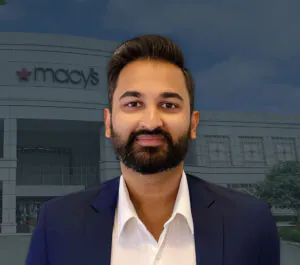
How Macy’s, Inc. Executes Crisis Management at Scale
What does crisis management look like when you’re responsible for over 90,000 employees across hundreds of locations?
At Macy’s, Inc., there’s no one-size-fits-all response. Vamsi Revuru, Lead for Enterprise Resiliency and Crisis Management, shares how his team navigates fast-moving incidents and large-scale disruptions. He explains how Macy’s executes crisis management in real time, where centralized strategy meets decisions on the ground.
This conversation also explores the leadership mindset behind effective response, from staying calm under pressure to making decisions with incomplete information in a complex retail environment.
Episode highlights:
- How Macy’s, Inc. cut crisis communication time from 40 minutes to 7 minutes
- Why store-level autonomy is critical during fast-moving incidents
- Where automation adds speed and where human input is still required
- How employee preparedness directly impacts business recovery
Transcript
(Automatically transcribed)Peter Steinfeld: Hello and welcome to The Employee Safety Podcast from AlertMedia, where you’ll hear advice from industry leaders on how to protect your people and business. I’m Peter Steinfeld. Macy’s, Inc. supports more than 90,000 employees at over 450 locations globally.
So how does the company manage crises at that scale across a mix of corporate offices and retail locations with very different operating needs? Vamsi Revuru, Macy’s lead for enterprise resiliency and crisis management, is here to answer that question.
He discusses how to leverage automation in crisis management and improve response while keeping human judgment at the center of the process. Here’s our conversation. Hey Vamsi, thanks for being here today.
Vamsi Revuru: Hey Peter, thanks for having me. I’m excited to get started here. I think we have some good topics that we’re going to cover.
Peter Steinfeld: We do. I’m super excited about the conversation, but let’s start with the basics. What is your role at Macy’s involved today?
Vamsi Revuru: So I’m part of the Macy’s Business Resiliency group. We are a 24 hour, three, six, five, seven days a week, nights, holidays, weekends.
We cover enterprise resiliency and for us, that includes business continuity, crisis management and components of coordinating our enterprise breach response. You know, as a team, we are responsible for disasters that could potentially happen and coordinating that response prior to response.
We also help the organization’s resiliency with business continuity planning and scenario testing and tabletop exercises. We have a communications platform and we ensure that our colleagues are resilient. So we wear a couple of different hats as a team.
And then specifically I also wear a hat for optimizing our processes through the integration of technology and through process automation and making sure that our technology ecosystem is working for us instead of us butting heads at every decision.
Peter Steinfeld: So you’re just a little bit busy?
Vamsi Revuru: Yeah, there’s always some work to do there.
Peter Steinfeld: Well, I know you’ve been doing this a long time, so how has your overall career informed how you lead during a crisis?
Vamsi Revuru: Today I started my emergency management career working ems and basically over those years I’ve had multiple leadership positions and led our town’s response for Hurricane Sandy. And then I was part of the New Jersey EMS Task Force and participated in multiple statewide and cross jurisdictional events.
From there, I kind of honed that skill of incident management and true crisis response.
Because in the world of EMS and really emergency management in the public sector, a lot of the decisions are truly life and death decisions and you are on the spot to make those calls. It also trains you to not Be married to a decision. It trains you to pivot on an idea or a decision based on new information that you found.
So both of those kind of go hand in hand where, yes, you’re good at making decisions with limited amount of information, but also not so married to the idea that that decision is the only true decision and good decision. And so quickly pivot right after.
The other important skill that’s kind of helped me along the way is to really remain calm no matter what’s going on around me. Because there’s a lot of uncertainty in our realm and in what we do.
And I think as a crisis manager especially, you need to bring that realm of calm and confidence to the situation. One, to focus the teams on our mission, what is our end objective?
And also two, to continuously work through the problem instead of just hitting roadblocks and getting stuck.
So my career really started in the EMS world, and then I’ve translated into the private sector, into kind of this corporate crisis management and incident response. And then my passion for this process improvement side really came from my enthusiasm for technology.
So I’ve always been a technologist and always been data driven in my decision making.
So my passion for this process improvement and kind of holistic environmental approach to our technology comes from that in understanding how our tools talk to each other and how our tools need to really support our decision and not cause additional friction.
Peter Steinfeld: You’re making it sound like you’re Spock.
Vamsi Revuru: I could be. I could be. However, there’s time to be Spock. There’s time to be Kirk.
Peter Steinfeld: Ah, that’s very interesting.
Vamsi Revuru: Wow.
Peter Steinfeld: We could have a whole separate podcast on that alone.
Vamsi Revuru: We could. We could. Right? You need to channel different Personas based on what’s going around.
You need to be the decision driven enterprise leader sometimes, and that’s the channeling of Kirk. And then sometimes you need to be very analytical and methodical in what you’re doing, and that’s the time it calls for Spock.
A really good example, now that you’ve mentioned it. Right.
Is during COVID times where there was a lot of uncertainty around the enterprise, around public safety, around what to do, and there was data, but we had to look critically at the data and take an element of emotion out to understand what our response is. And that’s the spark moment.
And then once you understood the data truly, like stripped away emotion and looked at the data, then you come at it from a Kirk perspective and say, look, here’s the data, but our people are going to feel differently about this.
So then you Be a true leader and say, let’s factor in human emotion, let’s factor in our colleague safety, let’s factor in our colleague concerns, and then you make decisions based on that. So I think it’s good to be dual at all times.
Peter Steinfeld: No, absolutely. And it really goes back to what you’re talking about, being able to pivot.
And I’m just curious as you think about what you bring to an organization, which is someone who’s been so exposed to so many things that have happened, especially with that EMS background, and now you’re working with executives and you’re managing up expectations, things like that, and they haven’t been exposed to emergencies like you have. How do you work in that dynamic?
Vamsi Revuru: Yeah, I think the big friction point that usually occurs is the lack of a common mission or a lack of a common priority. Executives always want to keep colleague safety top of mind, and that is something that we all rally around.
From there, we can work towards the resumption of business.
Now this is where we start to get a little bit of friction, because you’re going to have executives that want certain things up at first and then sequencing of resumption of services. But then we fall back on, well, what is our purpose? Our purpose for an organization is to service our customers.
And what that looks like is based on where customers meet us to transact. So then that’s the sequence of how we restore our operations. So prioritize colleague safety. But then where are we meeting our customers?
We always have central functions. Right. We definitely always want to get them back up. But that’s not where our customers are meeting us from a brand and reputational point.
So let’s take care of our colleagues, then let’s start addressing our customer needs. And I think both of those, once you frame the issue in that lens, it gains a lot more alignment in.
Peter Steinfeld: What you’re trying to accomplish, especially in an organization like yours that is not one dimensional.
I mean, you guys have a huge diverse footprint from corporate offices and retail stores to operational sites that are behind the scenes that your customers never even see. So how does that mix of environments shape the way that you approach crisis management?
Vamsi Revuru: So, you know, you mentioned brick and mortar stores. That poses its own challenges. We also cover supply chain corporate offices.
And then the other element that we also cover is travel risk and then our merchants. So I’ll kind of work backwards because our merchants and travelers pose our highest or most work effort.
They are always on the move, which is almost like a roving asset, because we want to make sure that they’re protected and that they’re not going to be in a position where their safety is of question.
We’ve established, you know, various profiles for our travelers about how we would get notified and how we should pass along those notifications to our travelers. So that’s one dimension of our environment.
Now you go to brick and mortar stores, you have both the colleagues that are in store, then you have the customer that’s in store, and then you have the transient customer that’s just literally walking through our store. Because we’re an anchor door that’s going to the mall. Yeah, right.
So they’re not necessarily shopping with us, but while they’re in the building, we still have a responsibility for them. And then we have the supply chain location where now we’re looking at product and merchandise along with our colleagues.
And then you have corporate offices, which I think a lot of people are used to by now. So how we do this is we look at who’s in our building and what our obligations and responsibilities are for each of those category of people.
Now, we always protect our colleagues and our customers, period. Whatever we need to do to ensure their safety. Where things get challenging is that resumption of service for a corporate office.
We can shut down the office, but everybody can work remote. So really, like, there may not be a disruption of service.
Granted, you might have like geographical power outages or network connectivity, but then you can always offload it to another set of colleagues in a different work area.
Once you start getting into the brick and mortar or your supply chain locations, this is dependent on a person being at either point of sale or being on the belt processing merchandise for those. Our strategy is we need to evaluate not just can we reopen it should we reopen and how should we reopen. So can we reopen is an easy question.
Can we open the doors? Yeah, we can open the doors.
Should we reopen gets a little bit more challenging because now we’re taking into consideration the environmental factors like are the roads plowed post snowstorm? Is the parking lot accessible and available? Does the mall have electricity? Does our building have generator power? Are we connected?
Do we have network connection? All of these factors start playing into the equation. The other big factor that we’ve actually found out is the schools.
Local schools play a big determining factor in how and when we should reopen.
Because if the schools are out, you’re going to have a larger call out rate because people need to be home and take care of their kids and you can’t fault them for it, right? I have a child and we just, we need to take care of our children.
And then supply chain is slightly again different because you don’t want to put trucks out on the road if there’s high wind conditions.
These are things that you just start thinking about and then you start answering, well, then we really can’t open because they can’t safely perform their job.
Peter Steinfeld: Is there like a rule of thumb or maybe a top three considerations that you should just go through in your mind it’s people listening. If they’re challenged with wondering, hey, how do I balance this employee’s safety with also, you know, the need to keep the business running.
Vamsi Revuru: What we’ve kind of come up with and what we think through is first, is there any watches or warnings? Ultimately, right? We are not going to go against any type of public health or public advisory that says don’t do something.
What we’ve also found is post hurricanes, for example, we have the damage assessment teams that walk the building, walk the roof. We have tooling that monitors wind at every location and we understand when the winds are expected to die down.
So we won’t put anybody out on the street or out doing damage assessments unless the winds are below sustained of 30 mph because you’re just going to get knocked over and it’s unsafe. Then we look at the geography of the location itself.
So in a very urbanized location, for example, New York City, we’re looking at public transportation system, we’re looking at mta, we’re looking at NJ Transit because the city itself is very porous. Or you have commuters coming from Connecticut, New Jersey, Staten island or Long Island.
So we’re looking then at public transportation systems and say this is going to make things very cumbersome for the colleague to get to the store.
So although we might say we’re going to open, but we’re not, we’re going to let the colleagues come in when they can type of a model what that resumption of normal hours or normal services might look very different based on what the enterprise needs. And then our last big consideration is definitely the history of that location around specific incidents.
So if we have a location that may have experienced some type of specific event that all of our colleagues were a little shook up about, we’ll take extra precautions on an extra day to have support services in the building to ensure that the colleagues feel supported before they actually come into the building.
In other instances, we also have great HR benefits and EAP program that we can bring in crisis counselors if we need to, to help address any colleague concerns.
So depending on what’s going on and depending on the sensitivity of the location and history of that location, we might change how that normal looks like on reopening.
Peter Steinfeld: And that’s just a great example of the Spock Kirk analogy. It’s like have your baselines that you manage to but observe what’s going on in that particular situation than adjust as necessary.
Vamsi Revuru: Yeah, absolutely. And I think it’s very detrimental to say this is my playbook and this is all I’m going to run at every single time.
I think the playbook should be looked at as more of a reference guide and a framework that’s adjustable based on severity, magnitude. Yeah, those are all the normal adjustments that you make.
But you have to have that human element that’s going to feed into that framework throughout your entire incident and the evolution into recovery and resumption of normal or new normal, if it is a new normal.
Peter Steinfeld: Can you share a recent incident that illustrates how crisis management looks in practice for your team?
Vamsi Revuru: Crisis management for our team kind of looks at two different types of events. We have events that give us a lead time.
So we have preparation, we have anticipation, we have data, we have metrics, we can send out weather alerts, we can send out some type of preparation material to get the region, division or store prepared.
Now these are events again, like your winter storms or your hurricanes, where a couple of days in advance we are not just stripping whatever the National Weather Service is putting out, but putting it in context of what it means for us for Macy’s. Because contextualizing to the individual organization is the value that you bring.
So when we look at that information and sending out the alerts, we’re looking at it and say, hey, this is the time period where we’re anticipating delivery issues for supply chain.
And then we’re also going to say this is the time period where this building will likely lose power based on the environment that we’ve seen on prior storms events or whatever else it is. And what that allows is for the operations team to start getting ahead of those things.
Once the incident or event is, let’s say about 48 hours out, we activate either our regional or our divisional crisis management team teams. And what those teams are comprises of cross functional partners.
It’s the Enterprise Resiliency Group, it’s ops, it’s ap, it’s Colleague Advisory, our HR Partners, Supply Chain Finance, Health and Safety.
But what we’ve done is we’ve outlined the roles and responsibilities of each of these functions within the Sphere of a crisis management team and what that helps us do is streamline our decision making while we’re on the call.
So our crisis management team calls are generally about 30 to 45 minutes because everybody knows exactly what they’re reporting out on and what decision that they own and what follow up actions that they have to do once we’re done with the call.
So it’s a really good coordination between our cross functional partners that might not have the proper venue or form to coordinate those resources otherwise. So we manage those crisis management calls and we’ve established a cadence in advance. It’s usually two times a day.
This way you address anything that happened overnight and then you forward plan and then that cycle continues. Once the incident ends, we transition to more of a coordination via email model.
This way the business is starting to resume back up and we provide support from the backside with data.
So we’re no longer the active team that’s going to manage the incident because now it’s a hyperlocal event and resumption needs to happen and at the local location because the leadership there is most tied in with those colleagues.
Peter Steinfeld: What about the incidents that you don’t see coming?
Vamsi Revuru: Yeah, so the incidents that you don’t see coming is a little bit more challenging. But again we have systems and tools in place that kind of help us mitigate that.
So one of our big things that we’ve done was give a level of autonomy to location leadership to say, you tell us what you have done. We gave them decision authority, but also said communicate with us what you need.
And what this allows us to do is the hyperlocal event pop up protests, any type of AP events, security events.
The store leadership will decide on what they need to do to protect colleagues and customers and then they will communicate that up to the division or regional partners. And all the central teams do is support that decision.
And what that allows is for us to rapidly execute on a strategy or a decision without creating friction or waiting for approvals.
So instead of going up from the store all the way to the region or central for a decision and then coming back down and then executing, the store is already executing a decision. And what central does is support that decision.
Now to facilitate that, we have SOPs, SOGs, but also clear call trees about who location leadership can call in case they have a question in real time. We have a store environment center that’s staffed 24, 7. They can call that number at any time.
So we have a lot of supporting infrastructure that supports that location individually to be autonomous to A certain point and degree.
Peter Steinfeld: So if you distribute that authority down, then it sounds like enablement is a really big part of your plan. So how do you train your teams to be ready for a crisis when fighting against complacency?
Because these things don’t happen very often is always an internal struggle. What do you do there?
Vamsi Revuru: Part of our BC plan is also a training and exercise component.
So we have regular tabletop scenarios with regional and divisional leadership and those scenarios are very specific to the types of incidents that they’re going to see in real world. For example, there is no reason for me to run a snowpocalypse scenario in San Diego. Not likely going to happen.
But we did run a wildfire scenario in California that is a likely scenario, especially coming into wildfire season now. So we are tailoring our exercise and exercise program based on their region and their division and likelihood of impact.
Now, we’re not necessarily looking at magnitude of impact, but just likelihood of impact because you might have a event or a scenario that doesn’t cause a significant amount of disruption that’s intolerable by the system, but you will have a disruption and that disruption still needs to be addressed. And that’s kind of what we’re looking for.
It’s very easy to build a scenario that says we have snowpocalypse coming in New York, New Jersey area and everything’s going to be shut down for a week. Well, that’s easy. You’re going to shut everything down for a week.
There’s no critical thinking there because the infrastructure is not going to allow you to really think about anything else but say we’re going to shut down because everybody’s buried. How we build our scenario, for example, is let’s take the snowstorm in the morning of you have a little bit of snow with some flurries by midday.
Now you’re getting like an inch of snow and then you’re starting to get some mumblings out of city all that the public infrastructure might be getting disrupted. So as the incident evolves, we also have to pivot our decisions. Yeah, you might have made a decision earlier, but don’t be married to that.
Here’s a new set of facts that’s going to make you pivot. So we have that training component. The other big part is especially in the region division roles when there’s a change point in roles.
So somebody gets onboarded, somebody’s new, they’ll have a touch base with our team for about 15 to 20 minutes as part of their onboarding just to get Them up to speed on our program, up to speed on our processes, our technologies, what they can expect from us and what we expect from them. And what this does is it gives us a really good opportunity to connect right out of the gate.
Instead of waiting for that first incident and then now in the middle of potential chaos, we’re also training an individual. So we kind of have that proactive approach of getting to them when they’re first with the company.
And then we do ongoing and repeated training and exercises now coming down very granularly to the store leadership level.
And we rely on our divisions to have touch bases with their store leadership to kind of push down this mindset of here’s our process, here’s our procedures, review them, let me know if you have any question, my door’s always open. And then if they’re unclear about something, they’ll connect them right to our team.
So there is no true barrier between us and the hyperlocal leadership because they can always just come right to us and also ask any question that they might have.
Peter Steinfeld: Yeah, you’re part of the business day in, day out. It’s not something like a team that parachutes in when an emergency happens. You’re part of the core culture, it seems like.
Vamsi Revuru: And we try to be right.
We’re integrated a lot in the day to day activities of the business because if something were to go off the rails, we’re the team that gets involved in trying to kind of straighten out our strategy in partnership with everybody else. And resiliency as a mindset is something that we continuously work towards ingraining in our colleagues.
So we engage our colleagues through our internal tool about resiliency. Right. How do we ensure the individual colleague is resilient?
For example, we are getting ready for hurricane season, so we’re putting together a list of resources that a colleague should have on their phones to ensure that they are resilient. And we are kind of giving them this checklist of go bag items that they should have prepared in case they need to rapidly evacuate.
And part of that resiliency is also, hey, come up with like an evacuation plan for your family in case you guys are separated. Where are you going to meet? How are you going to meet? Who’s going to take care of the kids, the dog, the lights, and whatever else. Right.
And when we build a resilient organization from all the way down to the people to our process, central processes that support, you know, larger processes like payroll and infrastructure and everything else, I think now we’ve driven a resilient organization, not just a resilient process.
Peter Steinfeld: I love that.
And it’s so critical to make sure that people can take care of themselves and their families because if they can, guess what, they can come to work for you. If they can’t, they can’t work for you.
Vamsi Revuru: And right.
That’s one of the bigger takeaways is you might have a whole bunch of processes and recovery strategies and business continuity plans and programs and everything else. But at the end of the day, a person has to execute that.
If your person is not available because something is going on that they were unprepared for, we are not resuming anything. If we can’t open a store with a safe number of colleagues, we’re not going to open. It’s just not going to happen.
We have different tools and playbooks that can help us, but we need people at the end of the day.
Peter Steinfeld: Well, it sounds like you guys have things pretty buttoned down there, but there’s always room for improvement. So as you look at crisis management across a large retail organization, where do you see the biggest opportunities to improve response?
Vamsi Revuru: First, I have a personal thing where I intensely dislike doing repetitive tasks, administrative tasks, and these are tasks like data entry for example.
A large part of what we do is tracking of information and a large part of what we do is maybe tracking modified hours or impacts or kind of playing this like shuffler of information where I don’t have anything to do with this, but they came to me because I know everybody and I’m just gonna pass this along.
So I think the biggest opportunity for organizations and for us also continues to be how do we automate the tasks that we can automate within our area of influence and how do we streamline our decision making process so that in the event of an incident or an event, our decisions are friction free or reduced friction. Most companies, and including Macy’s, we rely on a lot of tools and technologies to help streamline our work.
But what ends up happening is as you onboard vendors or as you repurpose an old tool, the systems don’t talk to each other. Now with tools like APIs and Power Automate and Power Bi and dashboarding and everything else, you can build a bridge between your tools.
You can build workflows that are systemic, that kind of capture that mindset and workflow rules that say if this condition is triggered, then do this. And then if this condition is triggered, but you don’t know what to do, come ask me and I’ll tell you.
You always want to have that human person that’s watching everything that’s going on, especially when it comes to colleague safety. But you also want to make sure that that flow of information is as streamlined as possible.
For us, we had an old process where we relied a lot on emails and phone calls to let everybody know that something was going on at the store or we needed to close down a store for whatever was going on. From the point of that decision being made to the point that our colleagues were notified took about 40 minutes.
Through this integration of various tools that we have to manage these things and APIs and learned media platform, we have an API that kind of sinks through all of that logic and bacon approval layers within that. That’s that human in the loop component where we want that decision to have the proper authority, proper content and proper timing.
And what that does now is from the time the decision is made to the time the line staff colleague is notified, takes about seven minutes.
Peter Steinfeld: Wow, from 40 down to seven. That’s stunning.
Vamsi Revuru: So it’s very demonstrative to say that if you just optimize a process, look at it holistically, obviously from start to end, instead of just saying, well, my component is just a communication. And I’m just going to look at at that.
I think you need to look at the process from start to end to really look at what can drive optimization that impacts cross functional partners and drive the biggest gain in efficiency. And when you do that and you look at it and not really look at it from a turf war point of view, but from a collaboration point of view.
Because when I’ve optimized this process, it involved ap, it involved ops and it involved HR data tracking, obviously our team for the crisis communication component and it involves store leadership. It involved a huge cross section of cross function partners. And the proposal was simple, right?
It’s the store leadership still has the autonomy, they communicate it up to the division and then the division activates this tool and then it has the layers built in for approval. So with that right now we have significantly reduced our email noise pollution.
We know that when a notification comes through this tool it is significant and it’s a priority to action.
And we’ve kind of built this separate channel for these high priority communications that need to go out to the colleague and it doesn’t just get buried in your email. So it kind of addressed a whole bunch of different things.
And then if you remember when I first started this, I said I hate doing repetitive administrative tasks.
What our team did historically was anytime one of these happened, we went into Excel file and Tracked all of these things with date and timestamps, what we’re sending out to people, how we’re sending it out, and what the message was. Now, through that API loop, once AlertMedia posts that message, the loop completes with the return from AlertMedia saying, message was successful.
And then it logs all of that information and a file that’s made available to HR that then process payroll right out of that file, or any schedule adjustments right out of that file.
We’ve synced almost like four to five different systems on this one process chain, and each team has increased their own workflow efficiency because now everything is standardized and you’re not looking at five different modalities to say, where is my information going to come from and in what format? With standardized format and modality of communication.
Peter Steinfeld: Well, it’s so great because you get people out of the weeds where they waste a bunch of time, and you get them focused on the more valuable response and recovery, which is really where people should be focusing their time. And with today’s technology, there really is. It’s kind of no excuse.
It’s out there if you want to sit down and look at your processes and where you can automate the technology is there to help you.
Vamsi Revuru: The big challenge that I tend to see occurring is a fear that you’re stepping on someone else’s toes or somebody else’s workflow.
And I think that fear and the apprehension can be repurposed to say, look, I’m going to streamline this for you so that it gives you more time to work on other priorities. You reframe the problem as an advantage to them instead of saying, I’m going to take this role from you. And that’s worked magnificently.
And it comes down to that common mission picture that says, what is our objective?
Our objective is on this process to notify our colleagues in a timely fashion and to provide this data holistically and systematically to all partners that need it. So when we’ve done that and standardized it, now all the partners know the exact format that it’s always going to look at.
They know exactly where to go to get the information, and they know when they’re going to receive that information in case something is timely. Because we’ve essentially taken this whole work stream and put it outside of our normal communication channel.
Because now when this tool goes off, you know that it’s something other than normal work.
Peter Steinfeld: One thing you mentioned before that I’d like you to work in a little bit more is this concept of human judgment. And when you jump in and try to make a process faster.
How do you ensure that you’re not removing the critical human judgment that many situations oftentimes require?
Vamsi Revuru: Human judgment should always be in the picture whenever anything to do with communicating a requirement to a person is needed. So let me break that down a little bit. If we are communicating a requirement to the colleague, I think a human should be involved in that decision.
If we are communicating a change to status quo, a human should be involved in that decision.
If we are communicating additional guidance or additional information that’s not necessarily actionable and it is just an FYI, I think we can let the tool take care of that. We have threat intelligence alerts coming from AlertMedia, for example. Our team receives all the alerts for the entire footprint and all locations.
And then we pass it along to region and division leadership. We used to. And now we’re looking at it more from. Why are we in the middle of this?
Ah, because if we train the region and division to properly triage that alert and not over sensationalize that alert, then we can put this alert directly in their hands and it reduces their time to information and time to decision. So why not let the tool do the communicating?
But where our team will come in is the prior education around how to triage and how to react when something comes in and how to not sensationalize it and how to use your best judgment about which group of people that you’re going to disseminate any additional information to.
The other component now is on the flip side of when we should be in the middle of the communication is we have some type of modified hours going on or we have a security incident going on at the mall. Our colleagues are accounted for, they’re sheltered in place.
But maybe now is not the right time to send this communication that we’re going to close early for the day. Let’s wait till PD gives us the all clear. Let’s wait to ensure colleagues are safe and accounted for.
Let’s wait to make sure that our colleagues are in a mental space to receive that communication from us. Because a lot of times. Right. And I would be too. You would be a little shook up after something like that.
And you really don’t want a depersonalized message that says your location is going to have an early closure today.
You want that human element to say, yeah, our colleagues are in a mental space to receive this kind of information and they are safe to receive this notification note.
Because what you never want is a automated alert going out to a grouping of people that may accidentally have their phone not on silent or vibrate and alert a potential dangerous individual or perpetrator to their exact location.
I think those are the two where it’s like this is now an intentional delay, not a systemic delay, an intentional delay to ensure colleague safety and colleague priorities and colleague mind space.
And then there’s the other side where you can just streamline it because the impact is minimal on somebody receiving this notification at an improper time.
Peter Steinfeld: For leaders that are listening, who want to modernize their own crisis programs, how can they identify the right places to automate without overcomplicating things?
Vamsi Revuru: I think if you find yourself doing the same thing over and over in an administrative task, I think it’s ripe for automation. I think there’s a significant opportunity in driving enhancements without fear that your job is at risk.
Because what that gives people an opportunity to do is go focus on something that truly requires your mental space and your aptitude to apply to a problem rather than sitting here and doing something right. Let’s not just do things, let’s create things, let’s make things better. Let’s improve on our systems and our processes.
And that requires you to not have to do things, because when you’re doing things, your brain is blocked. I think that’s the number one thing. Number two thing is make sure you always look at your environment. Right?
What are the tools that are supporting my decision? Am I looking at four different tools to just tell me the same thing in different ways?
Or am I looking at four different tools because the four different tools give me different chunks of information? Or am I looking at four different tools because they don’t talk to each other?
And in all three of those scenarios, there’s a way to bring everything together, whether that’s through API integration, whether that’s through vendor assessment, whether that’s through some other type of automation, or linking your systems and tools together?
And then I think the last big thing about for all of us is in the crisis management space generally, it’s about building our systems and our tools and our teams to work towards a single mission. Even when conditions are imperfect, most of the time we’re going to be working off of imperfect information.
There’s never going to be a time where it’s like, I have 100% of everything that I need to make this well informed decision. This is not going to happen.
But what we need to work towards is making sure that everything around us supports that imperfect decision and not be married to that imperfect decision and quickly pivot when you need to.
Peter Steinfeld: And Something that you’ve said a couple times now. So I do want to ask you about this before we head out. It’s this concept of people get really comfortable doing the job that they’re doing today.
May not like it, but they’re comfortable doing it. And they’re a little bit nervous about letting the machines do what the machines do and then doing more of what the human should do.
So how do you encourage or coach people to be comfortable with that change?
Vamsi Revuru: Yeah, so this is a conversation that we have internally with our team all the time. And the way that I frame it always is if you are doing something, you are not thinking about it.
You were hired for your experience, for your personality, for your view on issues or for your perspective on how to execute this program. That doesn’t mean do everything. That doesn’t mean sit here and type away for hours on end trying to do this.
The other big one is a tool or a technology that automates something doesn’t necessarily mean that you’re not still doing the work. You are still monitoring that automation, you are still monitoring the workflow.
It’s a reframing of how you are doing work, not that you are not doing that work.
And what that really personally for our team has allowed us to do is instead of taking an hour to send out all of these communications, now we’re still using that hour to really holistically approach this event and looking at missed opportunities, missed gaps and then addressing those gaps. There’s still that hour chunk of work that you need to get done.
Before it was just missed because you didn’t have time, but now you have adequate time to address those gaps and opportunities and look at where else can I improve on the next iteration?
Peter Steinfeld: Well, final question, as you look ahead, what do you think the future of crisis management will require from leaders?
Vamsi Revuru: I think it’s a little bit of what we’ve been talking about, right. I think it’s a little bit of training your mind to both make that analytical decision.
Especially as more data becomes available and as the environment around us becomes more data driven, is looking at that data in a very Spock like manner and then executing on that decision in a very Kirk like manner. I think where our field and as an industry we need to start incorporating a lot more is definitely the tools and technologies.
With the rapid acceleration of AI and ajantic work, I think that’s another big opportunity that’s going to come through, especially in our realm.
And it’s the same cautions with automations as I’m going to apply to the agentic work is you need to still have that human in the loop, check the AI’s actions and the outputs to make sure that it’s doing what we need it to do before we broadly communicate something. So I think it’s AI, but it’s also kind of refining our technology use our environment, use Kirk and Spock, redefining.
Peter Steinfeld: The importance of the human in the loop.
Vamsi Revuru: Yep, Absolutely.
Peter Steinfeld: Indeed. Well, this has been fantastic. So much great information shared. Thank you for putting up with my Star Trek metaphors and analogies.
That was great and really appreciate you being on the show.
Vamsi Revuru: Hey, I love the Star Trek metaphor.
I don’t think I’ve ever thought about it that way before, you know, the Spock versus the Kirk thing, until you’ve just and I do channel both of them, depending on who I’m talking to and what I have to do at that time. So it was great that you referenced it in the beginning because I’ve now I’m thinking about it and I might have to watch the movie again.
But I also want to say thank you for having me. Right. I think this conversation was a lot of fun for me as well.
Peter Steinfeld: Indeed. And I think people will take a lot away from it. To learn more about Vamsi and his work with Macy’s, click the links in the episode description.
You can also watch the video Highlights on AlertMedia’s YouTube channel. Don’t forget to subscribe, rate and review the show. Wherever you get your podcasts, stay safe out there.
Outro: Thank you for listening to the The Employee Safety Podcast from AlertMedia, the world’s leading provider of risk intelligence and response solutions. To learn more about how to protect your people in business during critical incidents, visit alertmedia.com.

More Episodes You May Be Interested In
-
 The A.L.I.V.E. Program: How to Respond Effectively to Workplace Violence
In a moment of crisis, your first reaction can determine everything. Michael Julian, founder of the A.L.I.V.E. Active Shooter Survival Training Program, shares his proven mental and physical techniques for surviving an active shooter scenario. Michael walks through the A.L.I.V.E. framework, a practical approach that equips employees with skills and confidence to navigate any act…
-
 A Leader’s Guide to Building Organizational Resilience
Leadership can play a crucial role in fostering resilience by including employees in important decisions that directly impact their roles. In this episode, organizational resilience expert Dr. Atyia Martin explains why inclusion is critical and provides additional advice for leaders on how to avoid or repair internal dynamics that can hinder resilience. Dr. Martin also introduces…
-
 Inside Capital One’s Operational Resilience Framework
At Capital One, operational resilience is a long-term, companywide investment that prioritizes customer needs. Theresa Reynolds, Senior Director of Operational Risk Management, shares how her team ensures the company can deliver on its promises, even amid disruption. From mapping essential services to tackling third-party risk, she breaks down the pillars of Capital One’s resilience framework….