OSAC’s Blueprint for Global Security Collaboration
Security threats don’t respect borders, industries, or organizational charts. That’s why for the past 40 years, OSAC has connected government agencies and security professionals from U.S. private-sector organizations operating abroad to share intelligence, strengthen preparedness, and help organizations operate safely around the world.
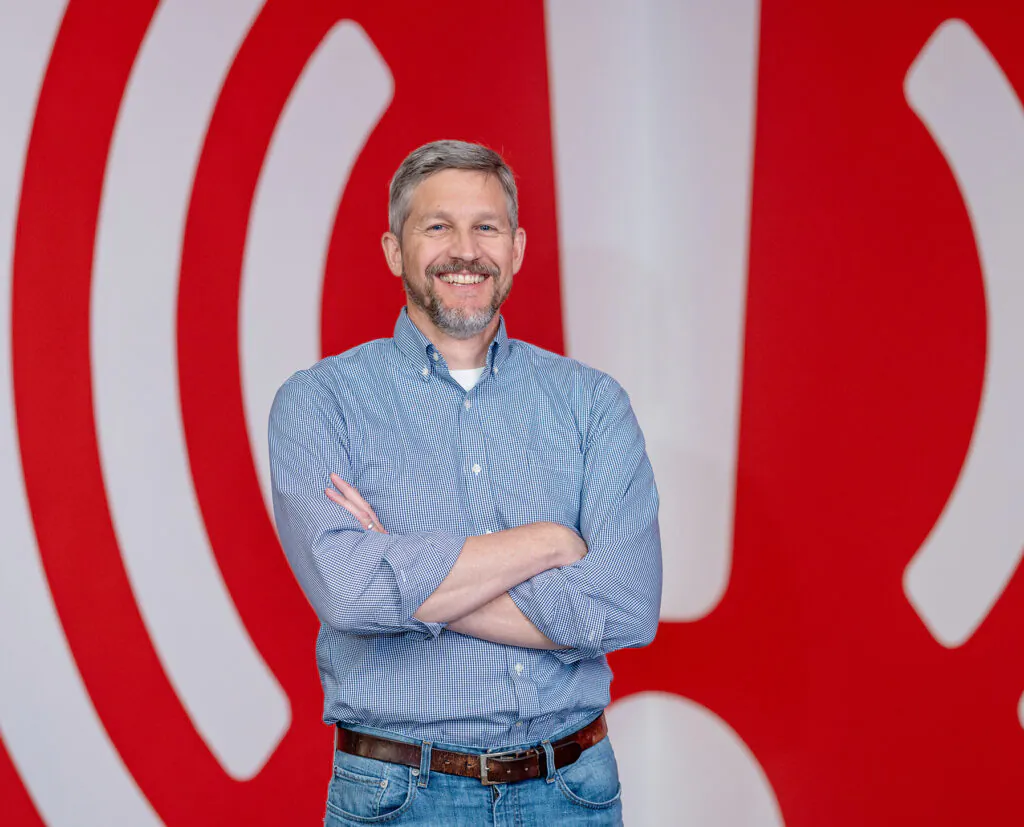
What began as a small advisory council—established by the U.S. Department of State’s Diplomatic Security Service (DSS)—has grown into a network of more than 36,000 members. In this episode, Stefan Merino, Director of OSAC, reflects on the partnership’s legacy and discusses the emerging risks shaping the future of global security. From AI and deepfakes to geopolitical conflict and drone technology, Stefan shares why collaboration remains one of the most effective ways to stay ahead of evolving threats.
Stefan shares insights on:
- The security challenges that have changed most over OSAC’s 40-year history
- How government and industry coordinate during fast-moving crises
- Why major global events create unique risks for global organizations
- What’s next for OSAC, including new tools for member reporting and engagement
Transcript
(Automatically transcribed)Sara Pratley: Hello and welcome to The Employee Safety Podcast from AlertMedia, where you’ll hear advice from industry leaders on how to protect your people and business. I’m Sara Pratley.
Today we welcome Stefan Merino, Director of OSAC, a partnership between the U.S. Department of State’s Diplomatic Security Service and the private sector security community that helps U.S. Organizations operate safely around the world.
As a former Marine Corps officer and longtime Diplomatic Security Service leader, Stefan brings decades of experience helping organizations prepare for and respond to global challenges. OSAC celebrates the conclusion of its 40th anniversary year this month, which also coincides with America’s 250th birthday celebration.
I invited Stefan to the show today to share how OSAC is observing these milestones and why collaboration between government and industry is more important today than ever before. Here’s our conversation. Stefan, hello. Thanks so much for joining us.
Stefan Merino: Hey, Sara, thank you so much. Thanks to you and AlertMedia for having me on the program. I really appreciate it.
Sara Pratley: Absolutely. We’re very much looking forward to it. So we can go ahead and jump right in.
I think for our listeners who may not be as familiar, it would be great to go ahead and start by telling us about OSAC and the role that it plays in supporting US Organizations operating globally.
Stefan Merino: Well, so to talk about OSAC, we have to take kind of a little step back and talk about the Diplomatic Security Service, ds, as we call it, in the State Department. So we are the law enforcement and security part of the State Department.
And we have nds, special agents like myself that are federal law enforcement engineering security officers who work on our technical security programs, and also our diplomatic couriers who bring our diplomatic pouches around the world. And so for us, in ds, we have field offices around the United States.
We have a law enforcement program, as we’re federal agents, we investigate passport and visa fraud. We also have a very active protective program. So people think of the Secret Service.
Secret Service protects the executive branch and also visiting foreign dignitaries that are heads of state. We protect the Secretary of State, the US Ambassador of the UN and other visiting foreign dignitaries that are not heads of state.
So we get some interesting folks in there like the Dalai Lama and the British royal family. And so that’s an interesting program. And then overseas, we run all the security in our embassies and consulates around the world.
So in that role, we’re known as RSOs, Regional Security Officers. We’re also the primary advisors and the Chief of Mission or the Ambassador on security and law enforcement matters.
So in that role, as the rso, Overseas in all these different countries, we have a pretty active program where we engage with US Private industry whose companies are trying to have a presence overseas on security matters.
So actually we were already working with overseas companies back in 1985 when our then secretary, George Shultz decided that he wanted to have a more formal relationship. There was obviously a couple terrorist attacks in Beirut, Lebanon that led up to that.
And so Secretary Shultz decided that we wanted to have an actual organization that was the bridge between the private sector and the public sector. And that was what became OSAC. So it’s actually, it’s the Overseas Security Advisory Council. And we’re actually not an advisory council anymore.
We’re a public private partnership. But we kept the acronym because that’s what is most well known. I also should mention OSAC is completely free.
So for our membership, we look at US Based companies that are headquartered here in the United States, that are working overseas, have some sort of presence overseas. We also open that up to NGOs, to faith based organizations, to academia. So we cast a wide net and we don’t charge because.
Cause the idea here is that we are stronger together when we work together and try to share information and help each other out.
Sara Pratley: Well, that’s great, Stefan, thank you for going so deep there. I think it’s so helpful for people to understand contextually where you are with OSAC, as well as just kind of a good history there.
So I think we can all agree that each area of the world, especially you guys, cover so many different areas globally, but each area has very unique security challenges that are constantly evolving. Can you talk a bit about how OSAC helps its members really stay informed about regional developments as well as emerging risks in different areas.
Stefan Merino: So first and foremost we have our OSAC website. So we have analysts that work for us, that work on products that they put out, Travelers toolkits, and country reports on each country.
And for us, you know, the State Department obviously is focused on our government and our operations, but we are focused on the private sector and what is really impacting our partners in the private sector. And then also, you know, we have our in person meetings and these are really, I think, what’s the most value added for us in OSAC.
So starting with the country chapter. So again, for those RSOs overseas, they’ll work with the companies that are based in their country and they’ll have periodic meetings.
And just for an example, you know, when I was RSO in Casablanca, Morocco, we had a pretty robust country chapter and most of the security representatives were Actually regionally based in Dubai or Abu Dhabi.
And so it was interesting because when they came to talk to us, they had a good idea about the region, but they weren’t specifically focused on Morocco. So we were able to help fill that gap and talk about what’s going on every day in the country where we live and work.
And then we also have regional summits. So I went to the regional summit for East Asia Pacific EAP in Singapore.
And so again we brought together not only RSOs from the region, but also diplomats from the embassy there in Singapore and our private sector partners. And we had the alad, so that’s the assistant legal Attache for the FBI and also our friends from DHS come to brief.
So we’re able to get a real cross section of different folks to talk about what they’re seeing as far as threats, what they’re doing for mitigation. And that exchange of ideas I think is really the most important.
And you know, our OSAC board, we have the cso, the Chief Security Officer for from Coke and we have the CSO, Chief Security Officer from Pepsi on our board.
And so we are there all working towards the same goal, which is protecting our people and our facilities overseas and trying to help the United States prosper. And it’s really I think a unique setting when you see something like that because there isn’t a corporate competition.
And us as far as OSAC, we’re not in competition with anybody else either.
We’re all just trying to work together to make sure that we can help our American businesses and our non government organizations and our academia and everybody, our faith based organizations, be able to work safely overseas.
Sara Pratley: That’s amazing. And you mentioned the competition factor or the lack of competition.
It’s actually one of the things that I value so much about being in this space is that when it comes to keeping people safe and secure, there really is no competition. I feel like there’s more collaboration and noting all of the different events.
I know myself and my team globally have been able to attend and participate. And there’s so much value in bringing together people from different sectors, different industries, local communities to really share learnings.
So I’m so happy you highlighted it because it’s definitely a value add that we’ve experienced as being partners with OSAC. As you were talking earlier, you also mentioned just some dates and the history of OSAC.
And for anybody who is counting, that means that OSAC is now concluding its 40th anniversary year. That that’s a huge milestone. What does that mean for The Agency. How are you reflecting on all of the evolution?
Stefan Merino: So, yes, we’ve just passed our 40th anniversary, and it’s going to coincide with America’s 250th anniversary. But it’s interesting because the two really do coincide, where OSAC has a lot of the same shared values as the United States.
We are trying to promote democracy and prosperity and transparency and give people a safe place to do business and support innovation. So, you know, this is really something that links up very well with us.
So also for us as OSAC, we have a campaign where we’re doing testimonials throughout the year and having people talk about their experiences with OSAC and where we’ve come.
And I think it’s important also, you know, when we look back as to what we were talking about, you know, the bombings in Beirut and, you know, when George Shultz was the secretary, and, you know, before that, we also had 1979, the takeover of our embassy in Tehran, Iran. So back then, our threats were a little more simple than they are today. We were looking at explosive devices.
We were looking at mobs and demonstrations.
And now, you know, I was just in a recent meeting, actually, it was the FIFA kickoff in Miami, and we’re talking to some of the security representatives there, and things are just so much more complex. I mean, you look at drones and the drone technology, especially over the last two or three years.
I remember when I was in Afghanistan in 2017, we were working on our counter drone program. But the amount that threat has grown in the last couple of years is just amazing.
Also, I was talking with some of my counterparts in the tech industry, and one of the problems that they’re having is they’re having mouth fees and people interview for jobs, and they’re using deepfake technology on these interviews, which is something again, two, three years ago wasn’t around. So, you know, the 40 years has passed, and, you know, we didn’t have an OSAC in this last 40 years.
We’d have to invent one, because we really need a space where everyone can come together and look at these emerging threats and try to figure out common ways to combat them.
Sara Pratley: Absolutely. I think you made a great point there.
I know a lot of conversations are happening around drone technology, around artificial intelligence and those fake Personas, as you mentioned. And I would imagine that a lot of the evolution of these conversations has probably contributed a lot to the longevity of the organization.
For four decades is obviously a great long period of time. Anything else you would say has really contributed to the length and the success of OSAC in this space?
Stefan Merino: Well, I think, you know, when you look at. So again, you know, 1986 they started, I think they had a board with about 30 people on it and that were the advisory committee with 30 people on it.
So now we have over 36,000 members. We have over 6,000 organizations that are part of OSAC.
So, you know, as America grows and as we have businesses that want to do business, business overseas and academia and non government organizations, as that continues to grow, which it has, it just shows you that there’s more of a need for an OSAC, a place where people can come together. And again, we talked about without competition, they’re not giving up secrets to anyone else.
They’re just all in a common fight, trying to make sure that their people can have a safe environment to do business overseas.
Sara Pratley: Yeah, I think for all members and for those who should be, obviously that partnership is incredibly important and obviously leans into kind of the success of all of us trying to keep security and safety front of mind for all of our organizations, no matter where we operate. You know, in my world, I live in the intelligence space. Right.
With my team and we’re constantly talking about the threat landscape and where things are going, how things are evolving. Obviously, organizations face a wide range of risks today.
What are some of the security trends and challenges that you and the folks at OSAC are really watching closely right now?
Stefan Merino: Well, I think, you know, as we discussed, obviously drone technology, AI, and when you look at AI, it’s not only for the cyber threat, because AI now is enabling people to be able to penetrate systems a lot more effectively, but also like we said, now we have these deep fake technologies that people are using. Also since 2024, you know, really executive protection is something that we’ve seen on a larger scale.
And I think also this crisis that we’re having in the Middle east has shown us is that now kind of all targets are on the table.
So if we look at the Middle east, just in this last couple months, they’ve had drones not just only target embassies and military bases, but they’ve targeted civilian airports or data centers or energy infrastructure where people are working. So we’ve realized that now the number of things that could be targeted by state and non state actors has really expanded.
Sara Pratley: The crossover, I think, has been pretty extreme as we look at it. And you mentioned obviously the conflict in the Middle east, something that is always evolving.
There’s a lot of major international events that I think we’re all keeping an eye on constantly. But they also create very unique challenges for organizations that are operating in different regions and really globally.
I know it’s such a priority for a lot of the organizations that we support.
Can you talk a bit about how OSAC helps organizations prepare for some of those events or some of these ongoing events that are just kind of continuing?
Stefan Merino: So in OSAC we have a thing called duty to warn.
And that is when we get information that may affect an American business overseeing sees that their threat information, then we have to break that information down. And our friends that help us, our intel analysts here in the State Department do a great job.
They work on getting something that comes to us classified to a non classified terror line that we can pass to a company.
And actually just recently with things going on in the Middle east, we got information, we were able to break that down to an unclassified terror line, pass that over to a US company, they evacuated their people from the area and then later on there actually was an attack. And so our information helped to save lives.
Now also I think you’re talking about major events and it seems like right now we’ve got more major events than we know what to do with. So you know, the World cup is going on right now in DS Diplomatic Security we have an office called our Major Events Coordination Unit, mecu.
And so when there is an event that’s overseas, DS is the coordinating body that coordinates the whole security effort from the US Government. If something’s happening domestically, then it’s going to be Department of Homeland Security. So for example, I was at the Olympics in 2016 in Rio.
I was actually posted in Tokyo when we had The Olympics in 2020 or 2021 is what it ended up being.
And so our Major Events Coordination Unit comes out to work on coordinating all the US Government agencies that are trying to go there to help the United States and Team America with security. Now on top of that, as we can see, especially with the World cup, there’s a lot of corporate sponsors.
So you know, the corporations are deeply involved in this as well. So OSAC, we work with them on that coordination effort.
And so for the Olympics we had a joint operations center at joc, I think they’re calling it, for the World Cup. It’s going to be a Joint Coordination center, jcc.
And so we have OSAC representatives that are there that are putting out daily reports that are working with the private sector to let them know if we hear of any threat and information. But I think the other point that’s really important to emphasize Here is that this is a true a two way street.
Sara Pratley: Another thing I’m curious about, right, the pandemic is very far in the rearview mirror, I think for many of us. But recently we’ve been talking a lot about other diseases. We’ve been talking about Hantavirus and Ebola making headlines.
How does OSAC help organizations navigate security concerns that are more public health or outbreak related?
Stefan Merino: That’s a great question. And Ebola is obviously going on right now.
In fact, you know, here at the State Department, we have an Ebola task force that’s been stood up and there are a lot of questions about what was going on. We were able to organize what we call a SNAP call.
So we were able to organize basically a large conference call with our members that wanted to be a part of that, with a representative from the cdc, because obviously when these things start, there’s a lot of information out there, there’s a lot of disinformation out there. And so it’s hard for our private sector partners to differentiate what is really happening.
So by having someone from the CDC sitting there, you know, we’re able again to bridge that divide between the public and the private sector to give them the best information. But also this brings up another good point about that two way street.
There are parts of the government, there are also parts of these non governmental organizations that are in places where industry is not or where even the government is not.
So when we get reports back from them from the field, that gives us a real added insight, a window into a place where we haven’t been able to get information. And so that is also very helpful for our private sector partners as we’re talking about what’s going on.
But it’s also very helpful for us and the government to understand the bigger picture. So OSAC helps bring all those people together and then we can share information.
And then obviously, as this Ebola task force is going on and they’re putting out their daily SID reps, we’re putting out information to the private sector to try to help them as well.
Sara Pratley: I’m happy you mentioned the SNAP calls, because I know how much value those provide to teams like mine and organizations globally just to hear and listen to the expertise and help to understand kind of how it impacts our businesses and kind of the ecosystem that we work within. So an important call out there. I imagine as OSAC has evolved a ton over the decades, that there’s a lot of evolution to go.
As you kind of look ahead, what new initiatives or maybe even capabilities are you Most excited about for OSAC.
Stefan Merino: Two things I think that we’re really trying to push right now. One is making this more interactive. So actually we just put out a new website.
So if I can I’ll plug the website, it’s osacos.govgov so one of the things we’d like to also put into the website is an interactive portal where people can report incidents to us. And one of the other threats that we’re looking at is counterintelligence.
When you look at our companies and their technology and their, and their innovation that is a part of national security. And so there are people that are malfeasant actors out there that would like to enter our systems, to try to enter our, our workplaces.
So we are also working with our Office of Counterintelligence to try to put together better reporting and also, you know, better go tos for them to put out to the field for people to watch out for different threats as they evolve. So the first step to that for us is to put a portal on our website where people can actually report into us. And so we’re working on that.
We’re hoping that is going to come out, you know, somewhere towards the end of August or September. And then another thing is we’re really trying to increase the interaction with RSOs.
So you know, for our regional conferences we’re working on, you know, funding mechanism to make sure that we can get the most RSOs out there. We’re also using technology to make sure we do an RSO panel to have RSOs be able to call in.
And then we have, you know, a couple things down the road that you know, I don’t want to over promise under deliver but we’d like to start looking at doing some training and some other things. But again, we have to see how our budget requests go and see where we can go from there.
Sara Pratley: Well, I for one love hearing all of the information about the new website we have noticed but just about that kind of portal and reporting functionality, that sounds really exciting.
So I think as people have been listening, hopefully a lot of people are already OSAC members but I know those who aren’t are probably wondering how do I become an OSAC member? Can you talk a little bit about how people get there?
Stefan Merino: Sure. Super easy.
Go onto our website osac.gov and when you go on there you’ll have to fill out some information and it comes back here for a little bit of vetting and then you’ll be able to join.
And again, what we’re looking for is US Based companies that are headquartered in the United States but have business overseas or have a projection overseas and then the folks from those companies are involved in the security program. Like I said, we have over 6,000 companies and over 36,000 members that are part of OSAC. So we are always looking to expand. So it’s super easy.
Go on the website. You can contact us if you’d like to send us a message also from the website. So we look forward to hearing from everybody.
Sara Pratley: Stefan, thank you so much for being on the show.
I’ve been connected with OSAC for several years now and I’ve certainly learned a lot more about the history, about everything that you guys have going on and all the support that you’re doing. But also again, really excited to hear about some of these future initiatives.
Stefan Merino: And thanks again for having me, Sara. I really appreciate it, really appreciate the ability to talk about OSAC. And if I can, just one last thing before I go.
I would just say if anyone’s listening to this and you are interested in a career in federal law enforcement that has a specific overseas angle to it, you can check us out on careers.state.gov and from there you can navigate down to the job openings and careers here in the State Department.
Sara Pratley: That’s great. Thank you for sharing that, Stefan. So to learn more about Stefan and his work with OSAC, click the links in the episode description.
You can also watch the video Highlights on AlertMedia’s YouTube channel. And don’t forget to subscribe, rate and review the show wherever you get your podcasts. Stay safe out there.
Outro: Thank you for listening to The Employee Safety Podcast from AlertMedia, the world’s leading provider of risk intelligence and response solutions. To learn more about how to protect your people in business during critical incidents, visit alertmedia.com.

More Episodes You May Be Interested In
-
 2026 FIFA World Cup: Risks Every Organization Should Know
The 2026 FIFA World Cup will be the largest and most complex tournament in the event’s history, spanning three countries and 16 host cities. With that scale comes a wide range of risks that extend far beyond the stadiums, impacting employees, travelers, and operations alike. Sara Pratley, Senior Vice President of Global Intelligence at AlertMedia,…
-
 Intelligence-Led Security in an Age of Information Overload
Having more intelligence does not guarantee better security decisions. Mike Evans, Director of the Risk Intelligence Center at Securitas Risk Intelligence, explains why organizations often struggle to turn growing volumes of threat data into meaningful action. Mike shares how intelligence-led security helps organizations move from reactive reporting to proactive decision-making. He also explains why context,…
-
 Understanding the Rise in Executive Targeting
Threats toward business leaders are rising, and security teams are starting to see the shift firsthand. Bob Hayes, Managing Director and Founder of the Security Executive Council (SEC), shares what his team uncovered after analyzing new data on executive targeting. In this episode, Bob explains what’s driving the surge in incidents, how executive exposure is…