
Understanding the Rise in Executive Targeting
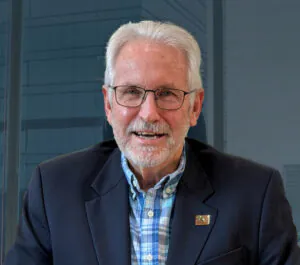
Threats toward business leaders are rising, and security teams are starting to see the shift firsthand. Bob Hayes, Managing Director and Founder of the Security Executive Council (SEC), shares what his team uncovered after analyzing new data on executive targeting.
In this episode, Bob explains what’s driving the surge in incidents, how executive exposure is changing, and why organizations may need to rethink how they assess leadership risk.
Key takeaways:
- What new research reveals about the 313% rise in executive targeting incidents
- The surprising shift in motives behind many incidents
- How visibility and circumstance can quickly increase exposure
- Why leadership risk often extends beyond the C-suite
For more insights, explore the Security Executive Council’s Executive Targeting Report and Beyond Incivility Report.
Transcript
(Automatically transcribed)Peter Steinfeld: Hello and welcome to The Employee Safety Podcast from AlertMedia, where you’ll hear advice from industry leaders on how to protect your people and business. I’m Peter Steinfeld. If you felt the risk environment shifting in recent years, you’re not alone. Bob Hayes, managing director and founder of the Security Executive Council, and his team have been tracking those shifts through research and real world security work. That work led the SEC to take a closer look at executive targeting. And Bob is here to share what their latest report reveals about executive exposure today. Let’s hear from Bob. Hey, Bob, thanks for being here.
Bob Hayes: Hey, thank you, Peter. I’m really happy to be here and share some of our work with you. I appreciate the opportunity.
Peter Steinfeld: Absolutely. Now, you’ve led security in large enterprises and now advise security leaders across industries. So kind of both ends. When you look at the past couple of years, what changes have stood out to you in the risk environment overall?
Bob Hayes: Well, there’s continual shift in the risk environment and it varies by industry to some degree by sector. But what we’ve seen that impacts them all is really a change in, in the perception of safety. We can’t say that it was caused by Covid, but in 2019, 2020, that’s what we first noticed was people’s perceptions of safety and concern. But the underlying cause really is a new risk threat profile for many, many organizations.
Peter Steinfeld: Well, when something starts to feel different in the risk environment like you’ve been describing, what’s your process for testing that instinct?
Bob Hayes: You know, the first thing we do is test it in our conversations. I talk to about between 20 and 25 security leaders every week. And so we test it there first. What are you seeing? What are you feeling? How are you responding to this? Then we also have a tool called security barometers. We’ve run hundreds of them. Then we go to open source. We have a relationship with Mercyhurst University and we have a private sector intelligence laboratory there manned by students. And so we’ll test open source in the laboratories to see if what we’re hearing is showing up in print or broadcast somewhere. Then if all of that clicks, we go to full research. The first person I hired was a PhD researcher. Her title’s our chief knowledge strategist. And she takes all of our findings and research and turns that into actionable information. And her and I both are really aligned on pattern analysis. So we’re always looking for pattern analysis and early trend indicators to respond to and prepare for. Really?
Peter Steinfeld: What’s the barometer showing based on all these winds you’ve been monitoring all of
Bob Hayes: this really started with this incivility and this perceptions to the change of behavior in the workplace. So the first thing that we did is, are you seeing people behave differently? And everybody said, yes, it was. Overwhelmingly, people are behaving differently. There’s more rudeness in grocery stores, more conflicts in parking lots, More road rage on the roads. We’re seeing people disregard rules and speed more and run through stop signs. And then we started to hear about, oh, sporting events, Parents getting in fights at their kids, Baseball and football and soccer matches. We started hearing about places where they couldn’t get umpires and coaches because of parental abuse. So the first thing we looked for were studies that were being done in this space, and we found a number of them about the perceptions and fear of changing behavior in the workplace. Probably the big watershed moment was when the society for Human Resource Management SHRM came out with a study on incivility, which really took our work to a whole new level. They’d been studying a thousand companies. Every quarter, they came up with a civility score. They determined that there were literally millions of acts of incivility occurring in the American workplace every day that was costing the American businesses over $2 billion a day. So now, here was a very extensive research project. This was about a year and a half into our work. Then we said, okay, that tips the scales. And we went on and started the laboratory and our research projects in full swing. But it started with that perception, which my undergraduate degree was in criminal justice. And there was a guy named O.W. wilson in the early days that wrote about what he called broken windows theory. And New York became very famous about it, that they. If they dealt with the small things, it would impact the larger, more significant crimes and that sort of thing. And they did a lot of work in that space. And what I really felt was we were seeing another example of broken windows theory, that bad personal behavior led to worse things. And so we kind of started to follow that trail and look for increasingly bad behaviors that would be documented through research. We didn’t want it to just be our perceptions. So we started looking for research studies that would take us there.
Peter Steinfeld: Yeah, I read the white paper, and I think the data in it speaks very clearly. Everyone should read this. It’s very insightful. I read another article recently that discussed the idea of this concept of the obedience to the unenforceable, or maybe a better way to put it, is the obedience of people to things which they cannot be forced to obey. And I don’t think we want a society where the only reason people do things is because some policeman standing around the corner who’s going to arrest you if you don’t do it. But civil society really only works that there’s some kind of agreement on lots of little things out there. And that really seems to be breaking down. And look, it’s been going on for a long time, but that old saying about how someone went bankrupt, you know, slowly then suddenly kind of seems to apply here too. And I just wonder when we’re going to reach that sudden part. When it comes to the obedience to obey. And the number trends in your research papers seems to show a concerning acceleration,
Bob Hayes: I think you’re spot on. So we started with perceptions and then we looked at this incivility, bad behaviors with coaches and teams and things like that. And then the Shurum study came and so then we went to really beyond incivility to what we called social disorder types of issues. So passenger misconduct on airplanes or trains or boats, that’s a federal offense. I mean they have to file reports on that. OSHA reports intentional injuries in the workplace. So we started looking at this social disorder category and came up, I think with eight or ten different research reports that showed those numbers were all increasing. If they were longitudinal studies that they were done year over year, they were increasing. The numbers were extremely high in one year studies way beyond what we thought would be a normal increase. So the social disorder part of that, running stop signs, having a property damage, hit and run accident, even personal injury, hit and run accidents were way up. Running from the police was way up. So we started to see this breakdown in law and order really at a lower level. But then that took us to the next one which was threatening behaviors and violence. And we found I think 12 or 13 studies in that that were also all up. So from our standpoint, the next reaction was, well, we’re to threatening behaviors and violence. How much worse can it get and what else should we be looking at? And that’s what led to the executive targeting, because we were hearing from our clients and partners that they were seeing a lot more threats towards executives and key figures and things like that.
Peter Steinfeld: Well, that’s a big concern to our listeners out there. So can you dig deeper into that report?
Bob Hayes: Well, it actually originally wasn’t our report. One of our clients, for many years, somebody we’ve worked with for almost 18 years, their executive protection team had started this report quite a while ago. They had a very high visibility executive. So they started this report and they started looking at data from 2003 and in 2023, they became very busy. And so 2023 was their last year. It wasn’t done in 24 and 25. So they said, well, is this something you could do? Could the Bi Squared Lab, the Business Intelligence innovation laboratory at Mercyhurst, take this on? So what we really did was continue the great work they started. What this report really focuses on is the 2425 change. The lowest increase was 150% in any of the categories we measured. Wow. Some of them were up to 450%. They were terribly alarming to me. I’ve never seen incident trends increase that rapidly. So this report’s never been published or made available in any form publicly before. And we kind of felt a little bit of a duty of care responsibility because the numbers were so drastically different that we decided to share a redacted version of it. And that’s what you see. Our community got the full report, and part of that concern was we didn’t want it to become a how to manual. The numbers are way up and people are being targeted. And so we felt we had to hold back some of that in the public version and call attention to it, but not cross the bounds and put more risk on people that are already facing significant risk.
Peter Steinfeld: Well, thank you for sharing that information. You know, I always say that anecdotes catch attention, but data drives action. And there’s tremendous data in there that I think every one of our listeners can take back to their executives and their companies and drive some action because things need to change as far as how they respond. And think about these threats that are occurring and increasing. If you could maybe just summarize, what were the top three takeaways from this research?
Bob Hayes: Probably depends on your perspective. For me, there were three things that really popped out that were a shift. One, the number one motive shifted from criminal intent to activism. That was shocking. That activists are willing to attack or target business leaders for the cause. Protest demonstrations, those been around forever. Labor unions. I mean, I’ve been through many of those kinds of things. But on personal attacks, that activism became the number one motive was pretty shocking to me. And that totally changes the ViewPoint that the EP teams and the executives have to look at. So, you know, you know, there’s sector and product risk that should be on your heat map. There’s proximity risk. Who’s on your boards, what other companies do you do business with, who’s in your supply chain. You’ve got to deal with that. Now when you’re talking about activism, political alignment becomes a motivation for activism. So what EP teams and executives used to worry about had been a pretty significant shift to a topic that had always been on many companies radars, but not at that level. Second big takeaway was the amount of targeting that was happening at people’s homes. Work had always been an issue. Transportation’s a weak point because it’s pretty easy to figure out where you’re going to start and end your day. But that homes and neighborhoods became a focal point was disconcerting to say the least. Because although most workplaces are pretty well secured, a lot of people had not taken similar measures at their homes. Third one was really the rate of change. To see numbers jump 400%, 300% in two years took me back to the incivility stuff. There’s no research correlation between the incivility work, but in my mind there’s an absolute connection there. There is no doubt in my mind personally that that’s the case. Now will we be able to prove it? I doubt it. But to me it then called the next question who else is being targeted that we haven’t seen the numbers on? So I’m hoping great research organizations will take this to the next level on cause and response.
Peter Steinfeld: When you look at the data over the full time span, not just from that 24 to 25 jump, but the whole time span, did anything stand out to you as an inflection point where the executive targeting trend started to just look different?
Bob Hayes: Oh yeah, it’s a hockey stick report. It’s a classic hockey stick. It goes along and then just rockets up in 23. The rest of it had been what I’d call normalized trending. As far as the Trends increasing from 24 and 25, we saw 313% increase in total incidents in that two year period. Wow, that’s not going to fall on any normalized curve of behaviors. As a general rule, that usually indicates a very significant change in something.
Peter Steinfeld: Well, something interesting in the report that I read I’d like you to elaborate on. A lot of people still hear executive targeting and assume it mainly applies to the C suite. But based on what you found, what does the report suggest about who is exposed today?
Bob Hayes: Again, remember, all of this is open source research, so a lot of it comes from news or police reports that make the news. And so the executive term is probably as much defined by the media more than our specifics. But there was enough data that we could look at family members of executives who were targeted. So maybe the wrong person answers the door. Our personal experience is that there were a number of People that were deemed to be executives, but really weren’t the C suite levels. They were site managers, they were business unit heads, they were an executive in the assailant’s mind, but clearly not C suite level. And so we saw a broader representation, but that’s also common in workplace violence. So if people go into, they have a workplace grudge and they’re going in to get a specific individual, that person’s not there that day or they can’t get to them. There’s a phenomena called target switching in the field. It’s pretty well known. And so I think there’s probably target switching that occurs in executive targeting as well, where you’re seeing other people become the victims just because they were there.
Peter Steinfeld: When you think about why that group is broadening, it’s gone from like C level to all sorts of other executives or leaders within the organization. What changes in day to day executive visibility feel most relevant right now for people to just be aware of all this?
Bob Hayes: We use what we call five dimensional security. So in the past, security was always defined as gates, guns and guards. And that’s where most money is spent. But at the end of the day, that’s not a comprehensive program. So what we do is we talk about risk based. That’s your foundation. What are the risks that you deal with? Secondly is research guided. That’s why we’re in business, is because there’s never been research into this in the past. You gotta work off of the intelligence to have an effective program. And then there’s metrics verified, how you’re gonna verify the effectiveness of the mitigations you’re putting in place. But the whole goal of all this is adding business value. I tell you that for a reason. So if you go back to the risks, the risk heat map, one of the things that a lot of people did not have on that was product risk. If you have a very controversial product, every employee’s more at risk. There have been a number of people that were just in the wrong place at the wrong time and got hurt. So the risk monitoring and risk assessment process is critical and intelligence drives a lot of that. And then research looking at these trends, I hope the research that we’ve done is going to make people say, wow, the risk has gone way up. It’s gone way up in different areas. We need to start getting intelligence in these other areas that weren’t on our radar before.
Peter Steinfeld: Well, based on everything you said, do executives tend to misunderstand their own risk exposure?
Bob Hayes: You know, after the United Healthcare shooting, we worked with over 50 companies in that next couple months. And we helped provide input on a lot of presentations to the CEO and to the board and the elt. And one of the things that we created that was really very popular was what we called an exposure matrix. There’s four levels of exposure, and if you think about tier one, that’s Elon Musk of a Mark Zuckerberg, Bill Gates, that’s really a Tier one exposure. They’re in every newspaper. Everybody knows who they are, everybody knows what they look like, et cetera. Tier 2 is where the chairman of UnitedHealthcare went after the shooting. Nobody really knew who he was outside of the business in industry magazines, but that propelled him to a level of exposure that he’d never experienced, I’m certain, and made him a target. And then there were some people circulating a deck of cards of the evil business leaders. If you saw that that was going around, there were wanted posters put up in New York of different executives that moved a lot of people to Tier two. Most executives are Tier three or four. Very few folks would recognize them. They’re not involved in any controversy. Their products aren’t a big problem. So there’s always going to be four or five tiers of people, and there’s different tiers of exposure. There’s online exposures versus personal exposure. So I think most executives are not aware of the things that move them from tier to tier. They say, well, Chase, I’m not a. Elon Musk. I don’t have any concerns. Well, there’s proximity risk, there’s product risk, there’s sector risk. There’s other things out there that are very normal to you, but they’re a red flag for somebody else.
Peter Steinfeld: So it sounds like if you’re a corporation that’s hiring security professionals, they should go far beyond just the C suite and really think about all the executives in the company and provide an appropriate level of training and giving them things to think about as they go about their daily lives.
Bob Hayes: Exactly. That’s where establishing your risk threat profile really comes in. If you go back to when the most violent animal rights extremism was occurring, there was a lot of physical acts by Shaq against anybody involved in animal experimentation for medical or cosmetic purposes. One of the most frequently targeted people in companies that did animal research was the animal veterinarians, but they were very seldom at the C suite level. There’s other researchers. I think in the future we’re going to see AI people targeted. There’s an anti AI movement developing. There’s a anti Data center movement developing. There’s other environmental movements where you’re going to see non C suite people targeted that this targeting research really applies to. They just haven’t been studied yet.
Peter Steinfeld: You were talking a lot about risk profiles and how they can be so different for different organizations and people within the organization. So what’s one thing that you think security leaders should adjust when assessing executive risk to today?
Bob Hayes: Use the research, don’t go do what you’ve always done because things are changing too rapidly. It’s really become an industry of personal opinion. We were looking at program accreditation. So universities are accredited, hospitals are accredited, law enforcement agencies are accredited. We looked into an accredited security program and we talked to the international accreditation body and they said we’d be very interested. There’s enough people, there’s enough businesses, it’s ripe for accreditation. What would your body of knowledge be to determine best practices? We don’t have limited security. Interesting. We don’t have an all agreed upon body of knowledge to become an accredited program or organization. And that’s what we’re doing. That’s what the SEC does. We’re trying to build that body of knowledge based on research, not on personal opinion, based on peer review, not on a bunch of old white haired guys like me that are saying this is the way we, we’ve always done it, everybody should do it the same way. We need an accredited body of knowledge to make these decisions and we don’t have it and people aren’t doing it. So we need to really focus on the research that is available to make better decisions and then use metrics to see if what we’re doing is working.
Peter Steinfeld: So not every organization has a mature executive protection program for smaller or leaner teams. What should they focus on first?
Bob Hayes: Well, the left side of the continuum. So every program is a continuum from awareness to emergency response and actually disaster recovery if it goes really bad.
Peter Steinfeld: Right.
Bob Hayes: So I think on the awareness, the intelligence, the role definition, the reporting, making sure you know what’s going on, to do that risk assessment, to understand what the risk levels are, to know who the players are that are involved in it. What’s event security doing, what’s travel doing, what’s the executive assistance doing to mitigate problems, what’s communications doing to minimize publication of where the person’s going to be that might make them vulnerable? Who’s doing the sentiment analysis in the company? I’d spend all my time on assessment versus jumping to the people with the sunglasses and the guns because you’re going to be able to intervene and mitigate on the left hand side. Much easier.
Peter Steinfeld: Well, before we wrap up, where can listeners find the reports on executive targeting and beyond incivility that you referenced today?
Bob Hayes: They’re both on our website, securityexecutivecouncil.com just search incivility or targeting. We’ve got a great search engine there. There’s a lot of other supporting material that relates to that. There are free downloads. You don’t have to register. About 12,000 people a month come to that site and get stuff. We don’t track you. You don’t have to tell anybody you got it from us. We’re good with that.
Peter Steinfeld: So fantastic. Well, Bob, thank you so much for being on the show and thank you so much for making the data available to everybody. I think it’s going to make a real difference in a lot of these organizations security programs.
Bob Hayes: Well, thank you, Peter, and thanks to AlertMedia for putting the time and energy into these to call out issues that maybe aren’t on everybody’s radar. And I really appreciate the chance to be here.
Peter Steinfeld: To learn more about Bob and his work with the Security Executive Council, click the links in the episode description. You can also watch the video Highlights on AlertMedia’s YouTube channel. Don’t forget to subscribe, rate and review the show. Wherever you get your podcasts, stay safe out there.
Outro: Thank you for listening to The Employee Safety Podcast from AlertMedia, the world’s leading provider of risk intelligence, intelligence and response solutions. To learn more about how to protect your people in business during critical incidents, visit alertmedia.com.

More Episodes You May Be Interested In
-

 How to Build a Proactive Protective Intelligence Program
Corporate security is at a turning point. With rising acts of violence and grievance-driven threats, protective intelligence is no longer confined to executive protection. Melissa Newberg, Global Head of Intelligence at Seerist, explains why it’s becoming the standard operating model for modern security teams. Drawing on her experience building a protective intelligence program at Meta,…
-
 Closing Security Gaps With the Zero Trust Model
Dell Technologies’ Global Security Investigations Lead, Bo Bohanan, says most breaches start the same way: someone convinces you they belong. In this episode, Bo shares how his team approaches fraud prevention and investigations, and why Zero Trust is as much about culture and process as it is about tools and technology. From role-based access to…
-
 Modernizing Executive Protection With Digital and Protective Intelligence
Executive protection is evolving from traditional bodyguard work to a more intelligent, data-driven discipline that enables organizations to prevent threats before they materialize. Steve Hernandez, CEO of The North Group, shares how modern executive protection programs rely on predictive intelligence, thorough threat assessments, and a clear understanding of the organization’s risk profile. Listen to learn:…