Introducing the FUTURE Operations Center Model
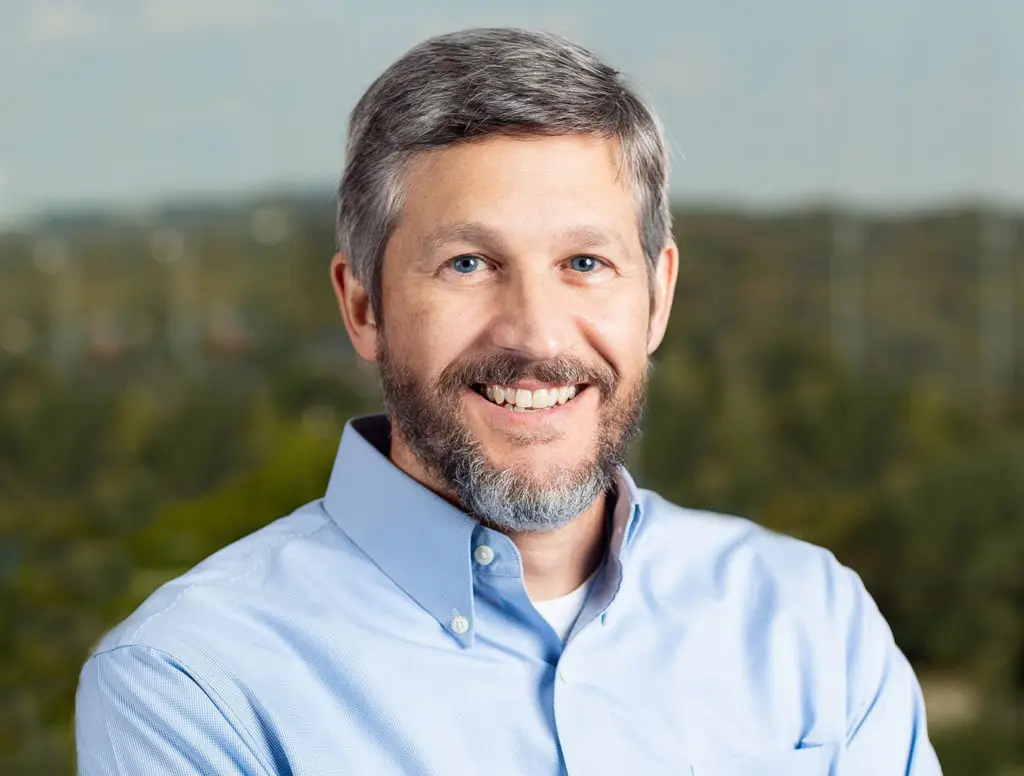
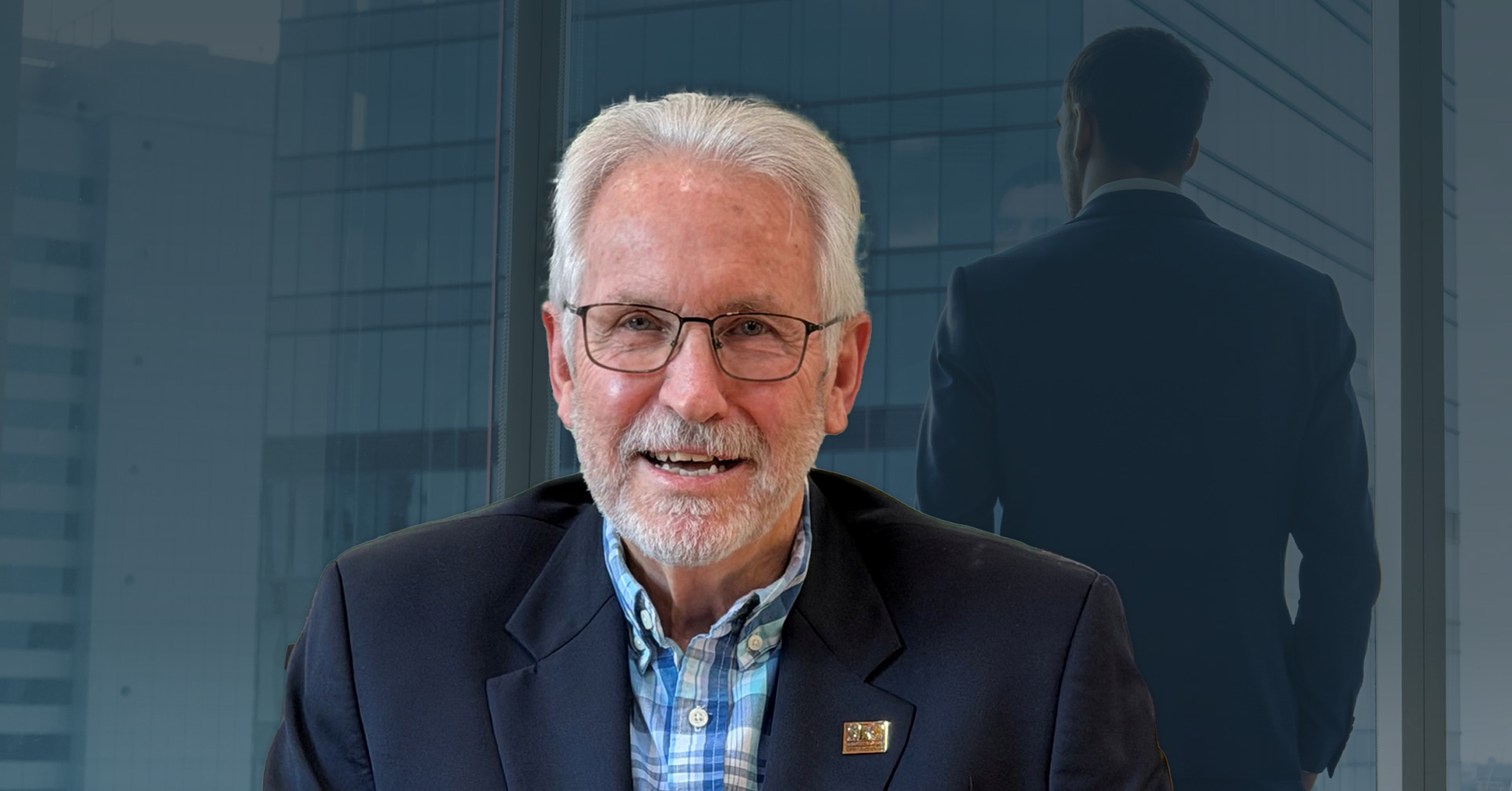
Many organizations have strong risk functions, but when disruption hits, siloed teams continue to operate without a unified model. Bruce McIndoe, a global risk advisor with decades of experience, explains why this gap makes it harder to respond quickly and effectively when it matters most.
Bruce outlines how organizations can move toward a joint, multidisciplinary model by leveraging shared data and stronger coordination to help teams detect threats earlier, act faster, and protect business outcomes.
Episode highlights:
- Why organizations struggle to move beyond siloed risk functions
- How to create a shared operating picture to improve response speed
- The importance of aligning risk reduction efforts to business objectives
- What metrics leaders can use to measure operational effectiveness
Transcript
(Automatically transcribed)Peter Steinfeld: Hello and welcome to The Employee Safety Podcast from AlertMedia, where you’ll hear advice from industry leaders on how to protect your people and business. I’m Peter Steinfeld.
Today we’re joined by Bruce McIndoe, a global risk advisor with decades of experience helping organizations navigate complex security and operational challenges.
In this episode, we explore how the traditional operations center is evolving into a joint multidisciplinary model built to manage today’s interconnected risks. Let’s dive in. Hey, Bruce, thanks for being here.
Bruce McIndoe: I’m happy to be here.
Peter Steinfeld: Excellent. Well, let’s get right into it.
You’ve had a very fascinating career path starting in physics and aerospace before moving into intelligence and enterprise risk. How did that journey shape the way that you think about risk and operations today?
Bruce McIndoe: I’ve been really lucky to have an interesting and, yes, eclectic career. I guess the through lines have become much clearer in hindsight than they did as I was evolving my career.
So starting in physics, I was specialized in high energy physics, astrophysics, and aerospace at NASA. I look back and say I was trained to think in systems, whether it’s unified field theory in physics or space.
So everything is interconnected and failure is rarely caused by a single point. So that’s what I took away from having to be in a high reliability space environment.
It’s usually the interaction between components where the real risk emanates. That mindset never left me. I moved then for 14 years into the intelligence community at NSA and CIA.
That added a very different dimension, human complexity.
Peter Steinfeld: Right.
Bruce McIndoe: But also dealing with incomplete information and adversarial intent, and making very consequential life and death decisions under uncertainty.
So that’s why I developed a real appreciation for the qualitative side of risk, where things don’t always show up clearly in a model.
The last half of my career has been in enterprise risk and business continuity, bringing both of those worlds together.
I’ve come to believe that operational resilience is not about predicting the future. It is about building organizations that can sense disruption early, adapt quickly, and recover without losing their core purpose.
Whether you’re tracking a missile or managing a corporate crisis, the underlying discipline is remarkably similar. I bring all of that to the table.
Peter Steinfeld: Well, that’s fantastic. It seems like organizations have been thinking about this for many years, but have not executed very well.
It’s been a long evolution to even get to where we are today.
When you look at how organizations run security, continuity, and crisis functions today, what is working and what seems to be missing?
Bruce McIndoe: What is working is that organizations have gotten much better structurally. Frameworks, standards, and certifications have elevated what I call the protective disciplines.
The challenge is they have grown in silos instead of coming together. When I started, we did not have dedicated security teams or business continuity functions. All of that has matured.
What is missing is integration. Threats have converged across domains, but the functions remain separate.
Even the word security is overloaded. You have physical security focused on assets, cybersecurity focused on networks, business continuity focused on recovery, and crisis management focused on response.
All of these operate independently, but they are deeply connected.
When a real event happens, those boundaries disappear and people come together under pressure to resolve it. In most cases they succeed, which is why the model has persisted.
Peter Steinfeld: Why do you think things evolved that way? Why did people grow in silos instead of collaborating from the start?
Bruce McIndoe: It comes down to money. Organizations address issues one at a time.
They fund a leader to solve a problem, then fund another leader for cybersecurity, and so on. Each function grows independently.
Over time, you end up with separate teams, budgets, and priorities. It becomes entrenched.
Peter Steinfeld: It feels very reactive. Something bad happens, then organizations invest.
Bruce McIndoe: Exactly. There is a saying, do not let any disaster go to waste, especially when it comes to budget.
Peter Steinfeld: That makes sense.
Many organizations have some type of operations center. What do leaders misunderstand about what that capability should deliver?
Bruce McIndoe: The biggest misunderstanding is that people see it as a technology investment.
They see screens, dashboards, and data feeds and equate that with capability. But those environments are often siloed as well.
A company might have separate centers for facilities, emergency response, cybersecurity, and a GSOC, all operating independently.
What we are talking about with a future operations center is not a physical space. It is an operating model.
Its purpose is to deliver decision advantage. If leaders and teams can make informed decisions quickly, the organization becomes more resilient.
Risk management is just a tool. Leaders do not want to see risk dashboards. They want to know how to achieve their objectives with greater certainty.
That is why I say we are not in the risk management business. We are in the certainty management business.
Peter Steinfeld: I love that idea of decision advantage. Everything comes down to decisions.
Bruce McIndoe: Exactly. Think about Google Maps or Waze. That is decision advantage. It helps you choose a better path in real time.
Peter Steinfeld: What has changed in today’s risk landscape that makes the old model harder to sustain?
Bruce McIndoe: The old model assumed risks stayed within domains. That is no longer true.
Cyber affects physical systems. Health events affect operations. Risks cascade across domains.
AI will accelerate this even further by impacting both people and systems.
Peter Steinfeld: So if organizations are still operating in silos, what needs to change?
Bruce McIndoe: Leaders need to recognize this is an operating model problem, not a technology problem.
We are moving toward joint operations. Teams keep their expertise, but come together around shared missions.
This is similar to the military’s team of teams model, where different disciplines collaborate to achieve a common objective.
We are not breaking silos. We are connecting them.
Peter Steinfeld: That makes sense. You keep expertise but increase value through collaboration.
Bruce McIndoe: Exactly. You get better perspectives, stronger decision making, and fewer blind spots.
Peter Steinfeld: Have you seen this work in the corporate world?
Bruce McIndoe: Yes. Most organizations already did this during COVID.
Leaders formed cross-functional task forces overnight to save the business.
The mistake was not institutionalizing that model afterward.
The goal now is to make that approach permanent and scalable.
Peter Steinfeld: What creates the most friction when teams try to come together?
Bruce McIndoe: Culture and language.
Different teams use different terminology and may not understand each other’s work.
There is also fear around losing ownership or restructuring roles.
To succeed, organizations need shared data, clear roles, human oversight, and a consistent operational rhythm.
Peter Steinfeld: As organizations invest in this, how should they measure success?
Bruce McIndoe: Early metrics include time to detect, time to decide, time to coordinate, and time to recover.
But the ultimate measure is reduced business impact.
How well are you identifying threats, understanding impact, and preventing disruption?
Peter Steinfeld: Metrics help justify investment.
Bruce McIndoe: Exactly. And modern systems will track these processes automatically, giving you rich data on how decisions are made and executed.
Peter Steinfeld: Final question. Where should teams start?
Bruce McIndoe: Start with leadership alignment and culture.
If leadership does not understand the value, progress will be difficult.
Then map existing capabilities and begin connecting them.
A simple 30, 60, 90 day plan can get things moving.
The organizations that will succeed are not the ones with the most technology. They are the ones with the strongest cross-functional relationships.
That is what drives resilience and certainty.
Peter Steinfeld: Wise words and a great way to wrap up. Thank you for joining us.
Bruce McIndoe: Thank you.
Peter Steinfeld: To learn more about Bruce and the FUTURE Operations Center, check the links in the episode description. You can also watch video highlights on AlertMedia’s YouTube channel. Be sure to subscribe, rate, and review the show wherever you listen.
Stay safe out there.
Outro: Thank you for listening to The Employee Safety Podcast from AlertMedia, the world’s leading provider of risk intelligence and response solutions. To learn more about how to protect your people and business during critical incidents, visit alertmedia.com.

More Episodes You May Be Interested In
-
 Understanding the Rise in Executive Targeting
Threats toward business leaders are rising, and security teams are starting to see the shift firsthand. Bob Hayes, Managing Director and Founder of the Security Executive Council (SEC), shares what his team uncovered after analyzing new data on executive targeting. In this episode, Bob explains what’s driving the surge in incidents, how executive exposure is…
-
 Top Threats Shaping Organizational Risk in 2026
Organizations faced a record number of interconnected threats in 2025, from global political volatility and multi-city protests to emerging technology disruptions and extreme weather events. The sheer volume and variety of incidents forced leaders to rethink how they monitor risk, protect employees, and maintain business continuity in an increasingly unpredictable world. In this episode, AlertMedia’s…
-
 Trends Defining the Future of Enterprise Security Risk Management
Corporate security risks are evolving in ways that demand new mitigation strategies. Ryan Schonfeld, Co-Founder and CEO of HiveWatch, an AI-driven physical security software platform, draws on his background in law enforcement and global enterprise security to offer a new perspective on how organizations can better manage today’s challenges. From the increasing risk and reach…