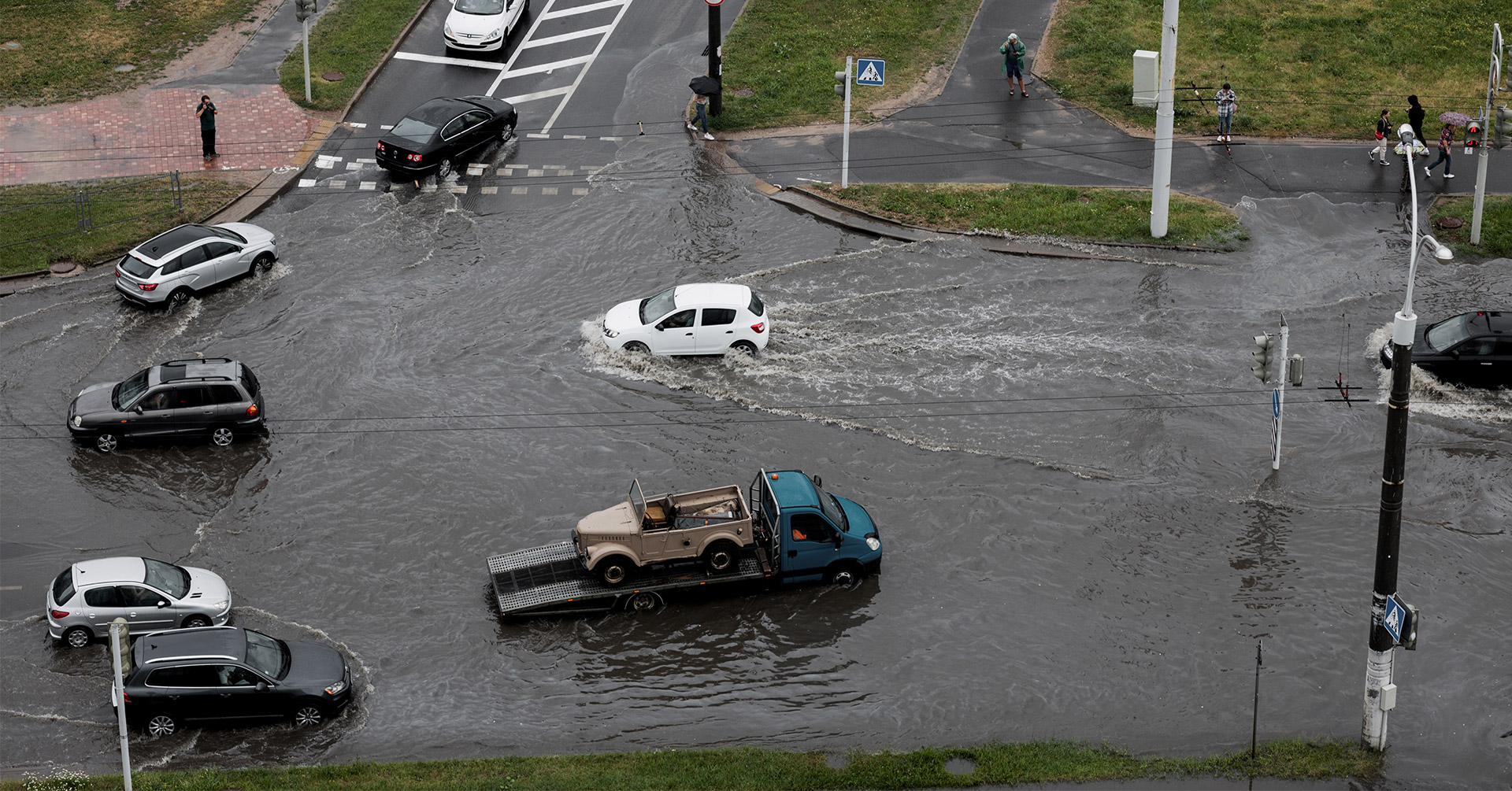
When severe weather strikes, a well-practiced response plan can help your organization act quickly, communicate clearly, and keep people safe. Learn how to run a severe weather tabletop exercise to prepare your team for an effective response.
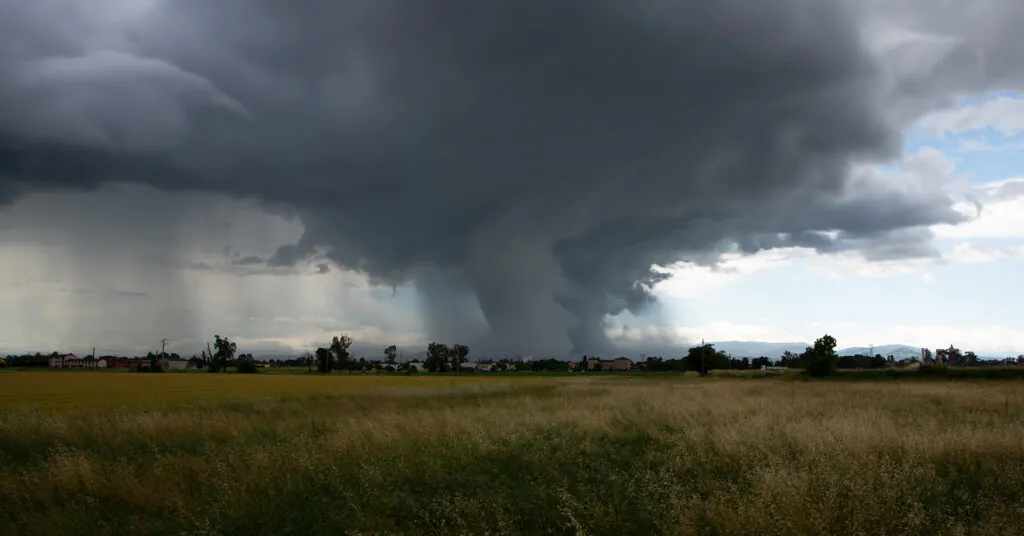
When severe weather strikes, a well-practiced response plan can help your organization act quickly, communicate clearly, and keep people safe. Learn how to run a severe weather tabletop exercise to prepare your team for an effective response.
Our ability to track severe weather has improved dramatically. Forecast models process enormous amounts of data in seconds. Meteorologists can identify storm activity earlier and issue more accurate warnings than they could even 20 years ago. But those advances, while critical for increasing the time organizations have to prepare for severe weather, don’t necessarily make these events easier to manage.
Instead, protecting employees during severe weather has become more complicated.
Today’s workforce is spread across cities, states, and regions. Remote employees may face completely different threats than those at your headquarters. Communication plans can fail before leadership understands the full scope of a crisis. Severe weather events can also escalate quickly and create overlapping emergencies that strain response teams and expose weaknesses in business continuity plans.
Paul Yura, Warning Coordination Meteorologist for the National Weather Service, explained the problem during an episode of The Employee Safety Podcast:
Technology can improve forecasts. It cannot prepare your people to make decisions under pressure. A severe weather tabletop exercise gives your teams a chance to test communication workflows, work through operational disruptions, and uncover response gaps before a real emergency forces those weaknesses into the open.
A severe weather tabletop exercise is a discussion-based training session that walks participants through a simulated weather emergency to evaluate how teams respond, communicate, and make decisions under pressure. Unlike a full-scale drill, a tabletop exercise focuses on coordination and problem-solving rather than physical deployment. Severe weather tabletop exercises are one type of tabletop exercise that organizations use to evaluate emergency response procedures and improve coordination before a real crisis occurs.
The goal is not to predict every possible outcome. The goal is to expose weaknesses in your response before a real emergency does.
That preparation window matters during severe weather events. “It’s almost like erring on the side of taking the watches as seriously as the warnings,” said Paul Yura. “The watch phase is your preparedness time—there’s no time to prepare during the warning phase. The warning phase is the action time. If you’re trying to break out a book and look at the binder of your safety rules at that point, it’s going to be too late.”
The first step is to build on a framework that allows for continuous testing and improvements. Many organizations structure their current plans around guidance from government agencies like the Federal Emergency Management Agency (FEMA) and the Homeland Security Exercise and Evaluation Program (HSEEP). HSEEP treats preparedness as a continuous improvement cycle with four phases: design, conduct, evaluate, and improve.
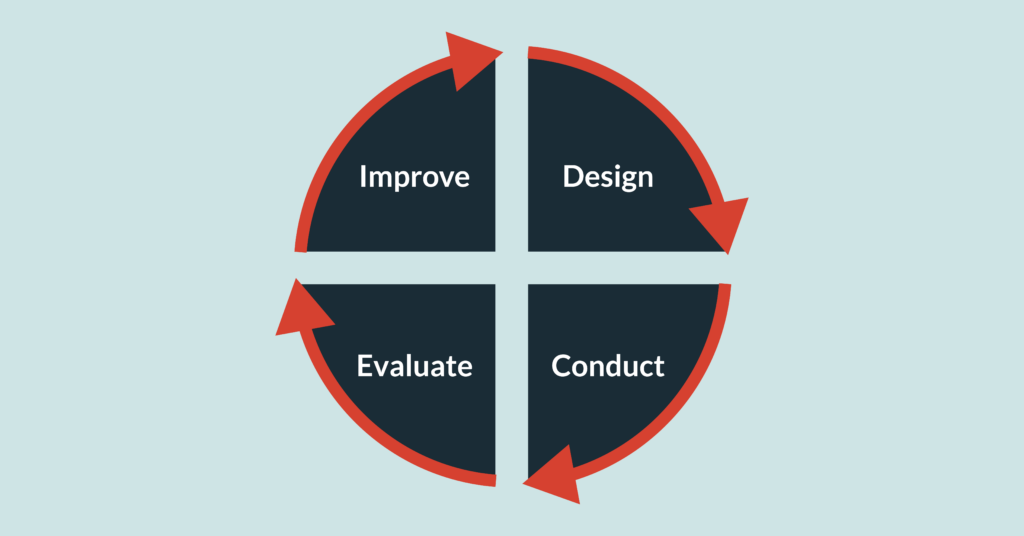
That structured approach is especially important for severe weather planning because weather incidents rarely stay isolated to a single operational problem. Unlike many generic emergency scenarios, severe weather can affect employees, facilities, transportation, utilities, vendors, and communications at the same time. Those impacts may disrupt one office while leaving another untouched. Remote employees may also face completely different conditions than personnel at your headquarters.
Severe weather incidents can also expand rapidly beyond their original impact area. A tornado, hurricane, or flood may begin as a regional emergency, then disrupt communications, staffing, transportation, utilities, vendors, and response coordination far outside the original impact area. The problem does not stay contained.
Paul Yura shared one example from Hurricane Laura. After the hurricane damaged local National Weather Service infrastructure, offices in completely different parts of the country had to step in and support forecasting and warning operations remotely. What began as a localized emergency operations plan quickly became a coordinated national effort involving multiple offices, backup systems, and cross-state operational support.
That complexity is exactly why corporate teams should run severe weather tabletop exercises specifically instead of relying on general tabletop exercise scenarios. These exercises test whether your people can adapt when weather conditions shift quickly, communication becomes fragmented, and multiple operational problems unfold at once.
An effective severe weather tabletop exercise walks participants through realistic storm scenarios while testing how teams communicate during a crisis. It should evaluate how leadership escalates decisions, how regional teams coordinate response efforts, and how employees adapt when conditions change faster than expected. A well-designed exercise should also pressure-test your emergency response plan under realistic conditions and reveal operational gaps that may stay hidden during day-to-day operations.
Planning a severe weather tabletop exercise follows the same continuous improvement approach outlined in the HSEEP framework mentioned earlier. Start by identifying the operational challenges and response capabilities you want to evaluate. Next, build realistic scenarios and involve the appropriate participants. Once the exercise is complete, use the results to strengthen future response efforts and improve your emergency response plan.
The following six steps can help you design a TTX that reflects the operational challenges teams may face during severe storms, natural disasters, and other weather-related events.
One challenge with severe weather planning is that teams often become comfortable with the threats they see most often. During the podcast, Paul Yura discussed how organizations in regions that experience frequent tornadoes or flooding can start treating certain alerts as routine background noise. Over time, that familiarity can affect how quickly teams escalate concerns or activate the emergency response plan.
That’s why exercise objectives should focus on the operational decisions teams have to make as conditions worsen. One organization may want to evaluate how quickly leadership moves from weather monitoring into emergency response procedures. Another may focus on whether managers understand when to suspend operations or shelter employees in place. Some teams may use the exercise to evaluate how regional offices communicate with remote employees during rapidly changing conditions.
A severe weather tabletop exercise can also reveal where decision-making slows down during a crisis. Teams may discover that employees are unclear about who has the authority to close a facility. In other cases, the exercise may expose communication gaps between regional leadership teams and corporate decision-makers.
Severe weather incidents rarely affect a single department. Building an effective tabletop exercise requires input from the teams that will need to coordinate during an actual emergency.
Your planning team may include:
The right mix of participants depends on the scenario you want to test. A winter storm exercise may require facilities teams and regional office leadership to play a larger role. A hurricane scenario may place greater emphasis on employee communications, remote work coordination, and continuity planning.
Some organizations also involve outside partners during the planning process. Local emergency management agencies, utility providers, transportation partners, and property management groups may all play a role during a real severe weather event.
In Paul Yura’s example, Hurricane Laura damaged National Weather Service infrastructure, forcing offices in other states to take over forecasting and warning responsibilities remotely. That response worked because multiple offices had already practiced supporting one another before the hurricane. The same principle applies to tabletop planning. The teams responsible for coordinating during a severe weather emergency should be involved in the exercise design process long before the storm arrives.
The people planning the exercise are not always the same people participating in it. Your participant list should reflect the operational realities of a severe weather emergency.
For example, a tornado scenario may require participation from facilities teams, executive leadership, communications staff, and regional managers responsible for employee accountability. A winter weather scenario may involve supply chain leaders, transportation coordinators, remote workforce managers, and continuity teams.
Think carefully about which groups would need to make decisions during a real event. Severe weather often creates fragmented conditions across regions. One office may lose power while another remains operational. Remote employees may face evacuation orders while the headquarters experiences minimal disruption. Your tabletop exercise should reflect those differences.
The scenario drives the entire exercise. Choose one that reflects the risks your organization is most likely to face and the operational challenges you want to test.
The strongest scenarios usually involve escalation and uncertainty. Conditions should worsen as the exercise progresses. Participants should face incomplete information, changing forecasts, infrastructure disruptions, or overlapping operational problems.
For example, a hurricane tabletop exercise may begin with a standard weather watch before escalating into flooding, communication outages, road closures, and employee accountability issues across multiple regions. These layered disruptions force teams to adapt in real time rather than follow a predictable script.
Once the scenario is defined, gather the materials participants will use during the exercise. These resources should mirror the tools and procedures teams rely on during real severe weather incidents.
Common materials include:
You should also build exercise injects that introduce new problems throughout the scenario. Injects create pressure and force participants to react as conditions change.
Examples may include:
These injects should challenge emergency communication, decision-making, and coordination without becoming unrealistic.
The facilitator drives the exercise forward as conditions change. They introduce new injects, challenge assumptions, and force teams to respond as new problems emerge. As participants work through the scenario, the facilitator should keep discussions focused on operational decision-making instead of broad, hypothetical conversations.
A strong facilitator also keeps the exercise grounded in real operational pressure. Severe weather incidents move quickly. Information changes constantly. Teams may have to make decisions before they fully understand the scope of the threat. The goal is not to create chaos, but to recreate the urgency teams would face during an actual severe weather emergency.
There are many different severe weather tabletop exercise scenarios you can use to test how your teams respond to weather-related disruptions. The examples below demonstrate how different severe weather threats can affect facilities, disrupt operations, and impact employees in different ways. While these scenarios focus on specific industries and environments, you can easily adapt them to reflect your organization’s structure, operational risks, and regional weather patterns.
Tornado scenario at a regional hospital | |
| Exercise overview It is 2:15 p.m. on a weekday at a regional hospital serving several surrounding rural communities. The emergency department is operating near capacity following a multi-vehicle accident earlier in the day. Severe thunderstorms have been moving through the area since late morning, and the National Weather Service has issued a tornado watch covering the county. Hospital leadership continues monitoring conditions while staff maintain normal operations. Many patients have limited mobility, several surgical procedures are underway, and family members are present throughout the facility. Ten minutes later, the National Weather Service upgrades the situation to a tornado warning after radar indicates rotation approaching the hospital’s area. As conditions worsen, leadership must make rapid decisions about sheltering patients, protecting critical infrastructure, maintaining emergency communications, and preserving public health. | Inject 1: The tornado warning polygon shifts directly toward the hospital. Local emergency management reports the storm may arrive within 12 minutes. At the same time, staff begin receiving text messages from family members asking whether they should evacuate loved ones from the facility.
Inject 2: |
Discussion questions
| |
| Evaluation criteria Strong performance during a tornado tabletop exercise includes rapid activation of shelter procedures, clear communication between leadership and clinical teams, and coordinated patient movement into protected areas without panic or conflicting instructions. Teams maintain accountability for patients, staff, and visitors throughout the incident while preserving critical medical operations. Leadership also coordinates effectively with emergency management partners and facilities personnel to assess structural risks and maintain continuity of care after the storm passes. | |
Winter storm scenario at a regional warehouse | |
| Exercise overview It is early January, and a large distribution warehouse is preparing for one of its busiest shipping weeks of the quarter. The facility supports retail and healthcare deliveries across several states, and leadership expects elevated outbound volume over the next 72 hours. A major winter storm is forecast to move through the region overnight. Meteorologists predict heavy snowfall, ice accumulation, dangerous road conditions, and the possibility of extended power outages. Warehouse leadership initially expects minor shipping delays, but winter weather conditions worsen faster than anticipated as freezing rain begins earlier than forecast. Within hours, transportation routes become hazardous, inbound deliveries stop arriving, and utility providers warn customers to prepare for prolonged outages due to ice accumulation on power lines. At the same time, warehouse teams must decide whether to continue operations, protect temperature-sensitive inventory, maintain employee safety, and communicate with vendors and customers facing growing delays. | Inject 1: The warehouse loses primary power after ice damages nearby transmission lines. Backup generators restore limited power to critical systems, but heating capabilities remain inconsistent in several parts of the facility. Utility providers estimate restoration could take 24 to 48 hours. Inject 2: |
Discussion questions
| |
| Evaluation criteria Strong performance includes early operational decision-making, clear communication with employees and supply chain partners, and rapid coordination between facilities, operations, logistics, and leadership teams. Participants prioritize employee safety while maintaining continuity for critical shipments and temperature-sensitive inventory. Teams also demonstrate the ability to adapt operations as outage timelines, transportation conditions, and staffing availability continue changing throughout the winter storm tabletop exercise. | |
Flash flood scenario at a bank | |
| Exercise overview It is late spring, and a bank’s downtown operations center is managing normal business activity during a period of heavy rainfall. The facility houses customer service operations, commercial banking teams, loan processing staff, and critical records management systems that support multiple branches across the region. Meteorologists issue a flash flood watch early in the morning after several days of sustained rainfall have saturated the area. Leadership initially expects localized street flooding and minor traffic disruptions. By early afternoon, rainfall intensifies rapidly, nearby creeks begin overflowing, and emergency management officials issue multiple flash flood warnings across the city. Road closures start affecting employee commutes and armored vehicle routes while water begins pooling near parking garages and lower-level facility entrances. As conditions continue worsening, bank leadership must determine how to maintain operations, protect employees, secure critical systems and records, and coordinate continuity procedures while access to the facility becomes increasingly limited. | Inject 1: City officials close several major roads surrounding the operations center after floodwaters strand vehicles nearby. Multiple employees report they cannot safely leave the building, while incoming staff cannot reach the facility. Inject 2: |
Discussion questions
| |
| Evaluation criteria Strong performance during a flash flood tabletop exercise includes early activation of business continuity procedures, coordinated communication across branches and operational teams, and rapid decision-making around employee safety and facility access. Leadership maintains accountability for employees affected by the flooding while protecting critical systems, records, and customer operations. Teams also demonstrate flexibility as transportation routes, facility conditions, and utility disruptions continue changing throughout the incident. | |
Before the exercise begins, establish clear expectations for participation and discussion. Participants should understand that the goal is to identify gaps and improve response capabilities rather than assign blame or “win” the scenario.
Facilitators should also explain how decisions will be documented throughout the exercise. Capturing key actions, assumptions, delays, communication breakdowns, and unresolved questions creates a foundation for the after-action report and improvement planning process later.
Encourage participants to answer from the perspective of their actual role during a severe weather emergency. Discussions become far more useful when teams explain how they would respond operationally instead of speaking in general terms.
Injects help facilitators control the pace and pressure of the exercise as the scenario unfolds. Instead of presenting every problem at once, introduce new developments gradually so participants have to reassess decisions as conditions change.
A facilitator may begin with a weather watch or early operational concern, then introduce additional complications as teams start discussing their response. This approach keeps participants engaged and prevents discussions from becoming too scripted or overly theoretical.
The timing of injects also matters. If teams solve problems too quickly, the facilitator can compress timelines or introduce conflicting information to increase pressure. If discussions stall, the facilitator can redirect the conversation by introducing a new operational challenge that forces participants to make a decision.
Severe weather tabletop exercises can quickly stall when conversations become too theoretical. Facilitators should consistently push discussions back toward operational decisions and realistic response actions.
For example, if a participant says, “We would notify employees,” the facilitator should ask:
Questions like these help expose hidden assumptions and reveal whether procedures actually work under pressure.
Even well-designed severe weather tabletop exercises can lose value if facilitators allow common discussion problems to derail the session. Below is a list of common issues and solutions to help stop them in their tracks.
| Pitfall | Facilitator solution |
| Participants default to groupthink or immediately agree with leadership decisions | Ask individual departments how the situation affects their responsibilities specifically. Encourage alternative viewpoints and challenge assumptions respectfully. |
| Teams rely too heavily on reading procedures directly from the plan | Redirect discussions toward operational execution by asking how teams would carry out the procedure in real conditions. |
| Participants respond with vague answers like “we’d call IT” or “someone would handle that” | Ask follow-up questions that clarify ownership, timing, escalation paths, and backup procedures. |
| Discussions drift into unrelated hypotheticals or technical debates | Bring the group back to the scenario timeline and focus on immediate operational decisions. |
| One department dominates the exercise while others remain passive | Call directly on quieter teams and ask how the incident affects their operations, staffing, communication responsibilities, or continuity procedures. |
| Participants treat the exercise like a checklist review instead of a realistic incident | Introduce injects that force adaptation, uncertainty, and competing priorities. Keep the pace moving as conditions worsen. |
A well-facilitated severe weather tabletop exercise should feel challenging without becoming overwhelming. When participants leave the session with a clearer understanding of operational gaps, communication weaknesses, and decision-making responsibilities, the exercise has done its job.
The value of a severe weather tabletop exercise does not end when the scenario concludes. The exercise itself reveals response gaps, communication breakdowns, and operational weaknesses. The post-exercise review process is what turns those observations into meaningful improvements.
A hot wash is an immediate post-exercise discussion where participants review what happened during the scenario while details remain fresh. This conversation should focus on operational performance rather than assigning blame.
Encourage the teams to discuss:
The goal is to capture honest feedback before participants return to normal operations and details begin fading.
After the hot wash, facilitators and planning teams should consolidate exercise findings into a formal after-action report (AAR). The AAR documents the scenario, summarizes key decisions, identifies operational strengths, and outlines the gaps uncovered during the exercise.
A strong after-action report focuses on operational realities rather than broad observations. Specific findings create clearer improvement plans.
An exercise only improves preparedness if organizations act on the lessons identified afterward. Once response gaps are documented, leadership teams should assign ownership for corrective actions and establish timelines for completion.
Corrective actions may involve updating the emergency response plan, refining notification procedures, improving backup communication systems, or clarifying escalation responsibilities during severe weather incidents. In some cases, organizations may identify the need for additional training exercises or stronger continuity planning between regional teams.
Paul Yura emphasized the importance of continued practice and adaptation over time. He explained that even well-developed response plans often have to be adjusted during real emergencies as conditions change and new operational problems emerge. Organizations that regularly review lessons learned, update procedures, and practice response coordination are often better positioned to adapt when severe weather disrupts normal operations.
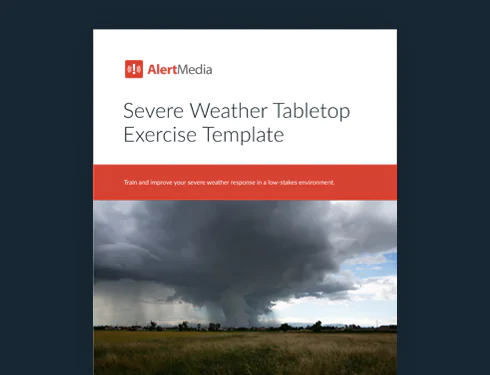
If your organization is building or refining its severe weather exercise process, a structured template can help simplify planning, facilitation, and documentation. Download our Tabletop Exercise Template to help organize scenarios, injects, participant roles, and after-action reporting in one place.

AlertMedia, Risk Intelligence and Response


Please complete the form below to receive this resource.