
Learn how AlertMedia’s Travel Risk Management solution can help you maintain a safe travel experience for everyone in your organization.

Company News Feb 13, 2026
How Travel Risk Management Helps Organizations Protect Traveling Employees 24/7
Travel Risk Management Key Feature Guide
Explore how AlertMedia can help keep your travelers informed and out of harm’s way.
Business travel has always carried risk — but today, those risks are more dynamic, localized, and harder to predict than ever before. An employee traveling to London or Paris may encounter sudden transportation strikes. Teams flying to Florida or the Caribbean could face last-minute disruptions during hurricane season. Executives visiting the Asia-Pacific regions may need to navigate typhoons, regional unrest, or rapidly changing border requirements. In each case, conditions can shift quickly, often with little warning.
For organizations with employees on the move, these realities have raised the stakes around employee safety and duty of care. It’s no longer enough to plan travel once and hope for the best. Employers are increasingly expected to understand where their people are traveling, what risks may affect them by location or season, and how to communicate if a situation escalates — whether that risk stems from severe weather, political instability, health concerns, or infrastructure disruptions.
That’s where AlertMedia’s Travel Risk Management solution can help by providing a flexible and scalable way to help you monitor, reach, and protect your business travelers no matter where they are. Combining our analyst-verified threat intelligence, two-way communication system, and your employee travel information, this integrated solution gives you a powerful suite of tools to keep travelers safe and informed while they’re away from home.
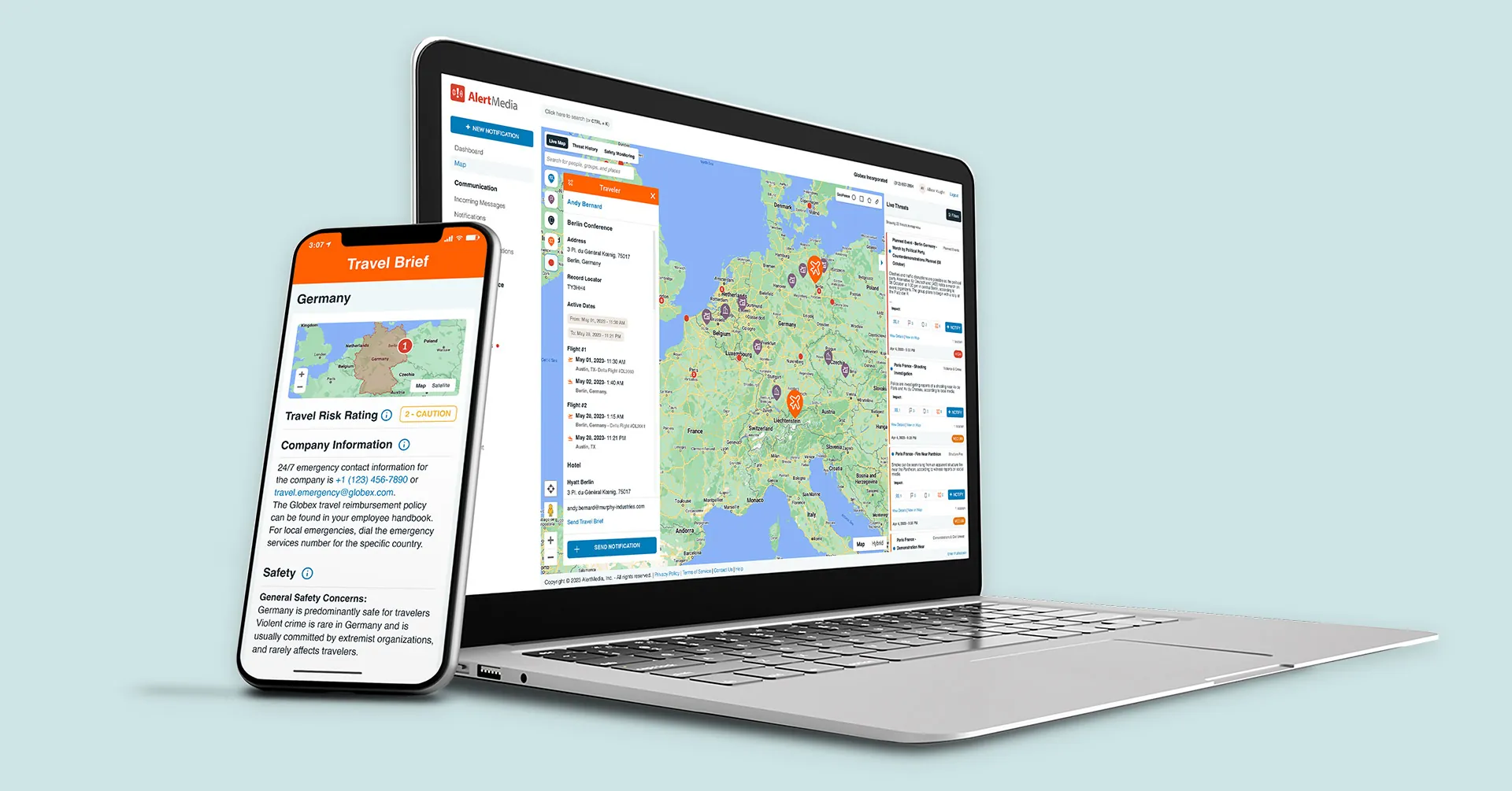 AlertMedia Travel Risk Management
With Travel Risk Management, employers of all sizes can prepare travelers before trips, stay ahead of emerging threats near their traveling workforce, and notify at-risk employees to ensure they are out of harm’s way.
Travel Risk Management Key Feature Guide
Explore how AlertMedia can help keep your travelers informed and out of harm’s way.
What Is Travel Risk Management?
Travel risk management is the practice of helping organizations identify, assess, and respond to risks that may affect employees traveling for work. These risks can arise from a wide range of factors, including political unrest, severe weather, public health crises, transportation disruptions, or security incidents. Whether employees are visiting major global cities, traveling to remote regions, or operating in areas experiencing heightened instability, travel risk management aims to reduce uncertainty and support employee safety throughout the journey.
At a high level, travel risk management typically involves understanding where employees are traveling, staying informed about emerging risks by location, and preparing to communicate quickly if conditions change. This may include monitoring regional developments, accounting for seasonal threats such as hurricanes or typhoons, and considering location-specific challenges such as labor strikes, infrastructure disruptions, or border restrictions.
Rather than treating travel risk as a one-time planning exercise, travel risk management emphasizes ongoing awareness before, during, and after employee travel.
The Challenge of Managing Travel Risks
Managing business travel risk is rarely straightforward. Risks vary widely by geography, timing, and circumstances, and can change rapidly. Here are some real-world travel risk examples that organizations may encounter:
- Political demonstrations in Latin American capitals
- Labor strikes affecting rail and air travel across Western Europe
- Border restrictions or health advisories impacting travel in East Asia
- Severe weather events in Japan, Australia, or the U.S. Gulf Coast
- Infrastructure disruptions in major global cities such as Berlin, São Paulo, or Hong Kong
For organizations with employees traveling across multiple regions, maintaining awareness of these risks—and understanding who may be affected—can be a significant challenge. Performing a business travel risk assessment will give your organization a clear picture of what travel risks you may face. With that knowledge, you will be better able to select a Travel Risk Management solution that meets your specific needs.
Why Some Travel Safety Solutions Fail to Take Off
Many organizations rely on static travel planning processes or fragmented information sources to manage risk. These approaches often fall short when conditions change quickly or when risks emerge unexpectedly.
For example, a transportation strike in Paris may disrupt travel plans with little notice. Wildfires in California or extreme heat across parts of Southern Europe can affect employee safety during a trip. Airport closures or security incidents in Tokyo or Istanbul may require immediate communication with travelers already on the ground.
Without a way to stay informed about location-specific risks and communicate efficiently with traveling employees, organizations may struggle to respond in time—putting both employees and operations at risk.
Key Components of an Effective Travel Risk Management Approach
While travel risk management programs vary by organization, effective approaches often share a few common elements:
Location awareness
Understanding where employees are traveling and recognizing that certain regions or cities may present different considerations at different times of year or under different local conditions. For example, an employee traveling to a major financial hub may face different challenges than one visiting a remote location or a region with known seasonal or political sensitivities.
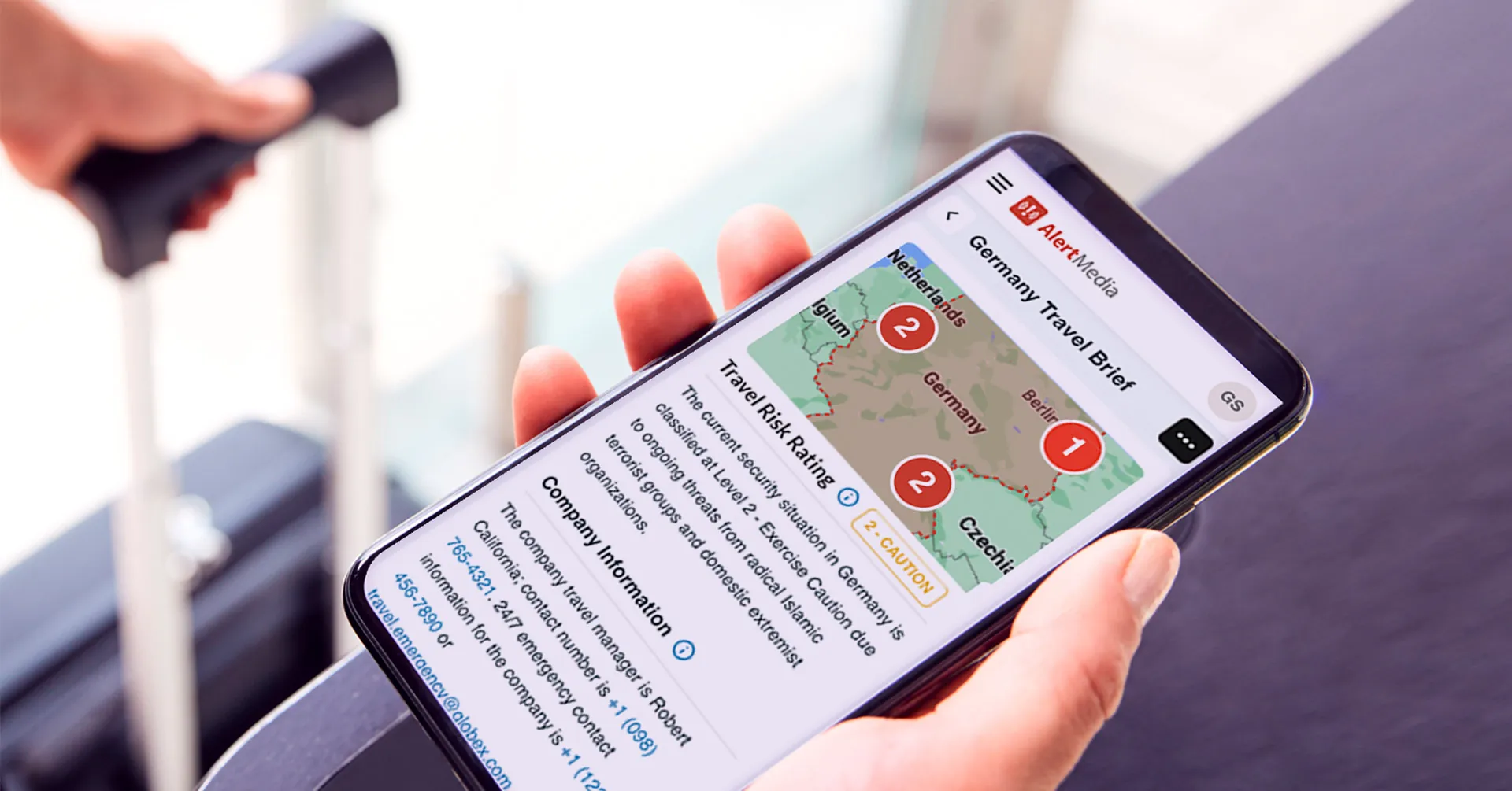 Travel Brief providing threat details and safety resources
Risk monitoring
Staying informed about evolving conditions that could potentially impact travel, such as weather events, civil unrest, public health developments, or transportation disruptions in specific locations. This awareness helps organizations anticipate issues before they escalate and consider how changing conditions might affect employees already on the road.
Communication readiness
“When you’re separated geographically and there’s so much communication that needs to occur, a tool like AlertMedia helps organizations communicate faster, better, and more clearly.”Gianetta Jones Vice President and Chief People Officer, Coca-Cola Bottling

Being prepared to reach employees quickly if a situation changes or escalates, particularly when risks emerge unexpectedly. Clear, timely emergency communication can help travelers understand what is happening, what actions to consider, and where to find additional support if needed.
Planning for variability
Accounting for how travel risks can differ across regions, seasons, and travel contexts, rather than applying a one-size-fits-all approach. What may be appropriate for travel within one country or region may not apply elsewhere, underscoring the importance of flexibility and situational awareness.
Keep your travelers out of harm's way with AlertMedia's Travel Risk Management.
How Travel Risk Varies by Region and Season
Travel risks are rarely uniform. An employee traveling within North America may face very different challenges than one visiting Southeast Asia or Eastern Europe, and risks often fluctuate throughout the year.
Seasonal weather events such as hurricanes, typhoons, or extreme heat can disrupt travel across wide geographic areas. Political developments, elections, or labor actions may increase the likelihood of demonstrations or transportation delays in certain regions. Health advisories or border policy changes can affect travel plans with little notice.
Recognizing how travel risk varies by location and season is a critical part of protecting employees and supporting safe, informed travel decisions.
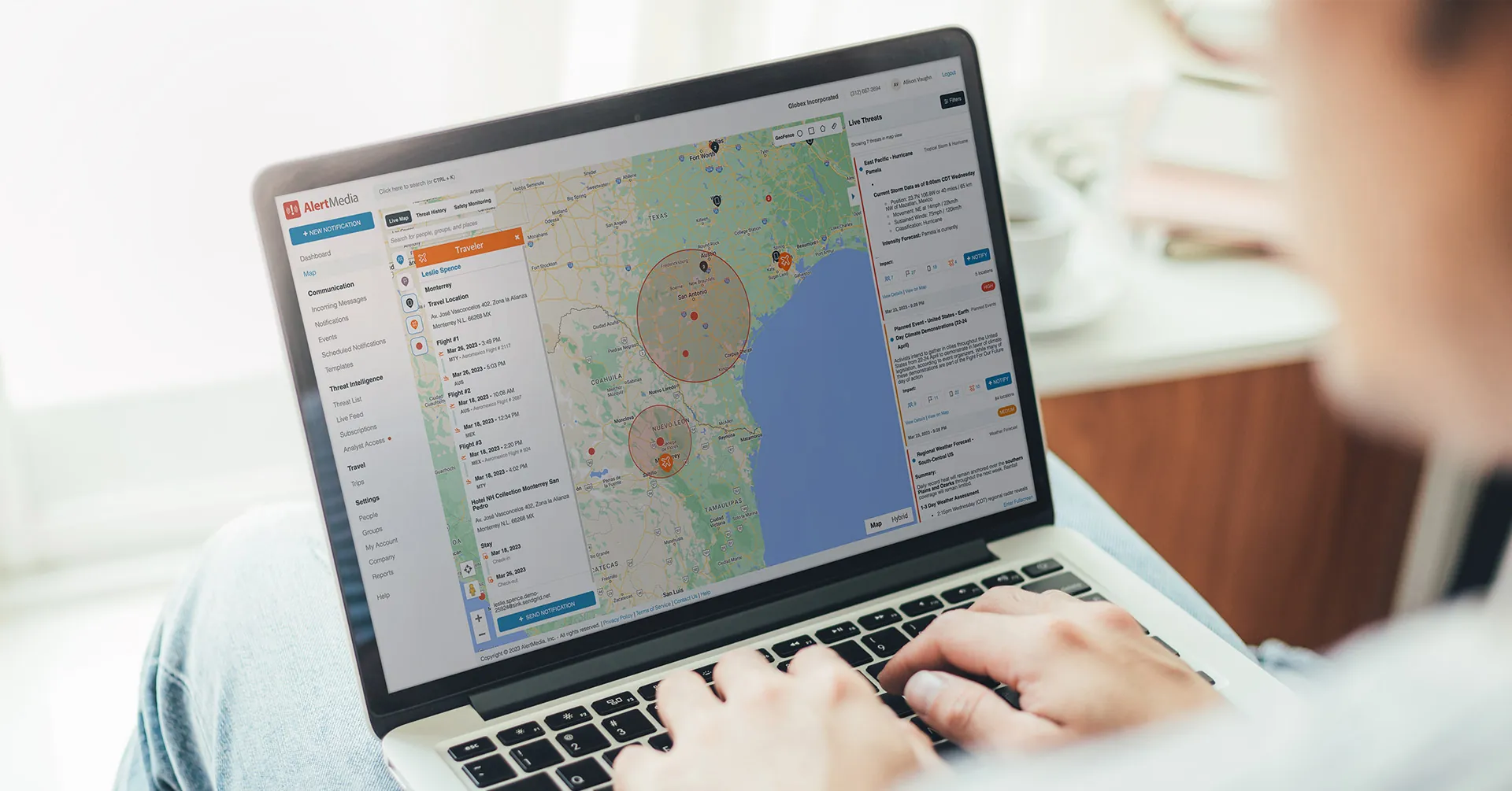 Live map showing employees' proximity to threats
Supporting Travel Risk Management Efforts
As organizations look to strengthen their travel risk management practices, many turn to solutions that help them stay informed and communicate effectively during disruptions. AlertMedia supports organizations seeking to improve their approach to travel risk management by helping them maintain awareness and reach employees when it matters most.
Request a demo now to see how AlertMedia’s Travel Risk Management can support your organization.
FAQ
- How do companies manage travel risk for international employees? Organizations manage travel risk for international employees by maintaining awareness of where employees are traveling, understanding location-specific risks, and preparing to communicate if conditions change. This often involves monitoring political, environmental, health, or transportation-related developments that may affect specific regions or destinations.
- What are the biggest travel risks for employees traveling to Europe? Common travel risks in Europe include transportation strikes, political demonstrations, severe weather, and infrastructure disruptions. Risks may vary significantly by country, city, and season. Performing a travel risk assessment can help identify specific risks to your travelers.
- How does political unrest affect business travel? Political unrest can potentially lead to demonstrations, travel delays, border restrictions, or sudden changes in local conditions. These situations may affect employees traveling to or through certain regions with little notice, making situational awareness and communication especially important.
- How can organizations prepare for weather-related travel disruptions? Organizations can prepare by understanding seasonal weather patterns, monitoring forecasts and advisories, and considering how severe weather events, such as hurricanes, typhoons, or extreme heat, could impact travel plans or employee safety in specific locations.
- Why is location-based communication important for traveling employees? Location-based communication helps ensure employees receive relevant information related to where they are traveling. When risks or disruptions affect a specific city or region, targeted communication can help employees stay informed and make safer, more confident decisions.
- What is an employer’s duty of care for traveling employees? An employer’s duty of care generally refers to the responsibility to take reasonable steps to protect employee health and safety, including during work-related travel. This may involve understanding potential travel risks, providing guidance or resources, and responding appropriately if an issue arises while employees are away from home.
- How does travel risk differ by region or destination? Travel risk can vary significantly depending on geographic location. Employees traveling to different regions may face distinct considerations related to weather, political conditions, infrastructure, or public health. Risks may also change over time, making ongoing awareness important.
- How has global travel volatility changed travel risk management? Global travel has become more dynamic and less predictable due to factors such as climate events, geopolitical developments, and changing regulations. As a result, many organizations are rethinking how they approach travel risk management to better account for rapidly evolving, location-specific conditions.
Travel Risk Management Key Feature Guide
Explore how AlertMedia can help keep your travelers informed and out of harm’s way.

AlertMedia, Risk Intelligence and Response