
Your employees either strengthen or undermine your security. Build a culture where people catch threats before they spread, report problems without fear, and treat security as part of their job.

Safety and Security Feb 06, 2026
How to Build a Security Culture That Actually Reduces Risk
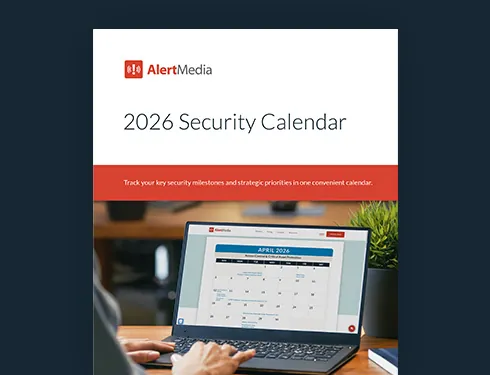
2026 Security Calendar
Track your key security milestones and strategic priorities in one convenient calendar.
Nearly 95% of data breaches involve human error, from credential misuse and phishing to simple mistakes. Despite continued investment in advanced security technologies, many incidents still begin with everyday decisions made by employees under pressure, with limited visibility, or without clear guidance on when to escalate concerns.
This reality underscores a critical point: security failures are rarely caused by technology alone. They’re often the result of gaps in awareness, accountability, and follow-through. When risks are known but not acted on—or when employees don’t feel responsible or empowered to speak up—small vulnerabilities can quietly grow into major incidents.
That’s where security culture comes in. A strong security culture helps organizations move from reactive responses to proactive risk reduction, ensuring threats are identified, communicated, and addressed before they escalate.
This guide will explain why security culture determines outcomes, the challenges organizations face in building it, and how to create a culture that actually reduces risk in practice, not just on paper.
Download Our 2026 Security Calendar
Track your key security milestones and strategic priorities in one convenient calendar.
What Is Security Culture?
Security culture is the shared values, attitudes, and everyday behaviors in an organization that make people collectively responsible for protecting systems, data, and assets.
In a strong security culture, protecting against threats becomes automatic. Think of it like this: cybersecurity training shows you how to spot phishing. Security awareness explains why you should care. And security culture means the check happens even when nobody’s watching, because protocols exist and good habits are ingrained.
“Security is everyone’s responsibility and should be part of the DNA of a business or organization,” said Wendy Bashnan, Director of Security and Fire Protection at Scout Motors. But what’s often been missing from the organizational approach is the why. “We explain what they have to do. We don’t explain the ‘why’. Why do we want them to change their passwords every three months? The why is important to people because then they understand the part that they can control.”
That gap between knowing and doing is where culture makes the difference. People know clicking suspicious links is dangerous, and that password security matters. Yet they still take shortcuts when security feels like an obstacle. In fact, one report found 96% of working adults who took risky actions knew that what they were doing was risky.

Preview of the 2026 Security Calendar
The Human Element: Strength or Vulnerability?
In a 2024 Voice of the CISO Report, 74% of chief information security officers ranked human error as their top cyber threat. But here’s the good news: you can train people to improve.
Cybercriminals exploit the human factors through phishing and social engineering—tactics that target psychology, not software bugs. People prioritize convenience over security and underestimate risks when tasks feel familiar. For example, you might click a link from a vendor who emails you daily without noticing the address changed slightly. Burnout and cognitive overload make this worse.
With proper training, humans become your first line of defense. Can your finance team catch wire transfer fraud? Does HR know how to protect employee credentials from phishing attacks? When people understand why security matters, they stop being the weakness.
Exploring the risks
These vulnerabilities show up in three common ways:
- Shadow IT: Employees install collaboration tools or project trackers to work faster, and connect applications to your network without IT approval. Each unauthorized app creates a new attack surface. A strong insider threat prevention requires addressing shadow IT.
- Credential compromise: IBM reported a 71% year-over-year increase in attacks using stolen credentials, caused by password reuse, careless MFA approvals, and shared logins.
- Cognitive biases: When people are fatigued or under pressure, they take shortcuts that bypass security controls.
These aren’t just technical problems—they’re human ones, and fixing them requires more than training. Shelley Benoliel, Senior Director of Corporate Safety & Security at Twilio, learned that trust determines whether programs work. Workers avoid incident reporting if they fear punishment, damaged reputation, and implicating colleagues. When reporting a breach means explaining how you clicked a phishing link, people stay quiet.
Psychological safety requires policies that don’t punish error reporting, leaders who follow through, and peer support. Organizations that get this right use tabletop exercises and after-action reports. They focus on fixing processes, not finding scapegoats. And they have fast reporting and incident response planning habits. This only happens when employees know a mistake won’t cost them their job.
Improve psychological safety by providing clear reporting mechanisms
Research from healthcare—an industry that pioneered non-punitive safety reporting—shows that 25% of safety event reports remain punitive in nature. Organizations that focus on individual blame rather than system improvement see lower reporting volumes overall. Which means problems stay hidden until they cause visible damage.
The shift requires structural changes, not just policy statements:
Establish a no-fault first response
When someone reports clicking a suspicious link, the immediate response is containment and investigation—not a conversation about job performance. The policy states clearly that honest reporting of mistakes will not result in discipline. This protection doesn’t cover repeated negligence, deliberate violations, or illegal conduct.
Provide anonymous reporting channels
Consider an incident reporting system that allows anonymous submissions, to capture concerns from employees who don’t feel safe speaking up in person.
Keep after-action reviews focused on process
Post-incident reviews should ask “what failed” not “who failed.” When a phishing attack succeeds, the investigation examines whether the email bypassed filters, whether the employee had relevant training, whether reporting channels were accessible, and whether response procedures worked. Individual performance becomes one factor among many.
Encourage vulnerability from leadership
Have the CEO or CISO share a story about their own security mistake publicly. This signals that fallibility is normal, not shameful. The goal is to create an environment where reporting a potential security breach feels as routine as reporting a broken printer. Fast incident response requires fast reporting, and fast reporting only happens when mistakes don’t threaten careers.
What Makes a Strong Security Culture?
A strong security culture includes the following key elements. Together, they have the power to change how people respond to threats:
| Leadership commitment and sponsorship If your executives treat security like a checkbox, your employees will learn to do the same. Leadership commitment extends beyond budget approval to include executive protection plans and modeling secure behavior. | Continuous, role-based security awareness training Generic videos don’t work because they don’t connect to real work. A salesperson deals with different threats than a developer. Finance teams need wire transfer verification training, while marketing needs customer data protection guidance. Match your training for each team to the risks they’ll actually face. |
| Clear policies, procedures, and access controls On its own, a 40-page policy document protects nothing. People need to know what to do, why it matters, and who to ask when unsure. Good policies include real-world examples. | Communication, awareness campaigns, and feedback loops One annual training session doesn’t build a strong security culture. Benoliel learned that “understanding different audiences and being able to tailor our safety communications is critical to maintaining trust and attention.” Messages need to stay regular without becoming noise, and that includes adapting your approach depending on who you’re talking to (e.g., salespeople vs engineers or leadership vs. operations teams). |
| Empowering employees as security stakeholders Security teams that act like police result in employees who hide mistakes. Bashnan wants her entire workforce engaged: “I don’t want a large security team ever because let’s say my company has 5,000 employees. I want 5,000 security people.” | Integrating security into everyday workflows If your security control adds 10 steps, some are likely to get skipped when people are busy. Instead, use single-click phishing reporting and password managers that integrate into login screens. Protection needs to fit into existing processes, not compete with them. |
| Incident response and after-action learnings Every incident shows where systems failed or training fell short. Use after-action reviews to fix what broke. Focus on what happened and how to prevent it, not who to blame. | Measuring, monitoring, and sustaining security culture Completion rates don’t tell you if behavior changed. To understand whether company culture is shifting or you’re just checking boxes: track phishing test results over time, measure reporting speed, and ask if employees feel confident handling security issues. |
Real cultural shifts result from consistent, long-term efforts—most organizations start to see new security habits form within the first year. This holistic approach aligns with enterprise security risk management (ESRM) principles.
Plan & Stay Ahead With The 2026 Security Calendar
What Does Culture Change Actually Look Like?
Culture change shows up in how people work, not just what they know. It’s visible when employees flag suspicious emails to IT before clicking. When leadership talks about security in all-hands meetings, not just during Cybersecurity Awareness Month. When project teams build security into timelines from the start instead of treating it as a last-minute checklist.
At Twilio, it looks like “security literacy”—employees who understand why a practice matters, not just that they’re supposed to follow it. “When employees understand the ‘why’ behind a message, they’re far more likely to pay attention and take action,” says Benoliel. That shift from compliance to comprehension changes behavior.
The data proves it works. A massive analysis of over 67.7 million phishing simulations across 14.5 million users found that 90 days of ongoing training reduced risky clicks by 40%. Within a year, organizations saw 86% improvement. But one-off or annual training doesn’t stick—employees improve in the first 90 days, then plateau and backslide without reinforcement.
What worked best? Role-based training connected to actual job functions, not generic modules. In healthcare, hospitality, and legal sectors, organizations using sustained programs saw 91% improvement rates. The pattern held across industries: continuous training plus regular phishing simulations created the steepest drops in susceptibility.
Real culture change requires consistent investment, not once-per-year checkbox exercises. It’s the difference between knowing the rules and living them.
Adapt and Improve: Your Best Defense Against Emerging Threats
The global risk landscape changes faster than most security programs can keep up. If you’re running the same cybersecurity training year after year, you don’t need to wonder why breaches keep happening.
Adaptive security means tying your program directly to what’s actually threatening you right now. For example, when deepfake scams start targeting your industry, you adjust training to cover them. When attackers shift to collaboration tools, policies get updated to match. Benoliel explains how Twilio uses continuous monitoring “to widen our aperture and rethink traditional duty of care models” because remote workers face different risks than office workers.
In 2026, you need ongoing risk intelligence that feeds directly into how you train people and what policies you enforce. Spot a new attack pattern on Monday, update guidance by Friday—that’s the pace required to address emergent or dynamic risks.
Organizations that get this right turn their workforce into sensors. People spot new patterns because they know what normal looks like and report things that don’t fit.
Common Challenges in Security Culture Transformation
Even the most committed orgs hit roadblocks. Common challenges include:
Resistance to change and security fatigue
People get weary of constant protocol changes. Every new security measure feels like another burden on top of their actual work. When you suddenly require password changes every 90 days, add multi-step authentication, and restrict tools employees have used for years, frustration builds. Eventually, they look for workarounds—or stop paying attention altogether.
Gaps between security (including IT) and the rest of the organization
Security sees itself as defending everything, and everyone else sees security as IT’s problem. Sound familiar? This is a common disconnect. It persists when controls get implemented without input from the people who’ll use them. If employees don’t understand their role in security, they won’t take ownership of it. And without buy-in from other departments, security stays siloed in IT.
Over-reliance on tools without culture alignment
Organizations invest a lot of money in endpoint protection, email filters, and access controls, and wonder why attacks occur. It’s because behavior cannot be fixed through technology alone. Even the most sophisticated systems do not work when individuals are in a hurry to complete tasks, and they follow suspicious links or provide credentials.
Sustaining momentum after early wins
Say that six months into your program, the figures are promising. Individuals are going through training, phishing simulation scores increase, and leadership talks about progress during meetings. Then the next budget cycle comes around, and priorities change. Key personalities move out of the security team, and no one is actively pushing the security initiatives forward. Unless you make security an ongoing priority, you risk reverting to old ways and an increased risk.
How Technology Can Support (Not Replace) Security Culture
Technology doesn’t create a security-aware culture—it only enhances it. The right tool stack can facilitate secure behavior; meanwhile, the “wrong” tools cause frustration, promote risky workarounds, and hurt adoption by making security feel like a constant hurdle.
For instance, password managers keep employee credentials simple and secure, while single sign-on minimizes authentication fatigue. A VPN reduces risks for employees using public networks. But none of this works unless employees use the tools and understand why they matter.
Complex processes create friction and promote risky behaviors. If employees have to change their passwords every month or get locked out by multi-step authentication, they will find shortcuts. So, the trick is to design systems based on the way people work. Compliance becomes automatic when controls are embedded in the workflow. This frees up security teams to train, communicate, and teach people why security practices are important.
How to Start Building a Strong Security Awareness Culture
Most organizations know they need a stronger cybersecurity awareness culture, but struggle with where to start. Your risk management plan should start with an assessment-first approach to prevent wasted effort on programs that miss your actual problems. Here’s how to start building a strong security awareness culture:
Step 1: Establish your baseline.
Pull your incident data from the past 12 months. How many security events started with user actions—like clicking links, disclosing credentials, or using unauthorized software? If your organization runs phishing simulations, what’s your current click rate? If you don’t know these numbers, that’s your first finding.
Send a three-question anonymous survey to employees:
- Do you know how to report a suspicious email?
- Have you ever hesitated to report a security concern?
- Why?
The answers tell you whether you have a reporting culture or a hiding culture.
Step 2: Identify your highest-risk group
Your data will show concentration—research shows just 8% of employees account for 80% of security incidents. Which departments handle wire transfers, customer data, and vendor communications? Finance, HR, and customer service typically carry elevated risk—not because those employees are less careful, but because attackers target them more often.
Schedule 30-minute conversations with department heads and ask:
- What security friction do your teams experience daily?
- What workarounds do people use?
- What’s the team sentiment around security practices?
These conversations surface the gap between security policy and practice.
Step 3: Align leadership, training, and communication
Executives need to do more than approve budgets—they need to model behavior. Send a simulated phishing email to the leadership team. Not to embarrass them, but to create a story. When your CEO clicks (and statistically, someone will), you have a conversation starter for the next leadership meeting. Use that moment to align on three things: what leadership will visibly do differently, what training will cover, and how communications will reinforce both. When these three contradict each other, the program stalls.
Step 4: Launch a pilot
Pick one department from your high-risk analysis. Design training programs specific to their actual threats: wire transfer verification for finance, social engineering awareness for HR, and customer impersonation for service teams. Measure baseline click rates before training. Announce clearly that this pilot uses no-blame reporting—mistakes surface learning opportunities, not discipline.
Track results for 90 days before expanding. Track things that reveal actual change:
- Reporting speed for suspicious emails
- Phishing simulation results over time
- Security-related questions raised during project planning
- Whether people report mistakes without fearing punishment
These tell you if culture is moving.
Step 5: Reflect and adjust
After 90 days, review pilot results. What moved? Where did click rates drop? Where didn’t they? Which departments reported faster? Use actual data to refine training content, adjust messaging, and identify the next department to onboard. Then repeat. Culture change isn’t a rollout; it’s a cycle of testing, learning, and adjusting. Organizations that treat security as a one-time initiative lose momentum. Those that build in continuous improvement get sharper as threats evolve.
Why Security Culture Is a Long-Term Risk Investment
Organizations that invest in security culture experience fewer breaches. More importantly, they build organizational resilience, speed up recovery, and create teams that spot problems before they spread.
Culture shifts take time, but the returns compound. People who understand security make better calls under pressure. Teams that run tabletop exercises know their roles when something actually happens. Organizations with strong cultures recover faster because security already lives in how work gets done.
Next steps: See where your security culture stands by checking what employees do, not what training they completed. Find the gaps between your security policies and daily reality. Download AlertMedia’s 2026 Security Calendar to build programs around the threats you’re facing now.
Download Our 2026 Security Calendar
Track your key security milestones and strategic priorities in one convenient calendar.

AlertMedia, Risk Intelligence and Response