

Protect Employees in the Middle East
During Conflict
Reach the right people quickly, confirm their safety, and adapt as conditions change.
- Cyprus
- Egypt
- Iran
- Iraq
- Israel
- Jordan
- Kuwait
- Lebanon
- Oman
- Palestine
- Qatar
- Saudi Arabia
- Syria
- Turkey
- United Arab Emirates
- Yemen
When conflict escalates, organizations need a fast, reliable way to communicate with employees across the Middle East. Whether your teams are based in the Middle East or traveling throughout the region, clear communication is essential to protecting people, reducing confusion, and supporting duty of care.
In fast-moving situations, leaders need to do more than send an alert. They need to quickly reach the right employees, share clear guidance, monitor changing conditions, and coordinate next steps as the situation evolves.
AlertMedia helps organizations strengthen employee protection with multichannel emergency communication, real-time threat visibility, and coordinated response support from a single platform.
When Conflict Escalates, Reaching Employees Gets More Difficult
When instability spreads across the region, employee protection becomes more complex almost immediately. Travel plans change. Local conditions shift. Employees may be dispersed across multiple countries, working remotely, traveling, or operating in the field.
In these moments, organizations need more than a contact list and a draft email. They need a reliable way to identify who may be affected, reach the right people quickly, share clear instructions, confirm employee status, and adapt communications as conditions evolve.
The challenge is not whether to communicate. The challenge is how to communicate effectively while the situation is still unfolding.
What Makes Employee Protection So Challenging During a Fast-Moving Conflict?
When conflict is unfolding in real time, the challenge of sending a message involves understanding who may be affected, how quickly conditions are changing, and how to reach employees before confusion and disruption escalate.
Organizations may be managing employees across multiple countries while also tracking travel disruptions, regional spillover, changing threat conditions, and shifting operational realities. Some employees may be in offices, some may be traveling, and others may be working remotely or in the field.
Leaders need quick answers to urgent questions:
- Who may be affected right now?
- Which employees need immediate guidance?
- How do we reach them quickly?
- How do we confirm they are safe?
- How do we keep communicating as the situation evolves?
That is why employee protection during conflict requires more than a one-time alert. It requires the ability to communicate quickly, monitor developments, and coordinate next steps as new information comes in.

How to Reach Employees Fast Across the Middle East
When conflict is active and conditions are changing by the hour, organizations need a communication strategy built for speed, clarity, and flexibility.
Reach the right people immediately
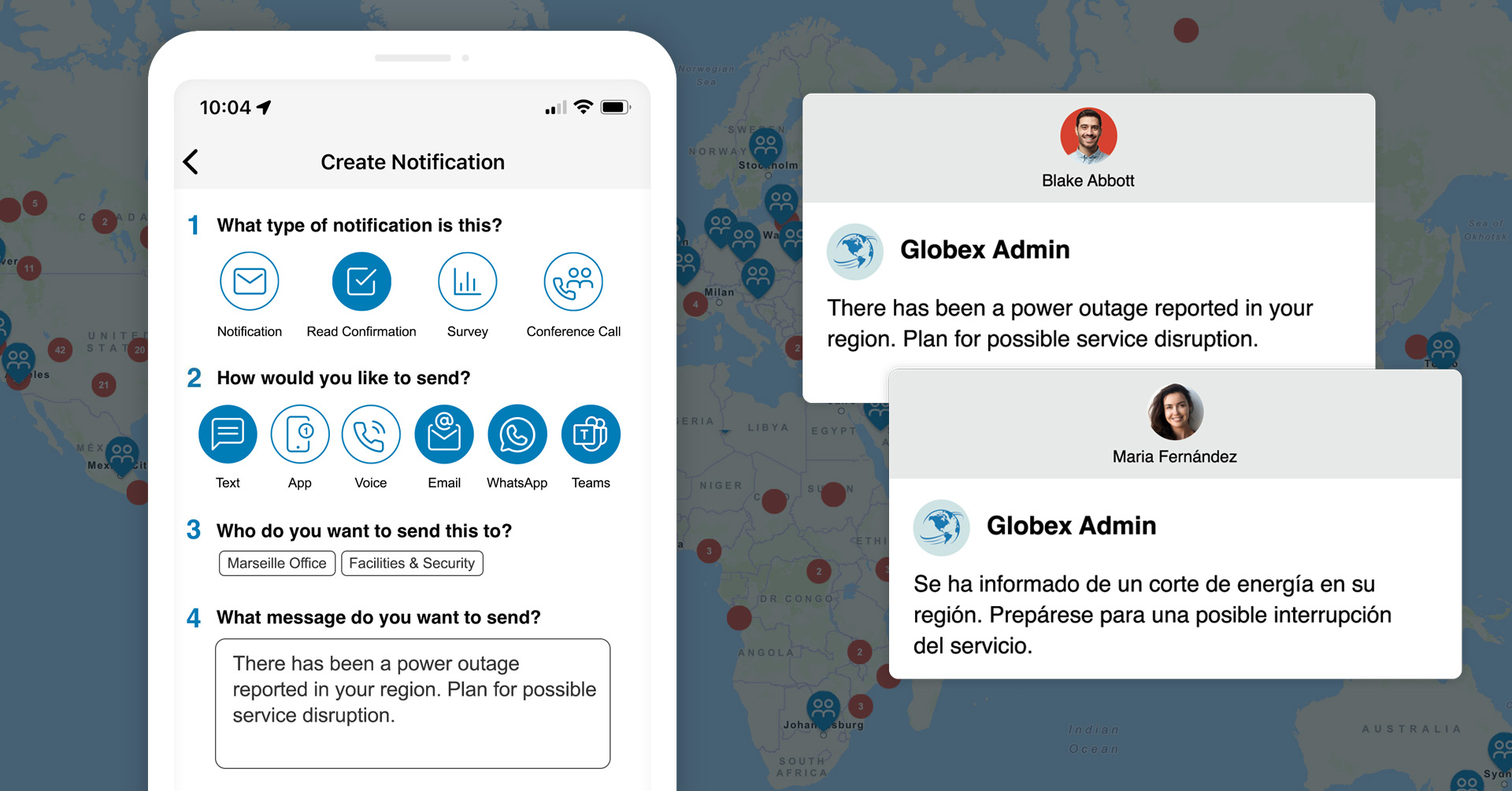
In a fast-moving crisis, broad messaging can create confusion. Teams need to quickly contact the employees most affected based on location, office, travel status, business unit, or level of exposure.
Send clear, actionable instructions
Employees under stress need direct guidance that they can understand quickly. The most effective emergency messages are concise, specific, and focused on what recipients should do next.
Confirm safety and identify who needs follow-up
Sending a message is only the first step. Teams also need to collect responses, confirm employee status, and identify anyone who has not replied or may need help.
Keep communicating as the situation changes
Conflict-related incidents rarely stay static. Employees need timely follow-up updates, not just an initial alert. Ongoing communication helps reduce uncertainty and supports better decisions throughout the incident.
Support multiple channels and regional preferences
Organizations need flexibility in how they communicate, especially when employees rely on different devices, channels, or communication habits across the region.
Why Email Alone Isn’t Enough During a Regional Crisis
Email can play an important role in crisis communication, but it should not be the only method organizations rely on when employees may be away from their desks, sheltering in place, traveling, or dealing with network disruptions and information overload.
During fast-moving events, employees may miss an email, read it too late, or struggle to act on it quickly. A single channel also creates unnecessary risk when communication conditions vary across countries, carriers, devices, and local preferences.
A stronger approach is multichannel emergency communication. By sending messages via SMS, voice, email, mobile app push notifications, and other supported channels, organizations increase the likelihood that employees receive and act on critical information.
Just as importantly, leaders need to understand what happened after the message went out. Who received it? Who responded? Who still may need help? Those answers matter when every minute counts.
What Leaders Need From an Employee Protection Solution
During conflict or severe regional disruption, organizations need more than speed alone. They need a solution that helps them protect employees before, during, and after a crisis.
Fast, intuitive emergency communication
When time is limited, teams need to create and send messages quickly without relying on complicated workflows or extensive training.
Multichannel delivery and two-way communication
Leaders need to reach employees through the channels most likely to get their attention and provide recipients with a way to confirm they are safe, request help, or share updates.
Real-time visibility into delivery and responses
Crisis teams need to know which messages were delivered, which employees responded, and where additional outreach is needed.
Targeted outreach by geography and employee group
A regional incident does not affect every employee the same way. The right solution helps organizations reach only the people who need the message, based on factors such as location, travel, office, or role.
Support for multilingual, distributed workforces
Global organizations need communication tools that can support employees across languages, regions, and varying levels of risk exposure.
A path to scale beyond one event
Today’s urgent need may be centered on the Middle East, but the same platform should be able to support future incidents in other regions as business needs evolve.
How AlertMedia Helps Protect Employees in the Middle East
AlertMedia helps organizations communicate quickly, monitor evolving threats, and support response efforts from one platform.
With AlertMedia, organizations can:
- Send urgent alerts across multiple channels, including SMS, email, voice, mobile app push, and other supported communication tools
- Use two-way communication to confirm employee safety and gather responses in real time
- Target outreach by location, team, and other employee data
- Track delivery and engagement to identify who may need follow-up
- Use templates and guided workflows to move faster during high-pressure events
- Support multilingual communication for global and regional workforces
- Integrate employee data from existing systems to streamline outreach and response
For organizations managing both immediate risk and long-term duty of care, AlertMedia also supports broader protection efforts through threat intelligence, incident response workflows, and travel risk management capabilities.
Why Real-Time Threat Visibility Matters
Fast communication is critical, but it is even more effective when leaders understand what is happening on the ground and who may be affected.
Real-time visibility, powered by Threat Intelligence, helps organizations monitor emerging events, understand where disruptions may affect employees, and make more informed decisions about when and how to communicate. It can also help teams move from reactive outreach to more proactive employee protection.
For employees abroad, context matters as much as speed. During fast-moving conflict, leaders and employees may need a shared view of critical resources, such as embassies and consulates, as well as nearby incidents, offices, or other locations relevant to employee safety. With AlertMedia’s Visual Intelligence layers, organizations can view these resources in context and make more informed decisions during evolving situations.
For organizations with employees traveling, working remotely, or spread across several countries, this added visibility is especially valuable when incidents escalate quickly.
How to Coordinate Response After Employees Reply
The first alert is only one part of protecting employees during a crisis. Once messages go out and employees begin responding, teams need a clear way to organize follow-up actions.
That may include identifying employees who need assistance, escalating urgent concerns, sharing updated instructions, or coordinating with internal stakeholders responsible for security, operations, HR, or travel.
When communication, visibility, and response coordination work together, organizations are better equipped to support employees throughout the full incident lifecycle.
Protect Employees in the Middle East With a Stronger Communication Strategy
When organizations are responsible for employees in high-risk regions, communication must operate under pressure. Leaders need a fast, reliable way to reach people, gather responses, and adapt as conditions change.
AlertMedia helps organizations strengthen employee protection with multichannel emergency communication, real-time visibility, and coordinated response capabilities designed for modern crises.
Frequently Asked Questions
What is the best way to communicate with employees during conflict in the Middle East?
The strongest approach is usually multichannel communication. Instead of relying solely on email, organizations should be prepared to use multiple channels to send urgent instructions, confirm receipt, and gather responses.
Why isn’t email enough during a regional crisis?
Email can support crisis communications, but it may be too slow or too easy to miss during fast-moving events. Employees may be traveling, away from their desks, or overwhelmed by rapidly changing conditions. Multichannel communication improves the chances that urgent messages are seen and acted on quickly.
Can employees confirm they are safe?
Yes. Two-way communication enables organizations to request responses from employees, helping teams better understand who is safe, who needs assistance, and who still requires follow-up.
Can emergency messages be targeted to specific employee groups?
Yes. Targeted communication helps organizations send relevant messages based on factors such as geography, team, office, travel status, and other employee data.
Does AlertMedia support multilingual communication?
AlertMedia helps organizations communicate with diverse, distributed workforces, including teams that may need messages in different languages.
Can AlertMedia support broader employee protection efforts beyond communication?
Yes. In addition to Emergency Mass Notification, AlertMedia can support broader employee protection efforts with capabilities such as:
- Threat Intelligence
- Social Intelligence
- Employee Safety Monitoring
- Travel Risk Management
- Incident Response
Can AlertMedia integrate with employee data systems?
AlertMedia can integrate with existing systems to help organizations keep employee information up to date and streamline communication during critical events.
How can organizations improve employee communication readiness before a crisis?
The strongest programs usually combine current employee data, prebuilt audience groups, message templates, multichannel delivery, and a clear process for confirming employee status and following up.
What should organizations look for in an employee protection platform?
Organizations should look for fast message creation, multichannel delivery, two-way communication, delivery visibility, targeted outreach, and the ability to support broader workflows such as threat monitoring and response coordination.
Can this kind of solution support future incidents outside the Middle East?
Yes. Many organizations need a platform that can address an urgent regional challenge now while also supporting future incidents affecting employees in other parts of the world.