The Signal
|
| By AlertMedia | June 23, 2026
Welcome to The Signal—AlertMedia’s weekly newsletter and your source for news and information on topics involving employee safety, business continuity, and emergency preparedness.
|
|
|
|
|
|
|
When severe weather threatens your organization, every decision matters.
The problem Reaching critical decisions is always a slower process the first time. Your team shouldn't be figuring out how to navigate a response plan during an actual hurricane, tornado, or flood.
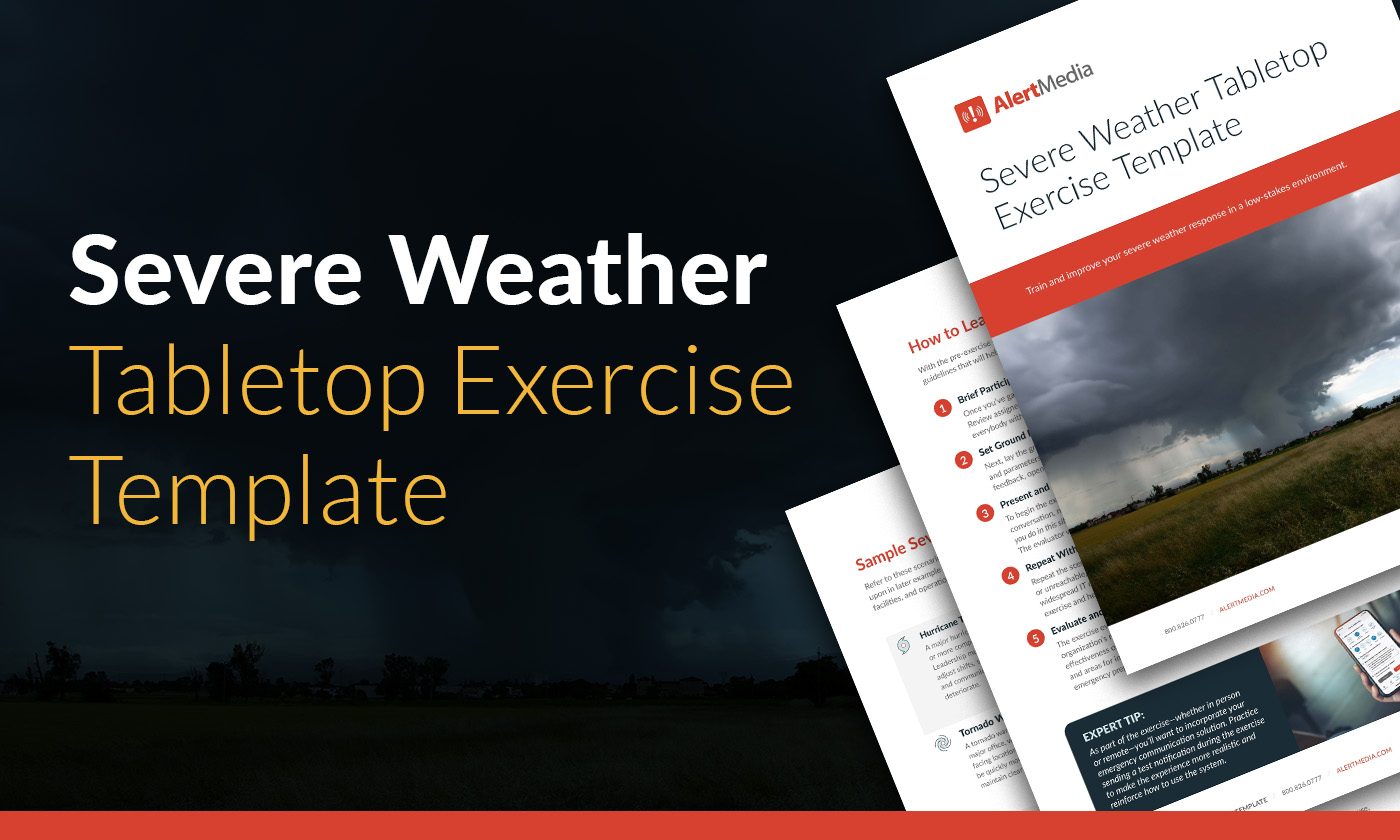
Use this Severe Weather Tabletop Exercise Template to help your team practice decision-making, test procedures, and identify gaps before severe weather impacts your people and operations.
|
|
|
|
|
|
|
|
|
|
|
 |
Severe Weather Tabletop Exercise Template
|
|
|
|
|
|
|
|
|
Intelligence-led security in an age of information overload
|
|
|
|
|
|
|
|
|
What is geopolitical risk A corporate security leader's guide
|
|
|
|
|
|
|
|
|
The hidden backdoors inside millions of smart devices
|
|
|
|
|
|
|
|
When security professionals do their jobs well, nobody notices.
Fans arrive, gates open, transportation runs on time, and the event unfolds exactly as expected. The focus stays on the entertainers and the spectacle.
When security professionals don't, everyone notices.
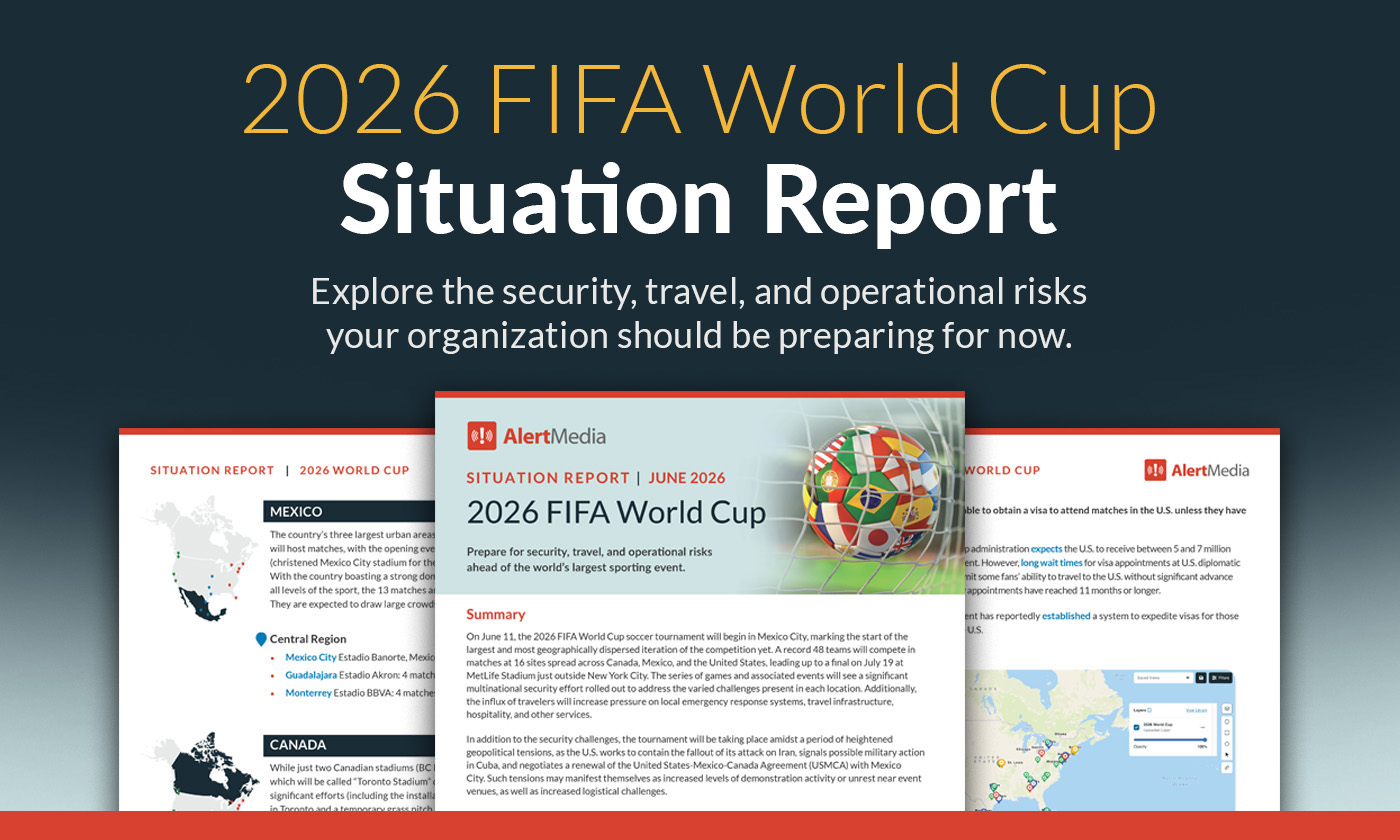
That's the challenge facing planners behind the 2026 FIFA World Cup. Across three countries and 16 host cities, security teams have prepared for everything from cyberattacks and drone incursions to crowd-related incidents and infrastructure disruptions. For an event expected to attract millions of visitors and generate billions in economic activity, that may be the most difficult assignment of all.
A tournament unlike any other
The 2026 FIFA World Cup is unprecedented in scale. The tournament features 48 teams, 104 matches, and host cities spread across the United States, Canada, and Mexico. Millions of fans are expected to travel between venues over 39 days, creating one of the largest security operations ever undertaken in North America.
To prepare, over 400 law enforcement agencies, intelligence organizations, federal authorities, and private-sector partners have spent years coordinating response plans. Their mission extends far beyond protecting stadiums. Security teams are also responsible for safeguarding airports, public transit systems, fan festivals, team hotels, and critical infrastructure supporting the event.
While organizers are preparing for a wide range of threats, three concerns have emerged as particularly significant: cyberattacks, unauthorized drones, and screening the enormous volume of people moving through World Cup venues and surrounding areas.
The drone dilemma
One of the most visible threats barely existed during previous World Cups.
Federal authorities repeatedly identified unauthorized drones as a significant concern throughout the tournament. The Federal Aviation Administration (FAA) has established temporary flight restrictions around stadiums and designated event locations, while specialized counter-drone teams have been deployed to monitor airspace and investigate suspicious activity.
The concern isn't limited to malicious actors. Even recreational drone operators can create security challenges, delay operations, or force authorities to divert resources away from other threats.
For World Cup organizers, the answer is a layered approach that combines detection technology, intelligence gathering, law enforcement coordination, and clear communication protocols.
The numbers demonstrate both the scale of the challenge and the effectiveness of detection efforts. Since the World Cup started on June 11, authorities have seized “dozens of drones.” In all, the Department of Homeland Security reported 145 “incursions” in restricted space across eight U.S. venues, including Atlanta, Dallas, Houston, Kansas City, Seattle, Boston, San Francisco, and Philadelphia.
Cybersecurity takes center stage
Security experts have warned that cyberattacks represent one of the most complex risks facing the tournament. Even a relatively small cyber incident can ripple across transportation, ticketing, communications, and venue operations, disrupting thousands of attendees. Criminal groups and nation-state actors have increasingly targeted major global events because they provide a high-profile platform capable of generating disruption, financial gain, or publicity.
Potential threats include phishing campaigns targeting staff and volunteers, fraudulent ticketing websites, malicious QR codes, ransomware attacks, and attempts to compromise operational systems supporting transportation, communications, and venue management.
Research published earlier this month by U.K. cyber firm Darktrace revealed that over 80% of the professional sports organizations it works with were affected by cybersecurity incidents in the past 12 months, with 57% experiencing multiple attacks.
Security beyond the stadium
The average fan will likely encounter security only during bag checks or screening procedures. Behind the scenes, however, organizers are operating a much more expansive security network.
Authorities are sharing intelligence across agencies and international borders. Analysts are monitoring online activity for emerging threats. Emergency managers are conducting exercises to test response plans. Security teams are coordinating communications strategies designed to quickly notify stakeholders if conditions change.
In many ways, the World Cup serves as a real-world demonstration of modern risk management. The objective isn't simply to respond when something goes wrong. It's to create enough visibility, coordination, and preparedness to prevent incidents from escalating in the first place.
Why you should care: Most organizations won't be tasked with protecting a global sporting event. But the lessons behind World Cup security apply to businesses of every size.
The tournament highlights a reality that industry professionals confront every day: modern threats rarely stay confined to a single domain. The organizations best positioned to manage risk are those that stop treating physical security, cyber, intelligence, emergency management, and communications as separate disciplines.
The World Cup's security strategy reflects a growing best practice for organizations everywhere, combining situational awareness, threat intelligence, cross-functional coordination, and rapid communication into a unified response capability. |
|
|
|
|
|
|
Every week, AlertMedia creates brand-new content to help safety, security, and business continuity professionals keep their people and organizations safe. Check out this week’s featured content: |
|
|
|
|
|
|
|
[Resource] Severe Weather Tabletop Exercise Template
Train and improve your severe weather response in a low-stakes environment.
GET THE TEMPLATE >>
|
|
|
|
|
|
|
|
|
[Podcast] Intelligence-Led Security in an Age of Information Overload
Hear why context, actionability, and human analysis are essential for turning intelligence into operational outcomes.
LISTEN NOW >>
|
|
|
|
|
|
|
|
|
[Blog] What Is Geopolitical Risk A Corporate Security Leader's Guide
Learn what geopolitical risk means for corporate security teams and how this risk management methodology differs from traditional political risk planning.
KEEP READING >>
|
|
|
|
|
|
|
|
The Hidden Backdoors Inside Millions of Smart Devices |
|
|
|
|
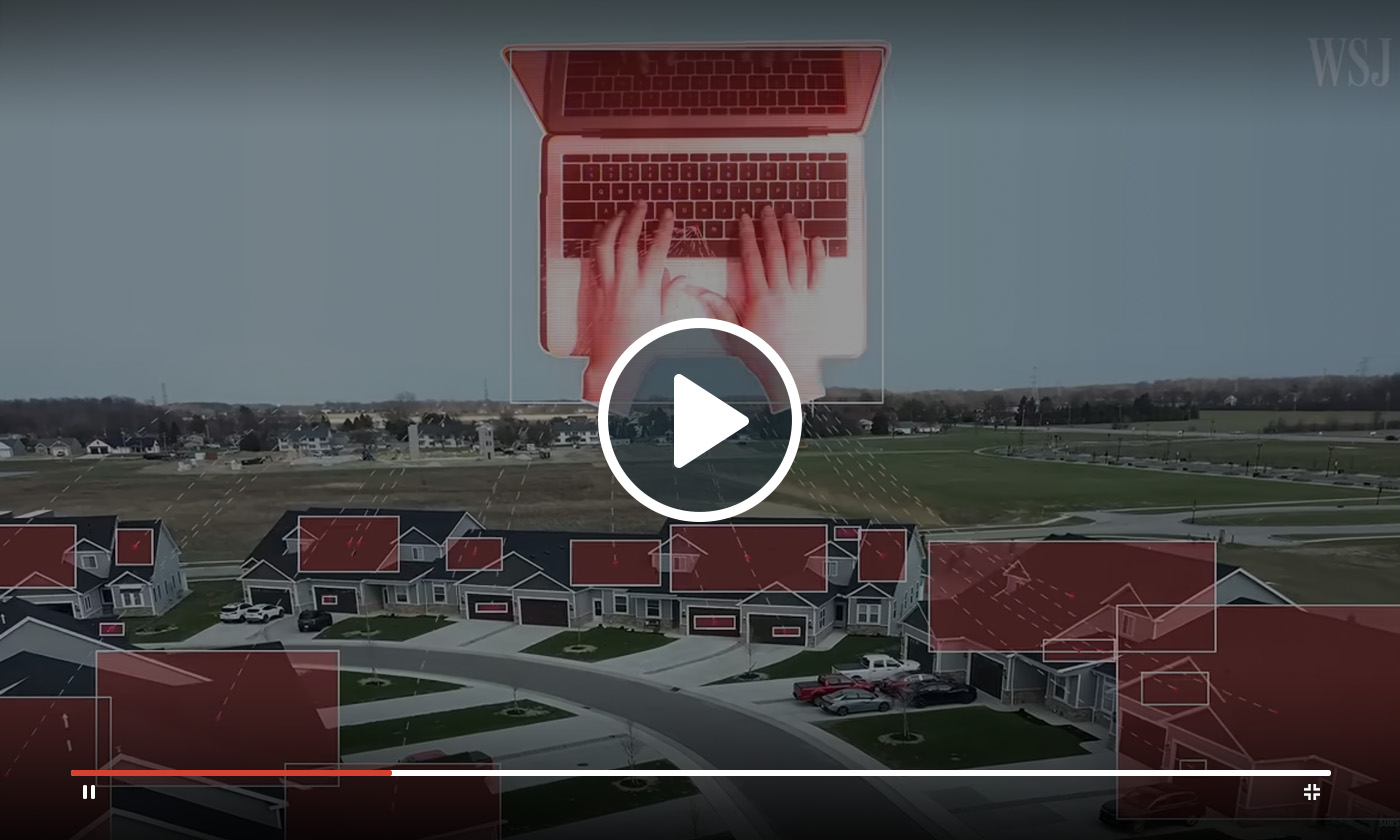
Millions of everyday consumer devices are being infected with malware known as residential proxy software. The result is a vast network of compromised devices that criminals can use to disguise their online activity and launch attacks from seemingly legitimate home internet connections. The Digital Citizens Alliance estimates there may be as many as 20 million of these compromised devices in the U.S. alone.
This new video from The Wall Street Journal examines a few of these malware-riddled products to investigate how criminals are tapping into them to carry out cyberattacks and other types of illegal activity around the world. |
|
|
|
|
|
|
Thank You for Reading The Signal |
| We hope you enjoyed this week’s issue of The Signal by AlertMedia.
Know someone who would enjoy this newsletter Send them a link to subscribe.
You can also follow and interact with AlertMedia on the following social media platforms:
|
|
|
|
|
|