| What exactly is hantavirus?
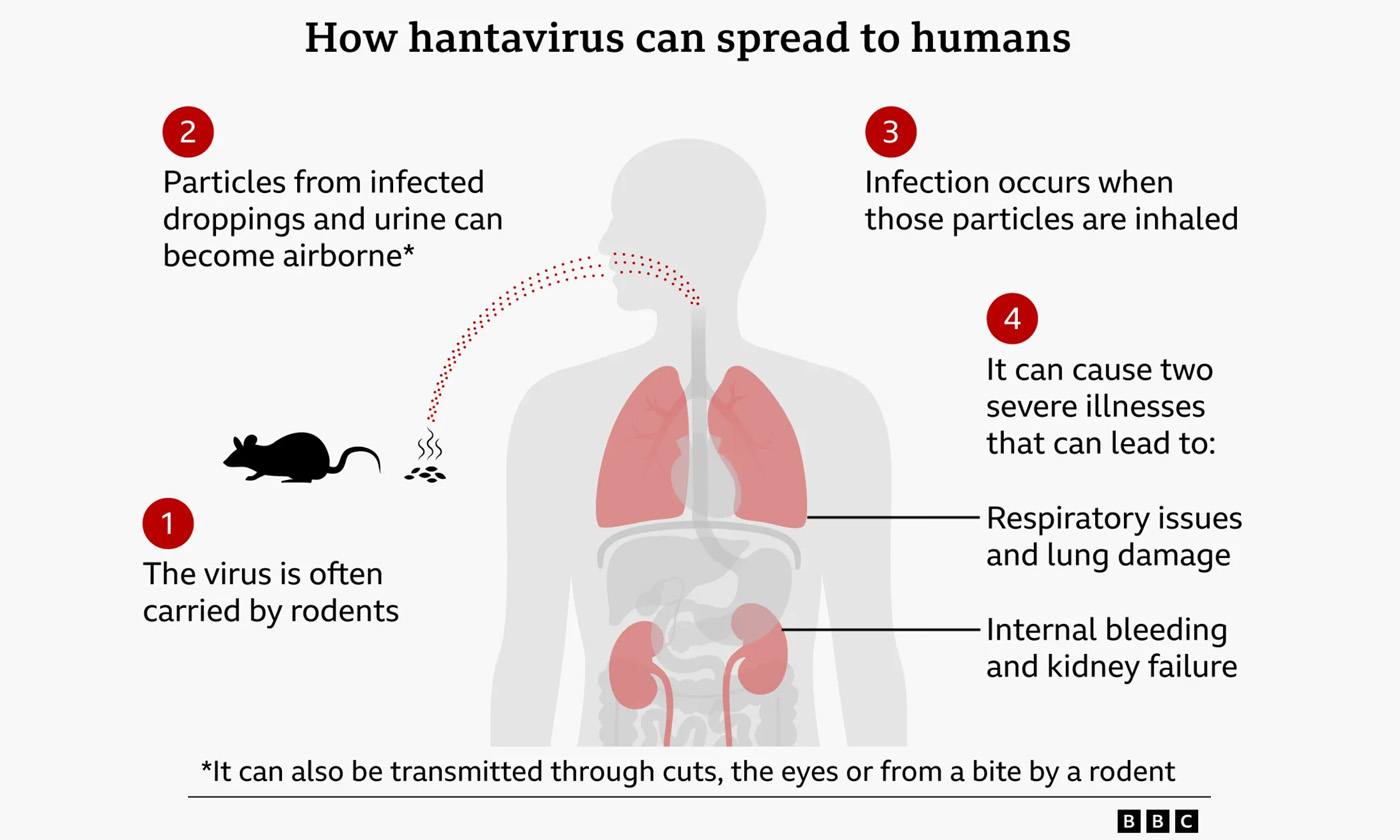
“Hantavirus” refers to a family of viruses carried primarily by rodents worldwide. In the United States, infections are most commonly associated with deer mice, particularly in western states and the Four Corners region (where Arizona, Colorado, New Mexico, and Utah meet).
People typically become infected not through bites, but by inhaling airborne particles contaminated with rodent waste. That makes enclosed spaces especially risky if they’ve been undisturbed for long periods.
According to the Centers for Disease Control and Prevention (CDC), symptoms often begin with fatigue, fever, muscle aches, headaches, dizziness, nausea, and abdominal pain before progressing rapidly into severe respiratory distress in some patients.
The disease is rare but serious. Since national surveillance began in 1993, the CDC has confirmed roughly 890 hantavirus cases in the United States, with approximately 35% resulting in death.
Why you should care: For many businesses, hantavirus sounds like the kind of threat that belongs in remote cabins or wilderness documentaries. In reality, rodent exposure risks exist in warehouses, construction sites, utility buildings, agricultural operations, storage facilities, shipping centers, vacant properties, and offices that have been closed for extended periods.
The danger often increases after seasonal changes, flooding, construction projects, or periods of vacancy when rodents seek shelter indoors.
One of the biggest misconceptions about hantavirus is how easily exposure can occur during routine cleaning. Public health officials specifically warn against dry sweeping or vacuuming rodent droppings because those activities can aerosolize infectious particles. Instead, contaminated areas should be ventilated and disinfected thoroughly before cleanup begins.
Organizations responsible for maintaining facilities, field sites, storage spaces, or remote properties should ensure employees understand how rodent-borne diseases spread and what precautions are necessary before entering potentially contaminated environments.
|