

How to Integrate a Mass Alert System Into an Emergency Plan
If not, it’s time to modernize your plan.
Organizations face a growing range of risks—from weather events and security threats to operational disruptions and health incidents. A modern emergency plan must account for these realities and ensure that critical information reaches the right people at the right time. Integrating a mass alert system into your emergency planning and management framework is essential to achieving that goal.
This guide explains what a mass alert system is, why it matters, and how to integrate it effectively into emergency planning to support fast decision-making, coordinated response, and employee safety.
Key Concepts for Integrating Mass Alerts Into Emergency Planning
Speed and reach: Alerts must be delivered immediately and across multiple channels to reach people wherever they are.
Actionable messaging: Notifications should clearly state what is happening, who is affected, and what actions recipients should take.
Targeted communication: Alerts should be sent only to relevant audiences based on role, location, or risk exposure.
Redundancy: Using multiple channels simultaneously reduces the risk of missed messages during system outages or high-stress situations.
Two-way communication: Recipients should be able to acknowledge alerts or share status information when appropriate.
Operational integration: Mass alerts should be embedded into emergency response workflows, not treated as an isolated tool.
Continuous readiness: Systems, contact data, and templates must be maintained and tested regularly to remain effective.
These principles ensure that mass alert systems support both emergency planning and real-time incident management.
What Is a Mass Alert System?
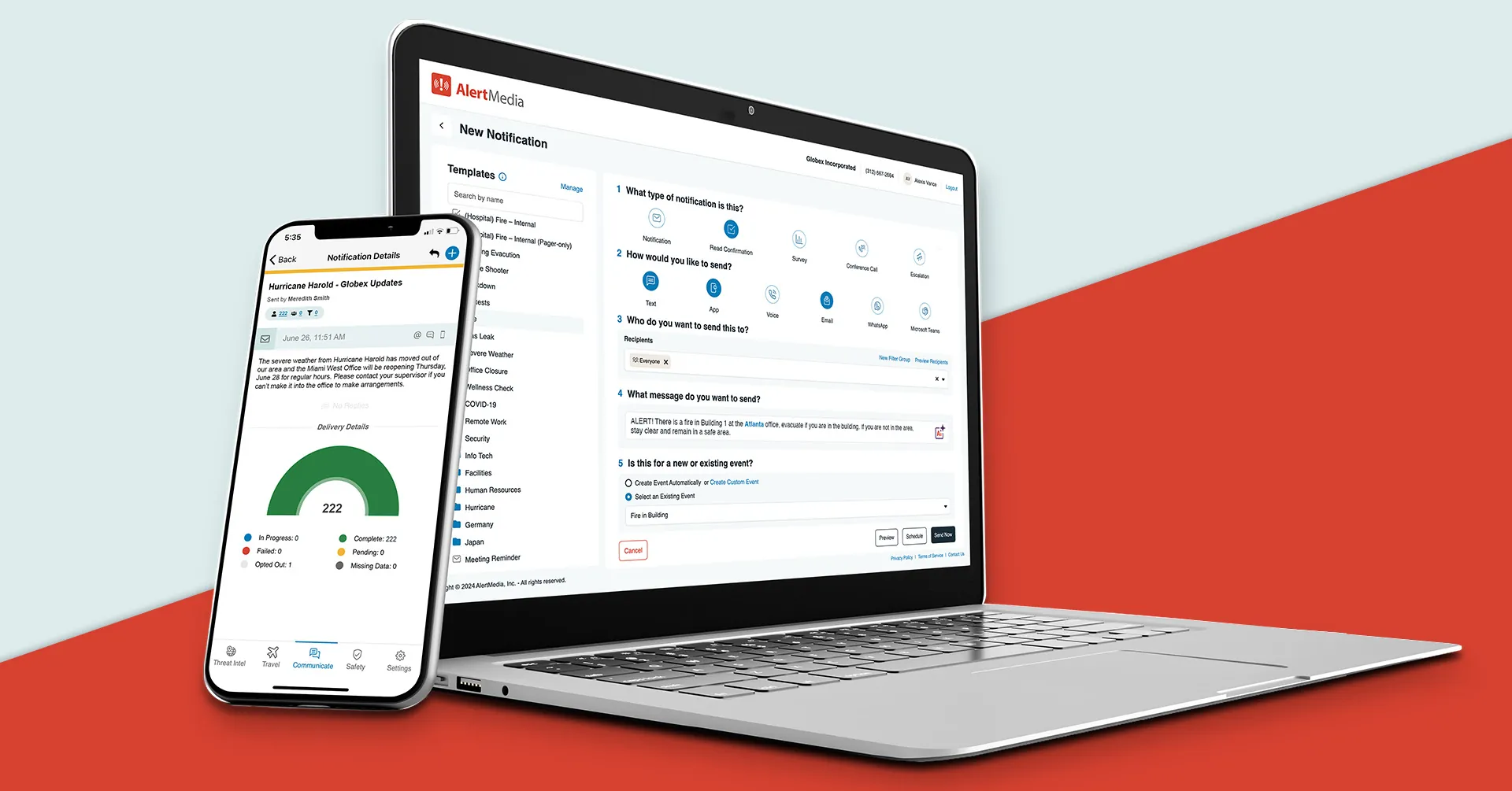
A mass alert system is a centralized communication platform that rapidly notifies large groups of people during emergencies or critical events. Modern systems support multiple communication channels—such as SMS, voice calls, mobile app push notifications, email, and desktop alerts—and deliver messages simultaneously to maximize reach.
More advanced platforms also support two-way communication, location awareness, and real-time visibility into message delivery and employee status, enabling organizations to manage incidents as they unfold rather than relying on one-way broadcasts.
Why Are Mass Alerts Critical to Emergency Planning?
Emergency plans are only effective if they can be activated immediately and understood clearly. Traditional communication methods—manual call trees, email-only notifications, or on-site announcements—often fail during real-world incidents due to delays, missed messages, or limited reach.
A mass alert system strengthens emergency planning by:
- Enabling rapid, simultaneous communication across multiple channels
- Reaching employees regardless of location, schedule, or role
- Supporting clear instructions and real-time updates during evolving situations
- Providing visibility into who has received and acknowledged messages
- Allowing leadership and response teams to coordinate more effectively
In short, mass alerts turn static emergency plans into actionable, real-time response tools.
How to Integrate a Mass Alert System Into Emergency Planning
1. Define emergency scenarios and communication needs
Start by identifying the types of incidents your organization plans for. These may include safety threats, severe weather, operational disruptions, technology outages, or security incidents. For each scenario, determine:
- Who needs to be notified
- What information do they need to take action
- How quickly must messages be delivered
- Whether two-way communication or status updates are required
This ensures your alert system is configured to support real-world response needs rather than generic notifications.
2. Align alerts with your emergency action plan
Your emergency plan should clearly define when and how mass alerts are used. This includes:
- Triggers for sending alerts
- Roles authorized to send messages
- Escalation paths for prolonged or worsening incidents
- Guidance on follow-up communications and updates
Mass alerts should be embedded directly into response workflows, not treated as a standalone tool.
3. Centralize and maintain accurate contact data
Effective alerts depend on accurate, up-to-date contact information. Integrate your mass alert system with employee directories or HR systems to keep contact details, roles, and locations up to date.
Segment audiences by factors such as location, department, or role to ensure alerts are targeted and relevant, reducing confusion and alert fatigue.
4. Use multichannel, redundant communication
No single communication channel is reliable in every situation. A modern mass alert system should deliver messages across multiple channels at once, increasing the likelihood that recipients see and act on the alert.
Multichannel delivery ensures continuity even when certain systems are unavailable or when employees are unable to access a specific device.
5. Enable two-way communication and situational awareness
Two-way communication enables recipients to acknowledge alerts, report their status, or share critical field information. This transforms alerts from simple notifications into tools for incident management.
An advanced mass notification system may also provide dashboards or map-based views that help response teams understand employee locations, message delivery status, and emerging issues in real time.
6. Prepare message templates and workflows in advance
During emergencies, clarity and speed matter. Pre-built message templates aligned to specific scenarios help ensure consistent, actionable communication under pressure.
Templates should include:
- Clear instructions
- Plain language
- Guidance on next steps or where to find updates
Custom messaging capabilities remain important for unique or evolving situations.
7. Train, test, and refine regularly
A mass alert system should be tested as part of routine emergency preparedness. Regular drills help ensure:
- Alerts are delivered as expected
- Employees recognize and trust official communications
- Response teams are comfortable activating and managing alerts
Post-test reviews and system analytics can highlight opportunities to improve message timing, channel selection, or audience targeting.
Guidance for Security and Emergency Managers
For security, safety, and emergency management professionals, a mass alert system should function as a core operational tool—not just a notification mechanism.
When integrating alerts into emergency management programs, focus on:
- Clearly defined activation authority and backup administrators
- Alignment with incident command or crisis management structures
- Support for rapid escalation, message updates, and incident timelines
- Real-time visibility into message delivery, acknowledgments, and employee status
- Integration points with complementary capabilities such as incident tracking, threat monitoring, or emergency response coordination
For these teams, alerts are most effective when embedded in repeatable response workflows that support situational awareness and decision-making throughout the lifecycle of an incident.
Choosing the Right Mass Alert Platform
When selecting a solution, organizations should prioritize platforms that:
- Support multichannel, simultaneous notifications
- Enable two-way communication and real-time visibility
- Are accessible via mobile and web interfaces
- Integrate with existing enterprise systems
- Provide reporting and analytics to measure effectiveness
- Offer reliable, always-available support
Many organizations choose platforms that also connect with broader emergency management and operational resilience tools. While mass alerts remain the foundation, integrations with related capabilities can help teams manage incidents more effectively before, during, and after alerts are sent.
Turning Emergency Plans Into Real-Time Response
Integrating a mass alert system into emergency planning is not about replacing your existing plan—it’s about making it executable. When communication is fast, reliable, and actionable, organizations are better equipped to protect their people, reduce confusion, and respond decisively to critical events.
A well-integrated mass alert system turns emergency planning from a static document into a living capability that supports real-time awareness, coordination, and recovery.